Key Takeaways
Marjorie Taylor Greene critiques Donald Trump’s Mar-a-Lago meetings with global leaders. Understand implications for US foreign policy & political dynamics.
Overview
In a significant development echoing ongoing debates within US politics, Representative Marjorie Taylor Greene (R-Ga.) has openly criticized former President Donald Trump’s recent high-profile meetings with world leaders at his Mar-a-Lago estate. This scrutiny raises questions about Trump’s foreign policy approach, with Greene advocating for a singular focus on America’s domestic needs amidst complex global conflicts.
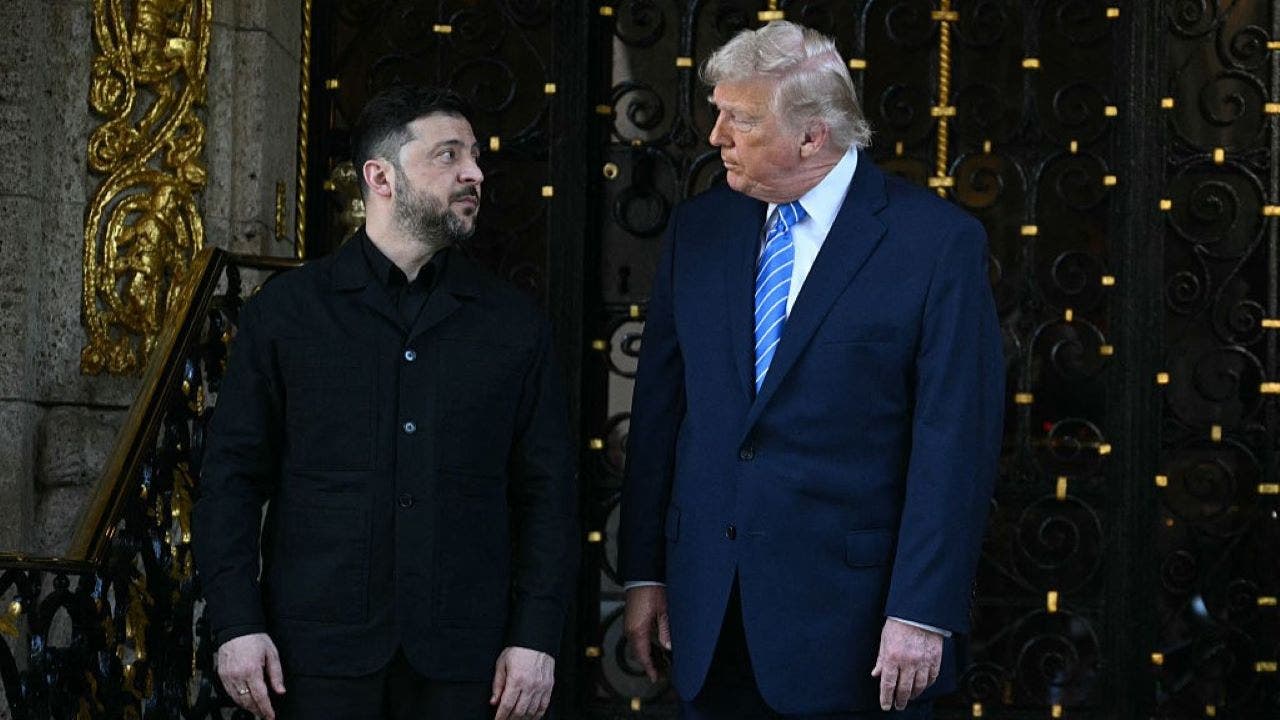
The criticism highlights a growing tension within conservative circles. Trump recently engaged with Ukrainian President Volodymyr Zelenskyy to discuss a peace plan for the Russia-Ukraine war and prepared for his sixth meeting of the year with Israeli Prime Minister Benjamin Netanyahu to address Middle East conflicts.
Greene, a vocal opponent of supplying U.S. military aid to foreign countries, explicitly articulated her position on X, stating, “Zelensky today. Netanyahu tomorrow. Can we just do America?” Her ‘America First’ stance challenges extensive international engagement.
The incident prompts critical analysis of foreign policy implications, political leadership dynamics, and evolving perspectives of key stakeholders in US government affairs. Policy watchers and informed citizens are closely monitoring this interplay.
Detailed Analysis
The evolving role of former presidents in foreign policy and internal party debates on international engagement represents a significant shift in American political discourse. The “America First” philosophy, deeply rooted in U.S. history, has seen a modern resurgence, particularly within a segment of the Republican party. This perspective often stands in contrast to decades of bipartisan support for global leadership and robust international alliances. Former President Trump, during his tenure and post-presidency, has consistently championed this approach, frequently questioning established diplomatic norms and multinational agreements. His continued engagement with foreign heads of state, specifically from his private estate, introduces an unconventional element into diplomatic relations, blurring the traditional lines of statecraft. This dynamic becomes particularly pertinent as the United States navigates major international flashpoints, including the prolonged Russia-Ukraine war and the complex Israel-Hamas conflict. Representative Greene’s criticism reflects a notable segment of the conservative base that advocates for reduced foreign intervention and a strategic reallocation of national resources towards domestic priorities.
At the core of Representative Greene’s latest criticism is a direct challenge to the allocation of United States diplomatic and financial resources towards international conflicts. Her public statements, notably her social media post querying “Zelensky today. Netanyahu tomorrow. Can we just do America?”, articulate a policy preference for prioritizing internal American needs over external entanglements, especially concerning military aid. Greene has established herself as a consistent and outspoken critic of U.S. military assistance to both Ukraine and Israel. Her previous characterizations of Ukrainian President Zelenskyy as a “dictator who canceled elections” and her description of Israel’s military campaign in Gaza as a “genocide and humanitarian crisis” underscore her isolationist leanings. This stance diverges significantly from historical Republican foreign policy, which often emphasized strong alliances and strategic global intervention. Meanwhile, Trump’s meetings, despite being conducted by a former president, inherently carry considerable political weight, influencing diplomatic perceptions and potentially foreshadowing future administration policies if he were to seek or regain office.
Representative Greene’s “America First” platform resonates with a discernible faction within the Republican party that has increasingly embraced isolationist tendencies over the past decade. This shift challenges the long-standing post-World War II consensus regarding the United States’ role as a global leader. Her position contrasts sharply with the interventionist foreign policies traditionally favored by both mainstream Republican and Democratic administrations. The current scenario also highlights the distinctive influence of Donald Trump, who, as a former president, continues to exert substantial sway in global affairs, albeit without the formal authority of his previous office. While past former presidents have historically engaged in diplomacy, Trump’s active involvement in peace discussions related to ongoing conflicts from his private residence is an unconventional departure from established norms. The internal party friction, evident between Greene’s staunch non-interventionism and Trump’s willingness to engage with foreign leaders on sensitive peace plans, illustrates the complex and sometimes contradictory ideological currents within contemporary conservative thought.
For News Readers, Policy Watchers, and Informed Citizens, this political discourse provides critical insight into the ongoing debate within the United States concerning its international commitments and global standing. Greene’s pointed criticisms serve as a significant indicator of public sentiment favoring domestic focus, which could potentially influence future legislative decisions on foreign aid and international agreements. Political Analysts should closely monitor how this internal Republican dynamic, particularly between an influential lawmaker and a former president, might impact the upcoming election cycle and the broader trajectory of US foreign policy. Key metrics for observation include shifts in public opinion polls regarding foreign aid, the outcome of congressional votes on defense spending, and any further public statements or high-profile meetings involving Trump or other leading political figures that could signal evolving international engagement strategies.
About the Author