Key Takeaways
Kosovo’s ruling Vetevendosje party achieved a landslide win in the 2025 elections. Understand the implications for governance, EU funds, and Serbia relations.
Overview
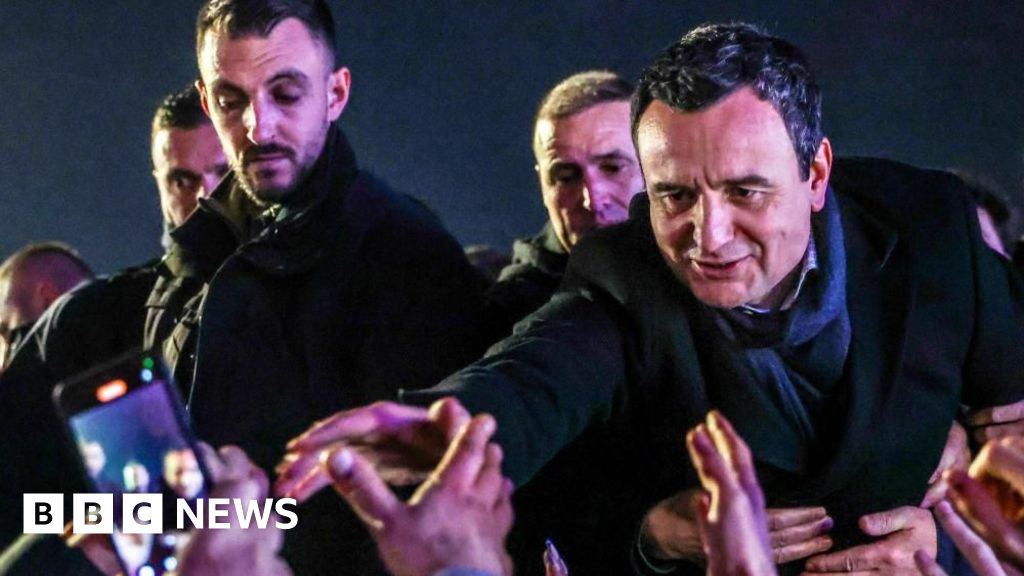
Kosovo’s political landscape has undergone a significant shift, with the Albanian nationalist Vetevendosje party securing a landslide victory in the parliamentary elections, effectively ending months of political deadlock. This outcome paves the way for a third term in power for its leader, Albin Kurti, following an earlier election in February that failed to produce a stable governing majority.
This decisive mandate from the electorate provides crucial clarity for News Readers, Policy Watchers, and Political Analysts monitoring stability in the Balkans. The results reflect voters’ clear preference amidst the prolonged governmental impasse, demanding reflection and responsible action from all political factions.
With 90% of votes counted, Vetevendosje garnered 50.8% of the vote, while the Democratic Party of Kosovo (PDK) received 20.98%, and the Democratic League of Kosovo (LDK) secured 13.89%.
The immediate focus now shifts to forming a stable government and addressing critical policy implications, including crucial international relations and economic recovery initiatives.
Key Data
| Political Party | Vote Share (%) | Election Result |
|---|---|---|
| Vetevendosje (Self-Determination) | 50.8% | Landslide Victory |
| Democratic Party of Kosovo (PDK) | 20.98% | Main Opposition |
| Democratic League of Kosovo (LDK) | 13.89% | Third Place |
Detailed Analysis
Kosovo’s recent parliamentary elections have delivered a clear mandate, bringing an end to several months of political deadlock that stalled governance and development. Following an earlier election in February which did not yield a parliamentary majority, the country found itself without a functioning government. This protracted impasse tested the electorate’s patience, posing a pivotal question: would voters penalise the ruling party for the legislative stagnation, or would they hold the opposition accountable for their refusal to form a coalition? The resounding victory for Vetevendosje, meaning “self-determination,” marks its fourth successive win in parliamentary elections, signaling a clear endorsement of its leader, Albin Kurti, and his political platform despite past challenges in government formation.
With 50.8% of the vote secured, Vetevendosje’s performance is particularly noteworthy, especially when compared to the 20.98% achieved by the centre-right Democratic Party of Kosovo (PDK) and the 13.89% by the Democratic League of Kosovo (LDK). While this landslide percentage may not guarantee an absolute majority of seats in the 120-member National Assembly, it significantly strengthens Kurti’s position in coalition negotiations. He is expected to find willing partners among the ethnic minority parties, who are constitutionally guaranteed 20 seats. Kurti himself hailed the result as “the greatest victory in the history of the country,” expressing an expectation for cooperation rather than frustration from opposition parties, a sentiment echoed by Arben Gashi of the LDK who acknowledged, “When voters speak, the result cannot be ignored.”
The implications of this election are multi-faceted, touching upon both domestic stability and international relations. A stable government is crucial for accessing hundreds of millions of euros in European Union funds, with potential agreements with the World Bank bringing the total sum to over €1 billion. These funds are vital for Kosovo’s economic development, which has been hampered by the governmental vacuum. Furthermore, repairing relations with key international supporters, particularly the EU and the US, is a high priority. Kurti’s previous actions targeting institutions serving Kosovo’s Serb minority had strained these relationships, leading to increased tensions in majority-Serb north Kosovo and punitive measures from the EU, which have now been lifted. The international community will be closely watching for a pragmatic approach to the long-stalled normalisation dialogue with Serbia, especially given Kurti’s historically frosty relations with Serbian President Aleksandar Vucic.
For News Readers, Policy Watchers, Informed Citizens, and Political Analysts, this election signifies a critical juncture for Kosovo. The electorate’s strong endorsement of a figure like Albin Kurti, despite previous criticisms regarding “countless violations of the constitution, the lack of economic development and the breakdown of relations with allies” as noted by analyst Artan Muhaxhiri, reflects a deeper disillusionment with the alternatives. Parties linked to the Kosovo Liberation Army, which dominated the decade following the 2008 declaration of independence, largely failed to deliver on promises of prosperity. This context suggests that citizens perceived the opposition as “more harmful” despite Vetevendosje’s shortcomings. The coming months will be crucial for monitoring the formation of Kurti’s government, its capacity to secure international funding, and its diplomatic approach to both its allies and Serbia. The challenge lies in translating this strong electoral mandate into effective governance and tangible policy outcomes for Kosovo.
About the Author