Key Takeaways
NASA’s Crew-11 mission cut short due to medical emergency. Analyze space sector operational risks and long-term investment implications for 2026. Critical insights for investors.
Overview
The National Aeronautics and Space Administration (NASA) announced an unprecedented decision to shorten its Crew-11 mission at the International Space Station (ISS) by over a month due to a serious medical condition involving a crew member. This marks the first such medical evacuation in 65 years of human spaceflight, a development with broader implications for space program continuity and associated contractual obligations.
For investors monitoring the nascent but growing space sector and government-linked ventures, this incident underscores inherent operational risks and the critical importance of robust contingency planning. It prompts a re-evaluation of risk premiums and operational resilience within organizations supporting space missions.
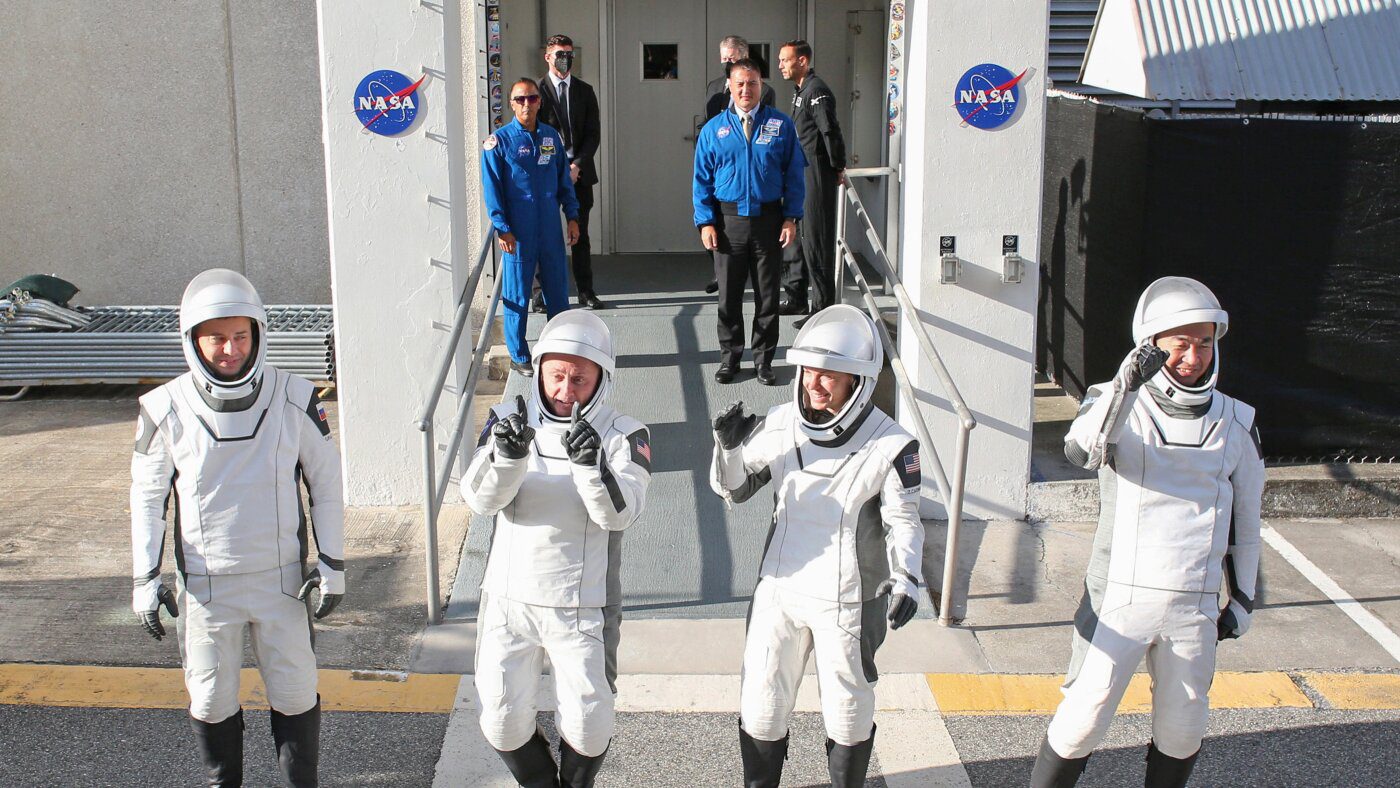
Key details confirm the early return of all four Crew-11 members, including two NASA astronauts, a JAXA astronaut, and a Roscosmos cosmonaut, departing in the coming days. The cancellation of a planned spacewalk and reduced ISS crew count will temporarily impact scientific operations and maintenance schedules.
This analysis delves into the short-to-long term operational and potential financial ripple effects for entities involved in space exploration and investment, highlighting areas for close monitoring.
Detailed Analysis
The National Aeronautics and Space Administration’s (NASA) decision to prematurely conclude its Crew-11 mission at the International Space Station (ISS) due to a crew member’s severe medical condition represents a seminal moment in the history of human spaceflight. This is not merely an operational adjustment but an unprecedented occurrence, marking the first such medical evacuation in 65 years of crewed missions. Such an event compels a rigorous re-evaluation of established risk profiles and operational protocols across the entire space sector, particularly relevant for the burgeoning segment attracting significant private investment. The reliability and safety perception of human spaceflight operations are foundational to investor confidence in commercial space ventures, including launch services provided by private entities like SpaceX, which facilitated the Crew-11 mission’s launch.
The International Space Station, a monumental testament to international collaboration involving multiple global space agencies, serves as a critical platform for scientific research and technological development. Its planned deorbiting in 2030 hinges on consistent operational capacity and scheduled upgrades, such as the power system enhancements that the cancelled spacewalk intended to address. Any disruption, however justified by crew safety, introduces variables into these intricate timelines and resource allocations. From a financial analysis perspective, consistent mission execution underpins the value derived from billions invested in the ISS program by member nations. Interruptions affect research continuity, potentially delaying scientific breakthroughs or the deployment of commercial payloads, which can impact the long-term financial returns and strategic justifications for these ambitious space endeavors.
This incident transcends the immediate crew welfare implications, extending into the realms of strategic planning for space agencies and the financial modeling for aerospace companies. It forces a recalibration of contingency budgets and highlights the inherent complexities of operating in an extreme environment where human factors can abruptly alter mission parameters. Investors in government contractors linked to space programs, or those holding positions in companies aiming for future commercial space opportunities, must critically assess the robustness of their portfolio companies’ operational resilience and their capacity to manage unforeseen human-centric risks effectively. The event underscores that while technological advancements are crucial, human health and safety remain the ultimate determinants of mission success and programmatic stability.
The early return of all four Crew-11 members — NASA astronauts Mike Fincke and Zena Cardman, a Japanese Space Station astronaut, and a Russian Space Agency Cosmonaut — more than a month ahead of schedule, precipitates immediate and foreseeable operational impacts on the International Space Station. With their departure, the ISS will temporarily operate with a reduced complement of only three individuals: two cosmonauts and a NASA astronaut from a prior Soyuz mission. This significant reduction in available personnel directly translates into diminished capacity for executing the station’s extensive scientific research agenda and its routine, yet critical, maintenance requirements. As noted by Don Platt, a professor at Florida Tech and former ISS engineer, this creates a “significant problem,” compelling the remaining crew to prioritize essential station upkeep, thereby postponing a substantial portion of planned scientific experiments.
Furthermore, the cancellation of a spacewalk, which aimed to update the station’s power system with new solar panels, has direct implications for future operational capabilities. The source material indicates these upgrades were crucial for helping “safely deorbit the station upon its retirement in 2030.” Any delay in such critical infrastructure enhancements, while not immediately disastrous, can accrue long-term risks, potentially affecting the station’s operational longevity or increasing future deorbiting costs. From an investment perspective, this illustrates the tangible link between seemingly isolated operational events and the broader programmatic financial health. Companies involved in providing components for such upgrades, or those engaged in future deorbiting contracts, could see their project timelines and revenue streams indirectly affected by such disruptions, although specific contractual details are not disclosed.
The underlying decision-making process, involving leadership across NASA and input from flight surgeons, prioritized crew safety above all else, aligning with established protocols articulated by former flight controller Paul Dye: “Safety of the crew comes first, and if the only answer is to bring them home, then you bring them home.” While this commitment to human life is fundamental, the ripple effect on station operations, scientific output, and resource reallocation merits close investor attention. It highlights the non-linear relationship between unforeseen events and the operational efficiency of highly complex, human-intensive enterprises, where the financial costs extend beyond direct medical expenses to encompass lost research opportunities, adjusted mission schedules, and potential re-budgeting for future flights and maintenance. This scenario underscores the need for robust operational risk metrics in any financial analysis of the space sector.
The historical context provided by Robert Pearlman, editor of collectSpace.com, is pivotal: “Though it has always been a contingency the agency has considered, NASA has never had to cut short a mission before due to an astronaut falling ill.” This statement places the Crew-11 mission termination in sharp relief, highlighting its exceptional nature. The International Space Station has been continuously occupied by humans since 2000, a remarkable record built on meticulous planning, rigorous astronaut training, and comprehensive onboard medical capabilities. This unprecedented medical evacuation, therefore, represents a unique stress test for the entire ecosystem of human spaceflight, challenging existing assumptions about operational continuity and risk tolerance.
When conducting financial analysis within the aerospace and defense sector, or more broadly for government-contracted projects, the ability to maintain continuous operations and mitigate unforeseen risks is a critical valuation factor. While “crew members have had medical problems in space,” the fact that none previously necessitated an early return indicates a certain threshold of medical severity that was, until now, successfully managed in orbit. This incident suggests that while preparedness is high—as retired NASA astronaut Nicole Stott notes, “We actually get quite a bit of training across all of the equipment that’s available for the whole crew”—there are limits to in-situ medical interventions in a microgravity environment, even with specialized equipment for first aid, sutures, pharmaceuticals, and dental procedures.
Comparing this event to standard business operations, one might draw parallels to an unexpected shutdown in a high-value manufacturing facility due to a critical equipment failure or key personnel unavailability. Such events incur not just direct costs but also opportunity costs from lost production and delayed delivery. In the context of the ISS, these “lost opportunities” manifest as postponed scientific research and disrupted maintenance schedules, which inherently diminish the immediate return on the massive investment in the station. For investors, this incident mandates a deeper look into the qualitative aspects of risk management: beyond technological readiness, how robust are human factor contingencies, and what are the contractual and financial implications of such unforeseen, yet critical, operational pauses?
For Retail Investors, this incident serves as a salient reminder of the inherent volatility and nuanced risks associated with investing in cutting-edge sectors like space. While the long-term potential of the space economy remains robust, short-term operational setbacks, even those rooted in unforeseen human health issues, can affect sentiment and prompt re-evaluations of specific company exposures, particularly those with significant reliance on government contracts or ambitious human spaceflight schedules. It underscores the importance of diversifying portfolios within the sector and looking beyond purely technological advancements to the underlying operational resilience of ventures.
Swing Traders should pay close attention to any future announcements from NASA or partner agencies regarding the next crew rotation in February, as well as updates on ISS operational status. Delays in resuming full operational capacity or further adjustments to planned activities could trigger short-term market reactions for publicly traded companies loosely associated with the space supply chain, though direct correlations remain challenging without specific financial disclosures. Monitoring the broader aerospace and defense news flow for subtle cues regarding budget reallocations or policy shifts in response to this event will be crucial for identifying potential entry or exit points.
Long-term Investors and Finance Professionals must integrate this event into their comprehensive risk models for the space sector. The incident highlights the critical “human element” risk, which can be harder to quantify than technological or market risks. Evaluating companies involved in human spaceflight now demands a deeper dive into their internal health protocols, astronaut training programs, emergency response capabilities, and the flexibility of their contractual agreements with space agencies. This includes assessing the robustness of insurance policies covering mission disruptions and the potential for cost overruns due to unforeseen operational adjustments. The long-term viability of private space ventures aiming for deep space missions or commercial space stations will increasingly depend on their demonstrated ability to manage such rare, but high-impact, human health contingencies. This incident, while isolated, acts as a valuable case study for enhancing future financial risk assessments in a domain pushing the boundaries of human endeavor.
About the Author