Key Takeaways
Ruben Amorim’s departure signals a leadership shift at Manchester United. Analyze operational performance, governance implications, and market outlook for investors in 2026.
Overview
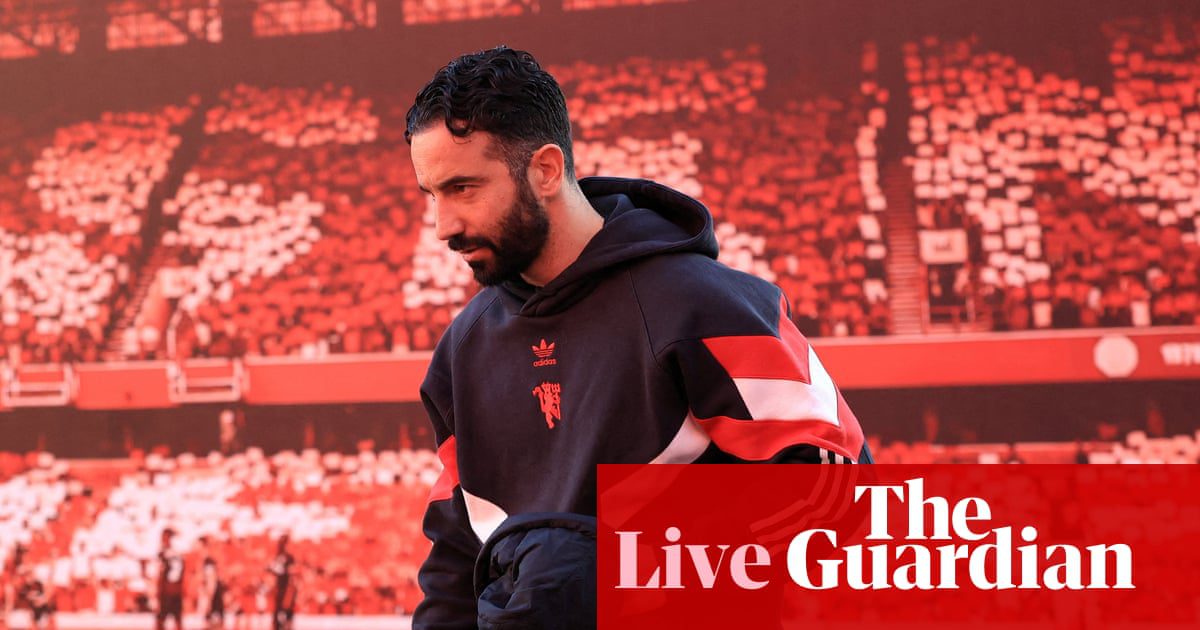
The abrupt departure of Ruben Amorim as Manchester United’s manager marks a critical leadership transition for the prominent football club. This event, akin to a significant C-suite executive change in a publicly traded entity, immediately introduces operational uncertainty and raises pertinent questions for stakeholders regarding future strategic direction and asset valuation.
Retail Investors, Swing Traders, Long-term Investors, and Finance Professionals must closely monitor such high-profile leadership shifts for their potential market signals. The instability impacts investor sentiment and influences perceptions of corporate governance and strategic execution within the sports entertainment sector.
Amorim’s 14-month tenure was characterized by a win ratio of less than 39% and an average of 1.24 points per Premier League game. Despite the club’s current sixth-place standing, these metrics suggest an underlying operational underperformance that ultimately led to the change.
This analysis further explores the short-term market reactions, medium-term strategic implications, and the long-term governance outlook for Manchester United following this unexpected managerial exit.
Key Data
| Metric | Ruben Amorim Tenure | Implication for Operations |
|---|---|---|
| Tenure Length | 14 Months | Short-term Leadership Instability |
| Win Ratio | <39% | Subpar Operational Performance |
| Points Per Game (PL) | 1.24 | Inefficient Performance Output |
| Current League Position | 6th (3 points off 4th) | Moderate Competitive Standing |
Detailed Analysis
The decision to terminate Ruben Amorim’s contract, after a 14-month tenure marked by perceived poor results and an increasingly strained relationship with the Manchester United hierarchy, resonates deeply within the investment community. Such a leadership change in a globally recognized sports franchise is often viewed through the lens of corporate governance and strategic realignment. For investors, managerial stability correlates directly with predictable operational output, brand strength, and ultimately, asset valuation. The friction over “major funds to bolster their squad” and the club’s “unwillingness to grant” them signifies a significant capital allocation dispute, a common flashpoint in corporate structures that can lead to management departures.
A detailed analysis of Amorim’s operational metrics reveals a win ratio of less than 39 percent and 1.24 points per game in Premier League matches, indicating suboptimal efficiency over his brief tenure. While the team was arguably at its “strongest point since his appointment” by sitting sixth in the Premier League and losing only one of his final eight games, the off-field issues and tensions with the hierarchy, particularly Jason Wilcox, Director of Football, proved decisive. This points to a deeper disconnect beyond immediate on-field results, suggesting fundamental governance and strategic misalignment within the INEOS-led management structure. The interim appointment of Darren Fletcher, followed by speculative reports linking Xavi, Oliver Glasner, Gareth Southgate, and Enzo Maresca to the permanent role, injects a period of heightened uncertainty and market speculation.
Comparing Manchester United’s recurrent managerial instability post-Sir Alex Ferguson to other top-tier sports organizations or even publicly traded companies reveals a pattern that often correlates with perceived higher risk. Frequent C-suite or senior operational leadership turnovers can erode long-term investor confidence, potentially impacting future revenue streams from sponsorships, merchandising, and even player valuations – key assets for a football club. The club’s stated rationale for the change—to achieve the “highest possible Premier League finish”—suggests an immediate focus on operational performance, yet the underlying issue of consistent strategic planning and executive alignment remains. [Suggested Matrix Table: Comparative Managerial Tenure and Strategic Stability among Top Global Sports Franchises]
For Retail Investors and Swing Traders, this period of leadership transition may present opportunities for short-term gains driven by speculative news cycles around potential managerial appointments. However, it also carries inherent risks due to market volatility. Long-term Investors and Finance Professionals should prioritize scrutinizing the quality of INEOS’s next appointment and their subsequent strategic declarations, particularly regarding capital expenditure on player recruitment and overall business development. Key indicators to monitor include the new manager’s strategic vision, any shifts in funding allocation, and the club’s sustained operational performance. A coherent and stable leadership strategy is crucial for restoring investor confidence and securing the long-term financial health and brand equity of Manchester United.
About the Author