Key Takeaways
Maharashtra rural poll verdict sees BJP emerge as single largest party with doubled councillors. Understand regional dynamics, Mahayuti’s sweep, and implications for upcoming urban elections.
Overview
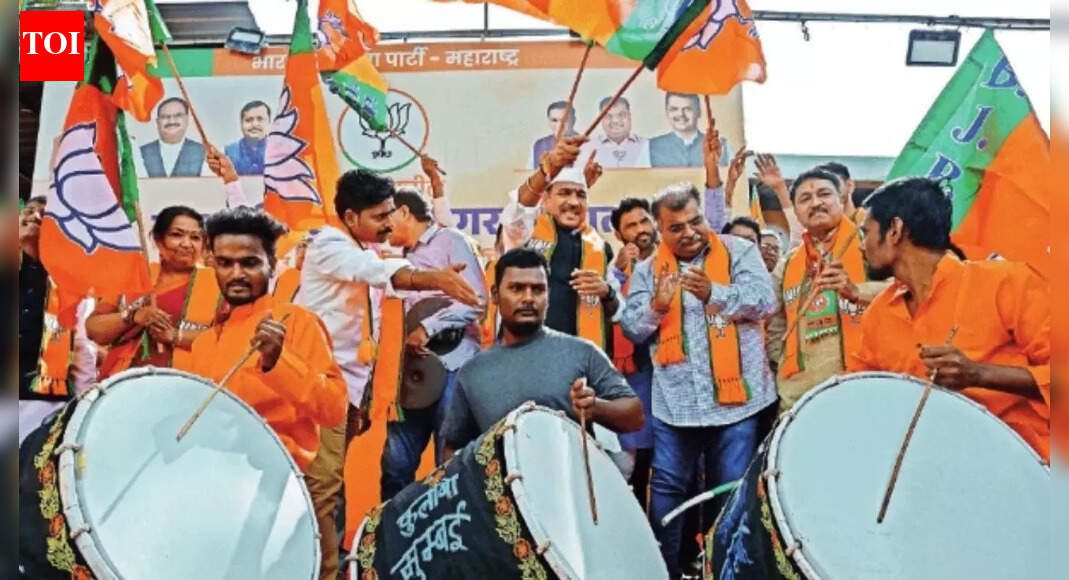
In a significant political development, the Bharatiya Janata Party (BJP) has emerged as the single largest party in the recent municipal council and nagar panchayat elections across Maharashtra. This outcome underscores a notable shift in rural political dynamics, positioning the BJP-led Mahayuti alliance favorably ahead of crucial urban polls.
The verdict is particularly relevant for News Readers, Policy Watchers, Informed Citizens, and Political Analysts, offering early insights into the prevailing sentiment across the state. It reflects the political temperature following significant legislative changes and local challenges, influencing future policy considerations.
Key metrics highlight BJP’s strength: their number of elected councillors reportedly doubled from 1,602 in 2017 to 3,125. The Mahayuti alliance secured over 75% of presidents’ posts, with BJP alone clinching 117 positions.
This decisive performance is widely seen as a crucial precursor to the upcoming municipal corporation elections, demanding close attention from all political stakeholders and observers.
Key Data
| Party/Alliance | 2017 Councillors | Current Councillors | Presidents’ Posts Won |
|---|---|---|---|
| BJP | 1,602 | 3,125 | 117 |
| Mahayuti (overall) | N/A | N/A | >75% of total |
| NCP (Ajit Pawar) – Pune Dist. | N/A | N/A | 10 of 17 |
| Shiv Sena (Shinde) – Pune Dist. | N/A | N/A | 4 of 17 |
| BJP – Pune Dist. | N/A | N/A | 3 of 17 |
Detailed Analysis
The recent Maharashtra rural poll verdict marks a critical juncture in the state’s political landscape. Local body elections, though often seen as secondary to state or national polls, serve as vital barometers of grassroots sentiment and political organizational strength. Historically, these elections have been fiercely contested, reflecting localized issues and the influence of regional political strongholds. This particular cycle gained heightened significance as it was the first time all councils and panchayats in Maharashtra held simultaneous elections following the splits within the Shiv Sena and Nationalist Congress Party (NCP), reshaping traditional alliance structures and voter loyalties.
Analysis of the results reveals a nuanced picture beneath the Mahayuti’s overall sweep. While the BJP solidified its position as the single largest party, expanding its footprint into areas traditionally held by the Shiv Sena, Peasants and Workers Party (PWP), and NCP in Mumbai and Konkan regions, the Congress managed to impede the BJP’s progress in several municipal councils and nagar panchayats within Vidarbha. Western Maharashtra, known as the state’s ‘sugar bowl,’ saw the BJP navigate internal competition even within its Mahayuti alliance partners, while the Congress and NCP (SP) struggled to maintain their traditional dominance. Deputy Chief Minister Eknath Shinde’s faction of Shiv Sena emerged as the second-largest party, demonstrating an expanded reach beyond the Mumbai Metropolitan Region. North Maharashtra, particularly Jalgaon district, notably re-affirmed its support for the BJP. However, high-profile BJP hopes of leveraging the influence of senior politicians like former Chief Minister Ashok Chavan and the Munde cousins did not fully materialize in Marathwada, indicating localized resistance or differing political dynamics.
Comparing these results to the 2017 local body elections, the BJP’s growth is significant, with its elected representatives’ numbers doubling, as stated by Deputy Chief Minister Devendra Fadnavis. This surge suggests a successful strategy in penetrating rural Maharashtra, moving beyond its traditionally urban support base. The Mahayuti’s comprehensive victory provides a crucial benchmark against the fragmented opposition, particularly after the political realignments caused by the Shiv Sena and NCP splits. These polls were also conducted against a backdrop of public discontent, with the government facing criticism for its handling of devastating floods that ruined kharif crops and allegations from the opposition regarding languishing public works due to fund paucity, potentially linked to populist schemes. The state election commission faced accusations of mismanagement from Congress state chief Harshwardhan Sapkal, though the state poll commissioner Dinesh Waghmare affirmed the smooth conduct of counting. [Suggested Matrix Table: Comparison of party performance in key regions including Vidarbha, Western Maharashtra, Mumbai/Konkan, North Maharashtra, and Marathwada for Current Polls vs. Previous Trends, detailing seats won or strongholds.]
For News Readers, Policy Watchers, Informed Citizens, and Political Analysts, the Maharashtra rural poll verdict offers critical insights into the evolving political power dynamics. The Mahayuti’s statewide sweep, particularly the BJP’s deepened penetration into rural areas, suggests a strong mandate that could influence future policy decisions, especially concerning agriculture and local governance. The upcoming municipal corporation elections, slated for January 15, will serve as the immediate next major indicator. Stakeholders should monitor party strategies in these urban polls closely, as they will confirm whether the rural momentum translates into broader electoral success. The performance of both the Eknath Shinde-led Shiv Sena and the Ajit Pawar-led NCP within the Mahayuti will also be crucial for understanding the internal power balance within the ruling alliance and its implications for future governance and policy implementation.
About the Author