Donald Trump has again said that the US has “total control over the strait of Hormuz,” adding that Iran’s leadership was so hobbled by infighting that it was unclear who was in charge.
But the US president’s claim seemed questionable in the face of the seizure of two container ships by Iranian commandos and a US report warning it could take six months to clear the strait of mines.
Trump’s comments on Thursday came after US special forces boarded a stateless oil tanker in the Indian Ocean which the Pentagon claimed was carrying Iranian crude oil.
The military operation took place hours after Iran’s seizure of the two container ships, with the two sides continuing to impose competing blockades on the strait, keeping global oil prices at about $100 (£74) a barrel.
While US forces have proved capable of stopping ships coming out of Iranian ports, they have still not demonstrated the capacity to open the strait to vessels coming from ports in allied Gulf states.
The impact of the dual blockades has been compounded by the presence of sea mines in the strait. In a briefing to Congress, the Pentagon warned it could take up to six months to clear all the suspected mines from the sea routes, according to a report in the Washington Post.
The report said approximately 20 mines are thought to have been placed in the strait, some deposited by small boats, and others manoeuvred into place remotely, making them harder to locate. The Pentagon’s warning suggested that the impact of the war on the global economy could linger long after any peace deal was agreed.
A Pentagon spokesperson described the report as “inaccurate” but did not provide specific objections. In his Truth Social post, Trump said that US minesweepers were working “at a tripled up level” and that he had ordered the US navy “to shoot and kill” any boat mining the waterway. “There is to be no hesitation,” said Trump.
Fatih Birol, the head of the International Energy Agency, said in a CNBC interview that the world was facing “the biggest energy security threat in history”.
Iran has refused to attend peace talks in Pakistan, a snub that Trump attributed to a lack of consensus in Tehran on negotiating strategy. The Iranian regime said it would not attend talks while the US was violating a Pakistani-brokered ceasefire, in particular during the imposition of a naval blockade.
Trump agreed to an “indefinite” extension of the ceasefire on Tuesday and, despite the suspension of talks, he claimed on Thursday that the US had a firm grip on events in the strait of Hormuz, the narrow channel between the Gulf and the Indian Ocean through which a fifth of the world’s oil and liquified fossil gas is transported.
“We have total control over the strait of Hormuz. No ship can enter or leave without the approval of the United States navy. It is ‘Sealed up Tight,’ until such time as Iran is able to make a DEAL!!!” Trump said in a Truth Social post on Thursday.
The president said he agreed to the extension of the truce to give Iranian factions time to agree on a negotiating stance and claimed there was disarray among their leadership.
“Iran is having a very hard time figuring out who their leader is!” Trump said, adding that the rift was between “hardliners” and “moderates”.
Iran’s current supreme leader, Mojtaba Khamenei, appears not to be as all-powerful as his father, Ali, who was killed by Israeli missiles in the first seconds of the surprise US-Israeli joint attack on 28 February which triggered the current conflict.
Mojtaba Khamenei was also seriously wounded in the attack, but the New York Times on Thursday cited senior Iranian officials who claim that he remains “mentally sharp and engaged”.
“One leg was operated on three times and he is awaiting a prosthetic. He had surgery on one hand and is slowly regaining function. His face and lips have been burned severely, making it difficult for him to speak, the officials said, adding that, eventually, he will need plastic surgery,” the newspaper reported.
The Islamic Revolutionary Guard Corps (IRGC) meanwhile appear to have greater influence in a more collective leadership, making it more hawkish overall, but it is far from clear that the regime is riven by policy disagreements.
The IRGC naval command said that the two detained ships – the Greek-owned Epaminondas and the Panamanian-flagged MSC Francesca – had endangered maritime security “by operating without the necessary permits and tampering with navigation systems”, suggesting that they had turned off their location transponders.
Reports from the region suggested the container ships were part of a larger convoy of vessels seeking to exit through the strait of Hormuz after being trapped in the Gulf for the duration of the war.
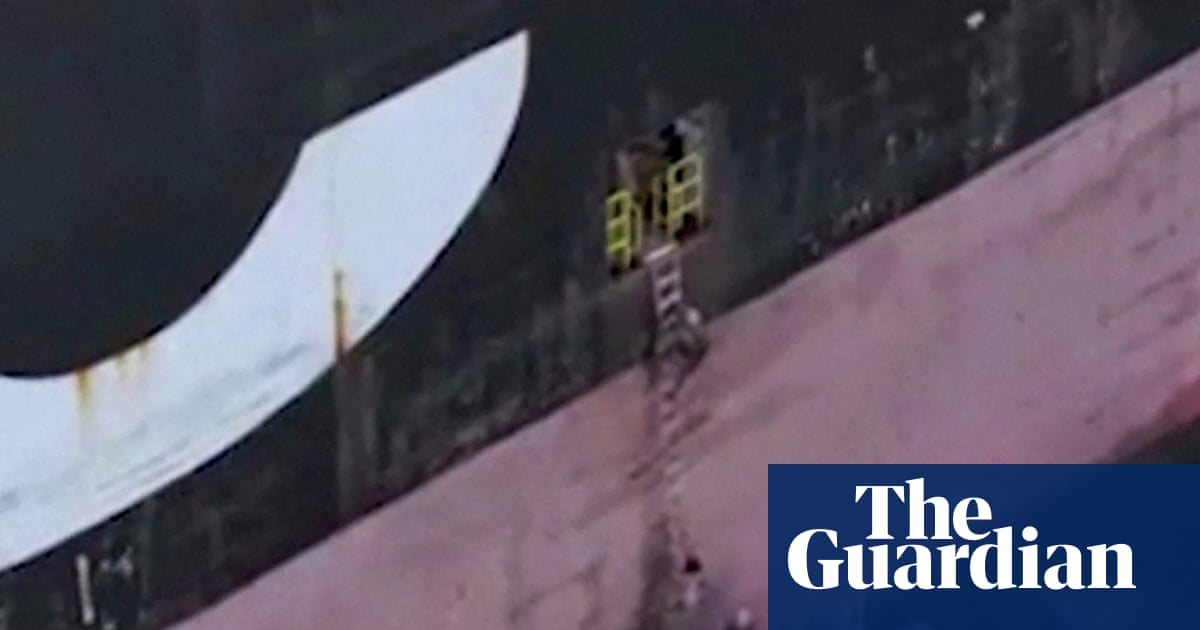
Iran published footage on Thursday that appeared to show Iranian commandos pulling alongside the Francesca and climbing on board using rope ladders. On the same day, in an illustration of a growing propaganda war, the US released footage of what it said were US special forces descending on ropes from helicopters on to the deck of the stateless M/T Majestic X.
The closure of the strait puts intense strain on the Iranian economy but, by restricting the global supply of oil, gas and petrochemicals including fertiliser, it also represents a political threat to Trump, in the form of higher petrol prices and general inflation in the runup to US midterm elections in November.
Source: https://www.theguardian.com/us-news/2026/apr/23/trump-claims-us-has-total-control-over-strait-of-hormuz-as-iran-seizes-two-container-ships
About the Author