Key Takeaways
Mahayuti secured decisive wins in Maharashtra local body polls, strengthening BJP’s position. Analyze results, political shifts, and future election implications.
Market Introduction
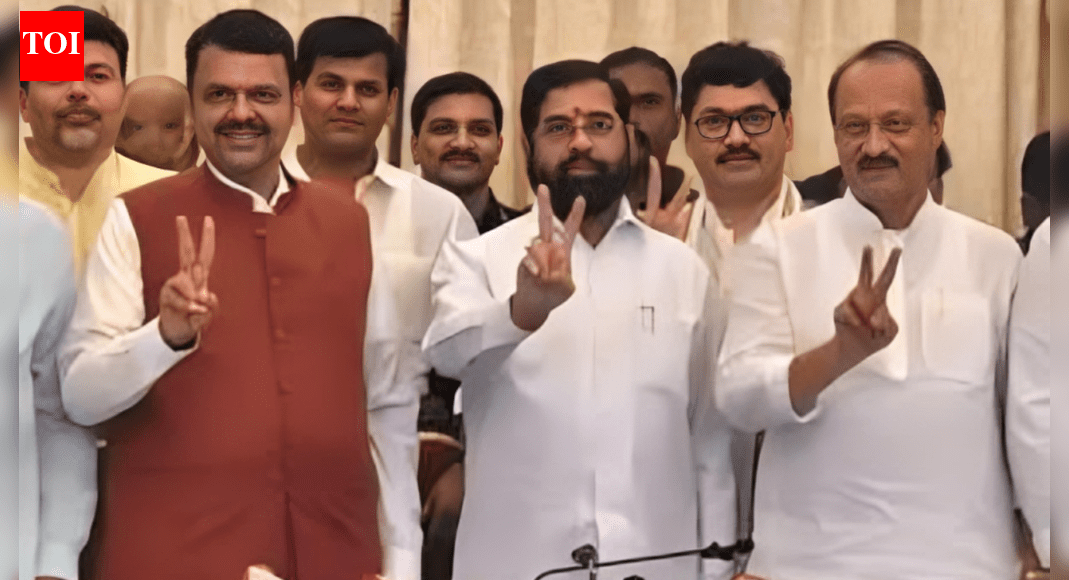
The BJP-led Mahayuti alliance delivered a sweeping verdict in the first phase of Maharashtra’s local body polls, securing presidents’ posts in an overwhelming 207 out of 288 municipal councils and nagar panchayats. This outcome mirrors the alliance’s robust performance in previous assembly elections, signaling a significant consolidation of power for the ruling coalition in India’s key western state.
This decisive win holds substantial implications for India Politics, particularly for the state’s governance and upcoming electoral battles. Political analysts view these results as a critical litmus test following the splits within Shiv Sena and Nationalist Congress Party (NCP), and a potential indicator for the impending municipal corporation polls in January.
Key metrics highlight the scale of Mahayuti’s victory: BJP emerged as the largest gainer with over 117 local bodies, Eknath Shinde-led Shiv Sena secured 53 posts, and Ajit Pawar’s NCP claimed 37. In contrast, the Maha Vikas Aghadi (MVA) coalition was reduced to just 44 posts statewide.
The following analysis delves into the geographical nuances of these Maharashtra local body polls results, their immediate and long-term impacts on key political stakeholders, and the underlying factors that shaped voter sentiment across various regions, providing context for News Readers, Policy Watchers, Informed Citizens, and Political Analysts.
Data at a Glance
| Party/Alliance | Presidents’ Posts Won | Share of 288 Posts |
|---|---|---|
| Mahayuti Alliance (Total) | ~207 | ~71.9% |
| Maha Vikas Aghadi (Total) | 44 | ~15.3% |
| Bharatiya Janata Party (BJP) | >117 | ~40.6% |
| Eknath Shinde’s Shiv Sena | 53 | ~18.4% |
| Ajit Pawar’s NCP | 37 | ~12.8% |
| Indian National Congress | 28 | ~9.7% |
| Sharad Pawar’s NCP (SP) | 7 | ~2.4% |
| Uddhav Thackeray’s Shiv Sena | 9 | ~3.1% |
In-Depth Analysis
Local body polls in India frequently serve as crucial barometers for the broader political landscape, offering insights into public sentiment ahead of larger electoral contests. The recent first phase of Maharashtra local body polls, with results declared on Sunday after polling on December 2 and 20, is no exception. This election was particularly significant as it represented the first statewide civic exercise conducted after the consequential splits within both the Shiv Sena and the Nationalist Congress Party (NCP), reshaping the political alignment in Maharashtra. Historically, such local elections provide ground-level feedback on government policies and opposition effectiveness, setting a crucial precedent for future state and national elections. This particular outcome arrived amidst public discontent over flood-hit kharif crops and opposition allegations regarding the diversion of funds to populist schemes, factors that typically energize voter dissent.
The Mahayuti alliance, spearheaded by the BJP, secured an unequivocal triumph, claiming presidents’ posts in approximately 207 of the 288 municipal councils and nagar panchayats. This performance closely mirrored its previous assembly election success. Within the alliance, the BJP itself emerged as the preeminent force, winning over 117 local bodies, thereby solidifying Chief Minister Devendra Fadnavis’s standing. Fadnavis emphasized the scale of this victory, noting that the number of elected representatives had doubled compared to 2017, marking it as the largest local election win for any party in the last 25 years. Eknath Shinde’s faction of Shiv Sena demonstrated its expanding influence beyond the Mumbai Metropolitan Region (MMR), securing 53 posts and finishing second statewide, while Ajit Pawar’s NCP faction contributed 37 posts to the Mahayuti’s tally. Conversely, the Maha Vikas Aghadi (MVA) was significantly diminished, managing only 44 posts, with Congress winning 28, Sharad Pawar-led NCP (SP) seven, and Uddhav Thackeray-led Shiv Sena nine. Despite a statewide setback, the Congress did manage to halt BJP’s advances in select parts of Vidarbha, indicating localized pockets of resistance. BJP also made inroads in Mumbai and Konkan, traditionally strongholds of the Shiv Sena and NCP.
A comparative look at the election results reveals stark contrasts in regional performance and a clear consolidation of power within the Mahayuti. While North Maharashtra strongly backed the BJP, particularly under minister Girish Mahajan in Jalgaon, anticipated gains for the MVA in Marathwada, led by figures like Ashok Chavan and the Munde cousins, did not materialize. The Vidarbha region presented a fractured verdict, where Congress succeeded in several councils from Chandrapur to Wardha, yet BJP maintained dominance in Nagpur, Gadchiroli, and parts of Bhandara. A notable specific outcome was in the Baramati region, where Ajit Pawar-led NCP secured 35 of 41 seats, replicating the undivided NCP’s 2017 performance, contrasting sharply with Sharad Pawar’s NCP (SP) winning only one seat. This regional disparity underscores the complex interplay of local leadership, specific issues, and shifting loyalties post-split. [Suggested Matrix Table: Comparison of Party Performance by Region (Mahayuti vs. MVA seats in Vidarbha, Western Maharashtra, North Maharashtra, Baramati)]
For News Readers, Policy Watchers, Informed Citizens, and Political Analysts, these Maharashtra local body polls outcomes carry several critical implications. Firstly, the results reinforce the stability and perceived strength of the Mahayuti government, potentially enabling a more aggressive push on its policy agenda. Secondly, for political analysts, the performance of the Shinde and Ajit Pawar factions confirms their consolidation as undisputed leaders of their respective Shiv Sena and NCP segments, validating their alignment with BJP. The outcome also sets the stage for the crucial municipal corporation polls due on January 15, offering a glimpse into potential strategies and voter behavior. Stakeholders should monitor whether the MVA can effectively address its organizational weaknesses and capitalize on issues like farm distress, which they reportedly failed to do in this phase. The political dynamics in Maharashtra will continue to evolve, with particular attention on leadership within the MVA and the BJP’s ability to maintain its broad appeal across diverse regions amidst ongoing policy challenges.
About the Author