Key Takeaways
The apprehension of Nicolás Maduro sparks a global debate on international law and US foreign policy. Explore legal questions and diplomatic implications.
Overview
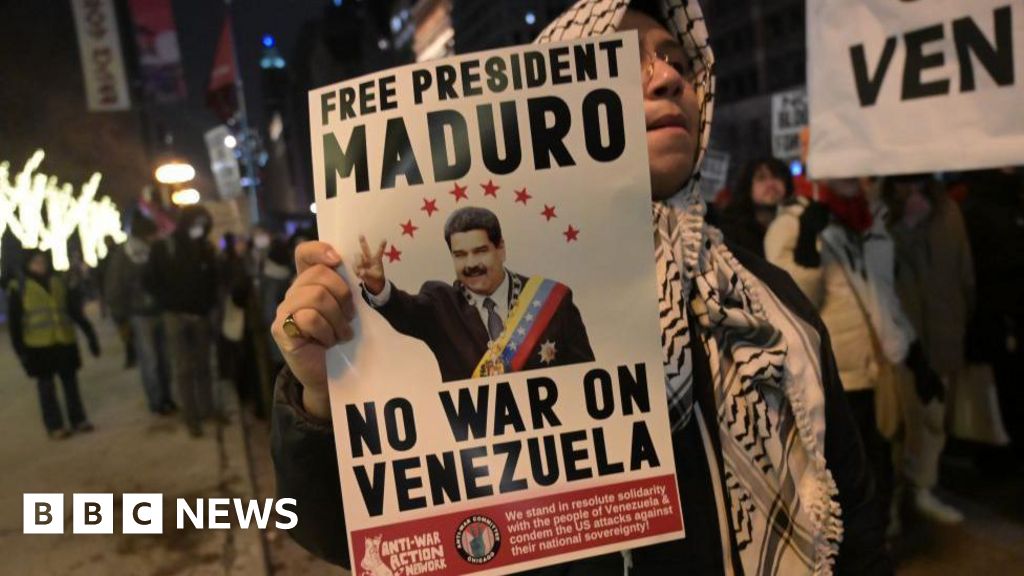
The recent apprehension of Nicolás Maduro, the Venezuelan president, by US federal agents and his subsequent appearance in a New York court has ignited a complex debate surrounding international law and national sovereignty. This dramatic action by the Trump administration, labeling it a “law enforcement function,” has brought long-standing accusations of narco-terrorism against Maduro to a head.
For News Readers, Policy Watchers, Informed Citizens, and Political Analysts, this event highlights the intricate legal grey areas that arise when one sovereign nation takes unilateral action within another’s borders. The international law implications, particularly concerning the UN Charter’s prohibition on the use of force, are under intense scrutiny globally.
Maduro was transported to the US to “face justice” for alleged large-scale narcotics trafficking, while international law experts like Luke Moffett argue the operation was “completely illegal.” Maduro has since pleaded not guilty to the charges.
The legal challenges to this operation, both domestically and internationally, will define the immediate and future discourse on extraterritorial law enforcement and diplomatic norms.
Detailed Analysis
The sudden and forceful removal of Venezuelan President Nicolás Maduro to face charges in a US court represents a significant moment in contemporary international relations, drawing sharp focus on the delicate balance between national security interests and established international legal frameworks. This dramatic development, reminiscent of past controversial interventions, underscores a persistent tension regarding the scope of a nation’s jurisdiction over foreign leaders accused of transnational crimes. The US government maintains its actions were legally justified, citing a revised indictment against Maduro for “narco-terrorism” and his alleged role in enabling massive cocaine shipments into the US, destabilizing the region, and contributing to America’s drug crisis. Attorney General Pam Bondi explicitly stated, “All personnel involved acted professionally, decisively, and in strict accordance with US law and established protocols.” However, this assertion faces considerable opposition from international legal scholars and numerous political observers worldwide, setting the stage for a protracted legal and diplomatic battle.
At the core of the controversy lies the interpretation of international law, particularly the United Nations Charter, which generally prohibits member states from threatening or using force against other states, with exceptions for self-defense against imminent armed attack or UN Security Council approval. Experts like Professor Luke Moffett from Queen’s University Belfast School of Law contend that a military operation conducted without UN Security Council authorisation, to apprehend an individual for drug-trafficking offences – typically considered a law enforcement matter, not an act of war – constitutes a violation of these foundational principles. Milena Sterio, an international criminal law expert at Cleveland State University College of Law, further articulated that a country cannot unilaterally enter another sovereign state to make arrests; the proper channel for such actions is through extradition processes. Maduro’s legal team has already signaled their intent to challenge the legality of his capture and transfer from Caracas to New York, underscoring the deep divisions in legal interpretation. This raises critical questions about state sovereignty and the boundaries of judicial reach.
A historical parallel frequently invoked in this context is the 1989 removal of Panamanian military leader Manuel Noriega by the George H.W. Bush administration, who was subsequently brought to the US on drug trafficking charges. An internal Justice Department memo from that era, authored by William Barr (who later served as Attorney General under Trump and initiated the original 2020 indictment against Maduro), argued for presidential authority to arrest individuals violating US law even if such actions contravene customary international law, including the UN Charter. This precedent highlights a recurring philosophical and legal debate within US policy circles regarding adherence to international treaties versus perceived national imperatives. While US courts have not definitively ruled on this specific point, legal scholars have criticized the memo’s reasoning. This ongoing legal ambiguity between presidential power, congressional war powers, and international obligations complicates the domestic legal landscape for such operations, even as US federal courts assert jurisdiction over a defendant once they are physically present, regardless of the circumstances of their arrival.
For News Readers, Policy Watchers, Informed Citizens, and Political Analysts, the Maduro case offers a multifaceted lens through which to examine the evolving dynamics of global governance, sovereignty, and the enforcement of international justice. In the short term, monitoring the legal challenges raised by Maduro’s defense team will be crucial, as their arguments could set new precedents or reinforce existing ones regarding the limits of extraterritorial apprehension. Medium-term implications include potential diplomatic fallout and increased scrutiny on US foreign policy tactics, particularly from nations concerned about violations of sovereignty. Long-term, this event may reignite discussions within international bodies about reforming or clarifying statutes governing cross-border law enforcement actions and extradition. Stakeholders should observe how this trial impacts Venezuela’s political stability and its relations with other nations. Key metrics to watch include statements from international legal bodies, UN member states’ reactions, and any developments in the US judicial process concerning the method of Maduro’s capture. This case underscores that while nations pursue justice, the methods employed are often as significant as the accusations themselves, shaping the future of global affairs.
About the Author