Key Takeaways
India and New Zealand seal a landmark Free Trade Agreement, hailed by PM Luxon. Explore policy implications, economic benefits, and future bilateral ties for 2025.
Overview
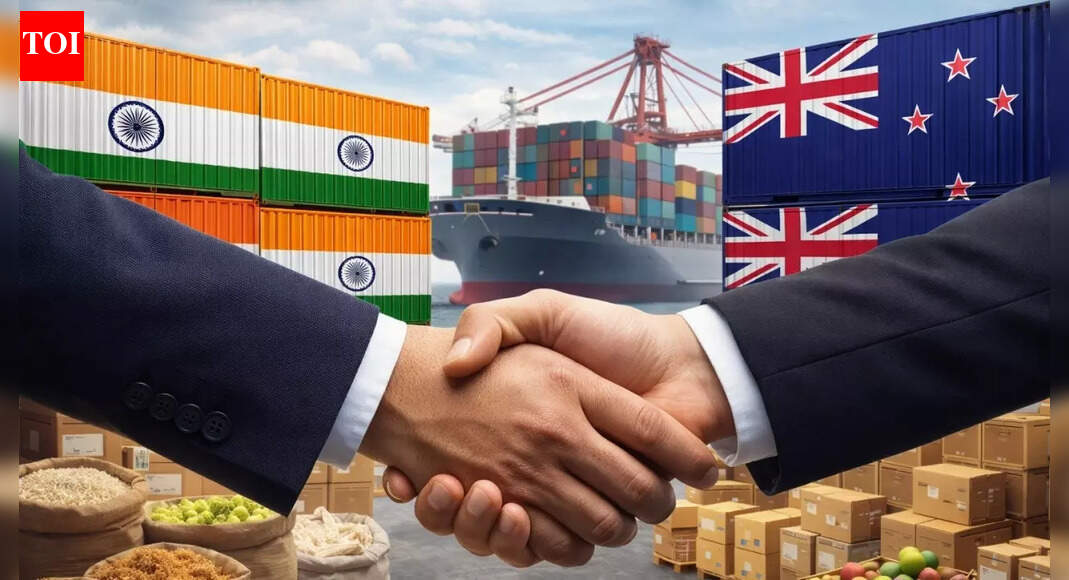
New Zealand Prime Minister Christopher Luxon on Saturday hailed a new free trade agreement (FTA) with India, fulfilling a key government promise. He emphasized this “landmark deal” would generate “more jobs, higher incomes and more exports” by opening access to India’s 1.4 billion consumer market, a significant step for the India-New Zealand Free Trade Agreement.
This pact is crucial for policy watchers. Negotiations concluded rapidly within nine months, reflecting strong political will from both PM Modi and Luxon to deepen bilateral economic relations and broader global affairs.
Under the agreement, tariffs on 95% of New Zealand’s exports to India will be eliminated or reduced. Notably, 57% become duty-free immediately, rising to 82% upon full implementation—among India’s highest FTA coverages.
Described as historic and mutually beneficial, this pact aims to catalyze trade, investment, and innovation. Further analysis details its comprehensive policy implications and stakeholder impacts.
Key Data
| Trade Metric | Current/Initial State | Upon Full Implementation | Significance |
|---|---|---|---|
| Total Tariff Coverage | N/A (Pre-Agreement) | 95% Eliminated/Reduced | One of India’s highest FTA coverages |
| Duty-Free Exports | 57% (Day One) | 82% (Full Implementation) | Significant immediate & phased market access |
| Negotiation Duration | March 2025 Start | 9 Months (Record Speed) | Reflects strong political will & shared ambition |
Detailed Analysis
The recent culmination of the India-New Zealand Free Trade Agreement represents a significant shift in India’s ongoing economic diplomacy. Historically, New Zealand sought closer economic integration with key Asian markets, and India, with its expanding economy, was a priority partner. This pact follows sustained diplomatic engagement, with negotiations commencing in March of this year. The swift nine-month conclusion, deemed a “record,” reflects an accelerated approach compared to previous complex trade discussions, underscoring potent political will. Prime Minister Luxon’s pledge to “Fixing the Basics. Building the Future” resonated through his commitment to securing this FTA within his first term, aligning with a broader policy imperative to boost New Zealand’s trade diversification.
At the core of this landmark agreement lies a substantial commitment to tariff liberalization. The pact stipulates that tariffs will be eliminated or significantly reduced on an impressive 95% of New Zealand’s exports to India. This figure is noteworthy as it represents one of India’s highest FTA coverage levels, signaling deep economic integration. Breaking down this coverage, 57% of these exports will immediately benefit from duty-free status from day one. This immediate impact aims to provide quick economic impetus. This duty-free proportion is set to rise significantly to 82% upon full implementation, with the remaining 13% subject to substantial reductions. Both Prime Ministers Modi and Luxon described the agreement as “historic, ambitious and mutually beneficial,” anticipating it will catalyze deeper trade, investment, and innovation.
The India-New Zealand Free Trade Agreement stands out against India’s broader bilateral trade pacts. Its 95% tariff coverage for New Zealand exports, with 57% immediate duty-free access rising to 82%, signals a more ambitious scope than some previous Indian agreements, indicating a readiness for deeper integration. This robust commitment underscores a strategic shift towards diversifying India’s economic partnerships. The rapid negotiation timeline also contrasts with the often-protracted nature of international trade talks, reflecting a streamlined diplomatic approach and shared urgency. This pact aligns with India’s “Act East” policy and New Zealand’s desire to strengthen Indo-Pacific ties, potentially setting a benchmark for future trade policy negotiations. [Suggested Matrix Table: Comparison of India’s FTAs by Tariff Coverage and Negotiation Duration]
For News Readers and Informed Citizens, the India-New Zealand Free Trade Agreement presents potential for tangible economic benefits. PM Luxon’s projection of “more jobs, higher incomes and more exports” suggests increased market access for New Zealand goods in India, and potentially competitive pricing for Indian consumers on certain imports. Specific product details remain undisclosed. Policy Watchers and Political Analysts should closely monitor implementation, especially how tariff reductions impact specific industries in both nations. Beyond trade, the pact’s emphasis on broader cooperation in defence, sports, education, and people-to-people ties indicates a multifaceted strategic partnership. Key metrics to monitor include detailed sector-wise impact assessments and further joint initiatives as this “new phase” unfolds, offering insights into India’s evolving global engagement strategy and trade policy.
About the Author