Key Takeaways
Legal challenge over Kennedy Center renaming raises questions of congressional authority and governance risk. Understand investment implications and regulatory precedents for 2026.
Overview
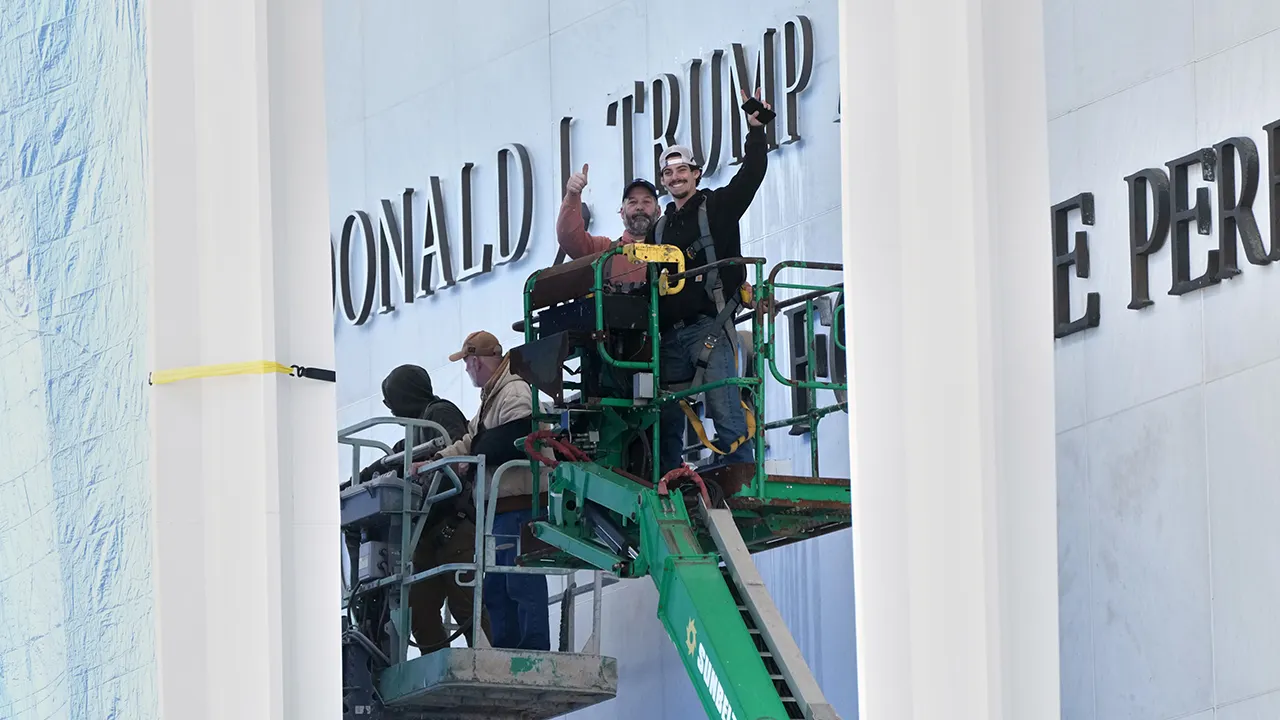
The ongoing legal challenge surrounding the proposed renaming of the John F. Kennedy Center for the Performing Arts to the “Trump-Kennedy Center” highlights critical aspects of regulatory oversight and governance risk that can indirectly influence investor sentiment and market stability. Ohio Democratic Rep. Joyce Beatty initiated a lawsuit, questioning the authority behind such a change, originally established by a 1964 act of Congress.
This dispute, set to unfold in courts, underscores the complexities of statutory interpretation and the insulation of national memorials from arbitrary modifications. For finance professionals, examining such legal precedents offers a unique lens for assessing broader themes of regulatory clarity and long-term investment safeguards within both public and, by extension, private sector entities.
Key legal facts involve a 1964 congressional act naming the center and 20 U.S.C. 3, which prohibits “additional memorials” without specific exceptions. The lawsuit challenges whether a name change falls under this prohibition.
Investors should monitor the resolution for insights into the robustness of legislative intent and the implications for corporate governance and regulatory compliance across the Indian stock market and global investment landscapes.
Detailed Analysis
The dispute over the Kennedy Center’s renaming, while seemingly confined to political and cultural discourse, offers valuable insights for investors observing patterns of regulatory stability and governance structures. Historically, memorial designations by acts of Congress carry significant legal weight, often intended to be immutable. The Kennedy Center, established as the National Cultural Center in 1958 and renamed by Congress in 1964 as a living memorial, exemplifies this. Any deviation, such as the proposed “Trump-Kennedy Center” moniker, sparks a debate on congressional authority and the interpretation of existing statutes. For long-term investors and those focused on ESG (Environmental, Social, Governance) factors, understanding the robustness of governance frameworks—even in non-financial contexts—provides crucial signals about the predictability of legislative and administrative actions. Such events, while not directly impacting NSE or BSE indices, contribute to the broader perception of a stable regulatory environment, which is paramount for investment planning and risk assessment.
At the core of this challenge is 20 U.S.C. 3, which explicitly states, “no additional memorials or plaques in the nature of memorials shall be designated or installed in the public areas of the John F. Kennedy Center for the Performing Arts.” The statute provides specific exceptions for donor plaques and major contributions, suggesting a clear congressional intent to prevent other significant alterations, including a full name change. This legal precision acts as a “governance metric,” indicating the strength of the original legislative decree. From a financial analysis perspective, this statutory clarity mirrors the protective clauses often found in investment contracts or regulatory frameworks governing public utilities, aiming to safeguard foundational assets or operational mandates. The board’s action, if upheld without congressional ratification, could set a precedent for unilateral changes to congressionally designated assets, introducing an element of regulatory uncertainty that finance professionals typically flag as a potential risk factor.
Comparing this legal contention to broader governance trends, the challenge highlights the tension between administrative discretion and legislative intent. Similar debates emerge in publicly listed companies regarding changes to foundational charters or executive powers, where shareholder activism often pushes for adherence to established governance protocols. While no direct peer comparison in the Indian stock market context (NSE, BSE) is applicable given the unique nature of the Kennedy Center, the underlying principle of challenging perceived overreach by an administrative body against a clear statutory mandate resonates across various investment landscapes. This scenario could be seen as a “stress test” for governance structures, similar to how market volatility tests the resilience of an investment portfolio. The lack of express statutory language prohibiting “name changes” versus “additional memorials” creates a legal ambiguity that introduces a non-quantifiable but tangible form of “regulatory risk,” demanding close monitoring by finance professionals for its interpretative outcome.
For Retail Investors, Swing Traders, and Long-term Investors, this situation, while not offering direct trading signals, serves as an invaluable case study in regulatory risk assessment and the importance of robust governance. The potential for prolonged litigation, noted by legal experts, underscores the costs and uncertainties associated with legal disputes. Finance Professionals should observe how this challenge resolves, as it could inform their understanding of judicial interpretations of legislative authority. The outcome may set precedents for how public assets, potentially involving future Public-Private Partnerships (PPPs), are governed. Key events to monitor include judicial rulings and any potential congressional intervention to clarify or ratify the name change. This case reinforces that the predictability of legal and governance frameworks is a silent but significant factor in maintaining overall market confidence and investment stability, even for issues far removed from daily stock price movements.
About the Author