Key Takeaways
CES 2026 highlights robotics investment opportunities. Analyze Dyna Robotics’ $120M Series A & Unitree’s geopolitical risks for informed investment decisions.
Overview
CES 2026 unequivocally signaled a pivotal moment for robotics investment, highlighting significant capital interest and technological leaps poised to reshape global industries. The event underscored strategic backing for burgeoning robotics firms from tech giants, affirming robust confidence in the sector’s growth trajectory, a critical development for the Stock Market India landscape.
These advancements offer crucial insights for Retail Investors, Swing Traders, Long-term Investors, and Finance Professionals seeking emerging market opportunities. Robotics innovation promises substantial efficiency gains and new revenue streams across manufacturing, logistics, and service sectors, demanding careful financial analysis for informed investment decisions.
Notably, Dyna Robotics successfully secured a formidable $120 million Series A round from key players including Nvidia’s NVentures, Amazon, LG, Salesforce, and Samsung. Simultaneously, Unitree, a prominent Chinese manufacturer, faces increasing scrutiny over potential ties to the Chinese military, introducing palpable geopolitical risk into the sector’s outlook.
This article provides an in-depth financial analysis of these evolving robotics trends, examining market implications, stakeholder risks, and strategic avenues for investment within this dynamic global landscape, crucial for participants tracking the NSE and BSE.
Key Data
| Metric | Pre-Series A | Post-Series A | Impact |
|---|---|---|---|
| Funding Round | Seed/Early Stage | Series A | Significant Capital Infusion |
| Total Capital Raised | Undisclosed | $120 Million | ▲ Growth Funding |
| Key Investors | Early Angels/VCs (Implied) | Nvidia’s NVentures, Amazon, LG, Salesforce, Samsung | ▲ Strategic Backing & Validation |
Detailed Analysis
The global robotics market is experiencing a profound transformation, evolving rapidly from academic showcases to concrete, commercially viable solutions impacting industrial automation and diverse service economies. CES 2026 emerged as a critical barometer, revealing an acceleration in practical robotics applications, a stark contrast to earlier years dominated by experimental displays. Historically, robotics adoption remained largely niche; however, propelled by exponential advancements in AI, sophisticated sensor technology, and enhanced manipulation capabilities, these machines now penetrate diverse sectors. This evolution promises substantial operational efficiency gains for businesses and creates new avenues for investment, fundamentally reshaping competitive landscapes across the NSE and BSE. The production-ready debut of Boston Dynamics’ Atlas humanoid particularly signifies a milestone in scalable robotics, poised to impact logistics, manufacturing, and hazardous environments, representing a crucial development for investors monitoring long-term growth.
Dyna Robotics presents a compelling financial profile, having recently secured a robust $120 million Series A funding round. This significant capital infusion came from a syndicate of strategic investors including Nvidia’s NVentures, Amazon, LG, Salesforce, and Samsung. Such substantial backing not only provides crucial growth capital but also critically validates Dyna Robotics’ advanced manipulation models, exemplified by its robotic arms efficiently folding laundry for key hotel and factory partners such as Monster Laundry. For Long-term Investors, this signals a high-growth private entity with robust commercial deployment, hinting at significant future valuation potential. Conversely, Unitree, a major Chinese manufacturer renowned for its impressive humanoid bots, faces considerable geopolitical risk. Scrutiny over its potential ties to the Chinese military introduces material concerns for Retail Investors and institutional funds regarding ethical investing, sanctions compliance, and market access, potentially impacting its long-term viability and growth trajectory.
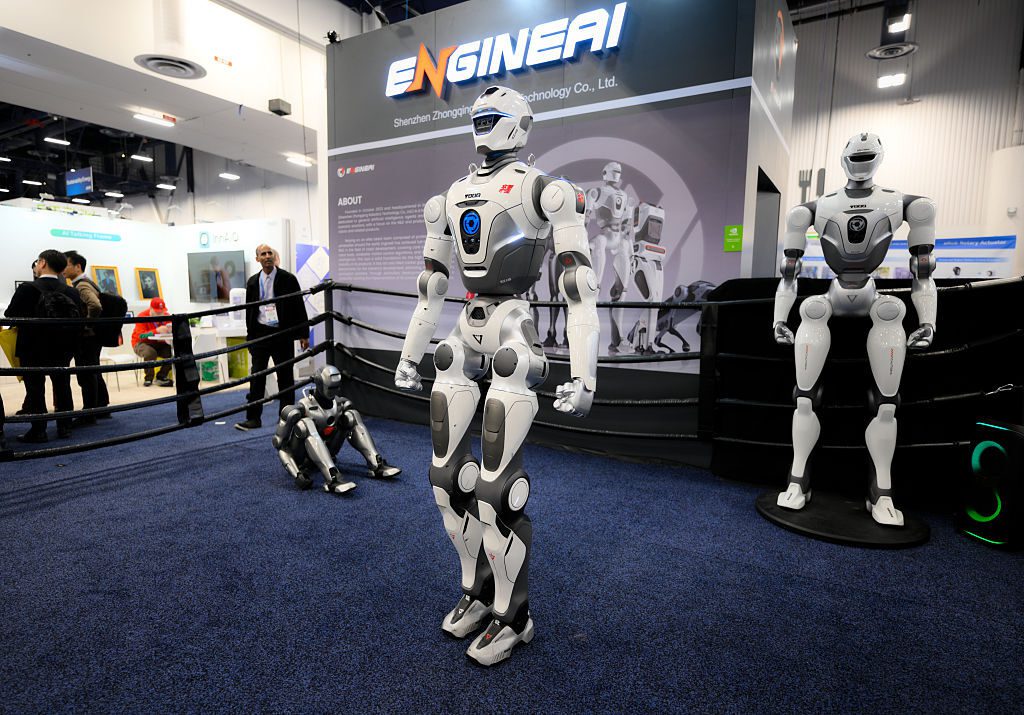
A comparative analysis of key players reveals distinctly divergent strategies shaping the robotics investment landscape. Dyna Robotics’ substantial Series A funding from a consortium including Nvidia, Amazon, LG, Salesforce, and Samsung exemplifies a model focused on specialized, commercially deployed solutions, rigorously validated by strategic industry backing. This approach contrasts sharply with established players like LG’s internal CLOid home robot initiative, representing an organic entry into consumer automation. Chinese firms such as Sharpa, EngineAI, Galbot, and Unitree primarily highlight technological prowess across diverse applications; Unitree, in particular, continues to face scrutiny over its potential state affiliations. This bifurcated model—characterized by Western venture-backed, enterprise-focused innovation versus state-supported Chinese technological development—presents distinct risk-reward profiles for Swing Traders and Finance Professionals. The multi-corporate backing for Dyna additionally signals a market trend where leading tech giants actively acquire specialized robotics capabilities, often offering clear exit strategies and valuation benchmarks for early-stage investors.
For Retail Investors and Swing Traders, the burgeoning robotics sector offers substantial high-growth potential but also inherently comes with increased volatility. Monitoring strategic investments, such as Dyna Robotics’ Series A, provides crucial signals for identifying future market leaders or potential acquisition targets within this dynamic space. Long-term Investors should closely track commercial deployment success, particularly in high-demand sectors like hospitality, retail, and healthcare, to gauge real-world adoption and revenue generation. Key risks for the sector include escalating geopolitical tensions, which could severely impact firms with state affiliations like Unitree, potentially leading to regulatory hurdles or market restrictions. Intense competition, intellectual property disputes, and overall market adoption rates are paramount considerations. Investors should also diligently monitor advancements in AI integration, the performance of critical component suppliers, and M&A activity, as larger tech entities continue to seek to integrate advanced automation capabilities. The robotics sector, though still nascent in its broadest commercial deployment, is unequivocally poised to be a significant long-term driver of productivity and economic restructuring, warranting continuous and detailed financial analysis.
About the Author