Key Takeaways
US strikes capture Venezuela’s President Maduro, sparking international condemnation. Explore the geopolitical ramifications, stakeholder reactions, and future policy implications for global stability.
Overview
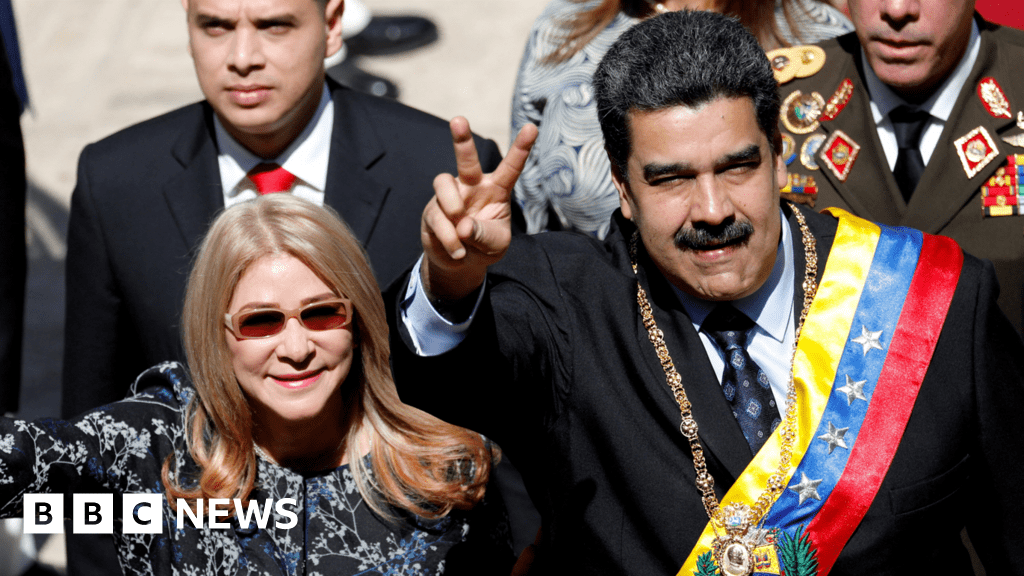
The geopolitical landscape shifted dramatically as the United States announced the capture of Venezuela’s President Nicolas Maduro following a large-scale strike on the South American nation. This unprecedented military operation, confirmed by US President Donald Trump, marks a critical escalation in long-standing tensions between Washington and Caracas.
This development is of immense significance for News Readers, Policy Watchers, Informed Citizens, and Political Analysts, as it challenges established norms of international law and sovereignty. The intervention by US forces raises questions about future global interventions and the role of international bodies in mediating such conflicts.
Reports from Caracas indicated explosions across the capital in the early hours of Saturday, hitting military bases like Fuerte Tiuna. The Venezuelan government has declared a national emergency and demanded immediate proof of Maduro’s life and his wife, First Lady Cilia Flores.
As the international community reacts with a mix of condemnation and caution, the immediate focus shifts to President Trump’s upcoming press conference for further details, and the evolving policy implications of these US Venezuela strikes.
Key Data
| Stakeholder | Key Claim / Accusation | Stance on US Action |
|---|---|---|
| United States | Maduro involved in drug-smuggling, illegitimate leader; operation to protect arrest warrant execution. | Successful, brilliant operation (Trump) |
| Venezuela | US threatening international peace/stability; attempt to seize oil/minerals; criminal attack. | Extremely serious military aggression; demands proof of life |
| Russia | Act of armed aggression; deeply concerning and condemnable. | Condemns US action |
| Iran | Flagrant violation of national sovereignty. | Condemns US action |
| Colombia | Assault on the sovereignty of Latin America. | Condemns US action |
| Cuba | Criminal attack. | Condemns US action |
| Spain | Calls for de-escalation; action in accordance with international law. | Calls for de-escalation |
| Germany & Italy | Closely monitoring the situation. | Monitoring |
Detailed Analysis
The United States’ confirmed military strikes on Venezuela and the subsequent capture of President Nicolas Maduro represent a profound shift in international relations, potentially setting a new precedent for foreign policy interventions. Historically, US-Venezuela relations have been fraught with tension, particularly since the rise of Hugo Chávez’s socialist government. Washington has long accused Maduro’s regime of human rights abuses, undermining democracy, and involvement in drug trafficking. Maduro, in turn, has consistently framed US actions as imperialistic attempts to control Venezuela’s vast natural resources, especially its oil reserves. The recent escalation saw the US imposing sanctions and striking boats in the Caribbean allegedly used for drug transport, intensifying the diplomatic and economic pressure leading up to this direct military action.
Details regarding the operation remain limited, but the US President confirmed that a large-scale strike culminated in the capture of Maduro and his wife, Cilia Flores, who were subsequently flown out of the country. According to US news partner CBS, the operation involved the US Army’s Delta Force, the military’s top counter-terrorism unit. Republican Senator Mike Lee indicated that the strikes aimed to protect those executing an arrest warrant for Maduro, who faces criminal charges in the US. Simultaneously, Caracas experienced widespread explosions, particularly at military installations like Fuerte Tiuna and La Carlota airfield, causing power outages. Venezuela’s Vice-President Delcy Rodríguez has vociferously demanded proof of life for Maduro and Flores, while Defence Minister Vladimir Padrino López asserted the nation’s resolve to ‘resist’ foreign troops, reporting civilian casualties and property damage.
The international community’s response to the US Venezuela strikes highlights a stark division in global perspectives on sovereignty and intervention. Key allies of Venezuela, including Russia, Iran, Colombia, and Cuba, swiftly condemned the US actions as a blatant violation of international law and national sovereignty, describing it as ‘armed aggression’ or a ‘criminal attack.’ Conversely, European nations like Spain, Germany, and Italy adopted a more cautious stance, calling for ‘de-escalation’ and emphasizing adherence to international law while closely monitoring the volatile situation. This divergence underscores the complex policy implications for global governance, potentially straining diplomatic efforts and challenging the framework of multilateral institutions tasked with maintaining international peace and stability.
For News Readers, this development mandates a careful examination of emerging facts and stakeholder narratives. Policy Watchers and Political Analysts must consider the long-term implications for international law, the principle of non-intervention, and the future trajectory of US foreign policy in Latin America. The immediate impact on Venezuela’s internal political landscape, economic stability, and potential for widespread unrest necessitates close monitoring. Informed Citizens should track how this event might influence global commodity markets, particularly oil, and the broader geopolitical balance. Key metrics to observe include any UN Security Council discussions, subsequent statements from the US administration detailing Maduro’s legal proceedings, and the Venezuelan government’s capacity to maintain internal control and international support, all of which will shape regional stability moving forward.
About the Author