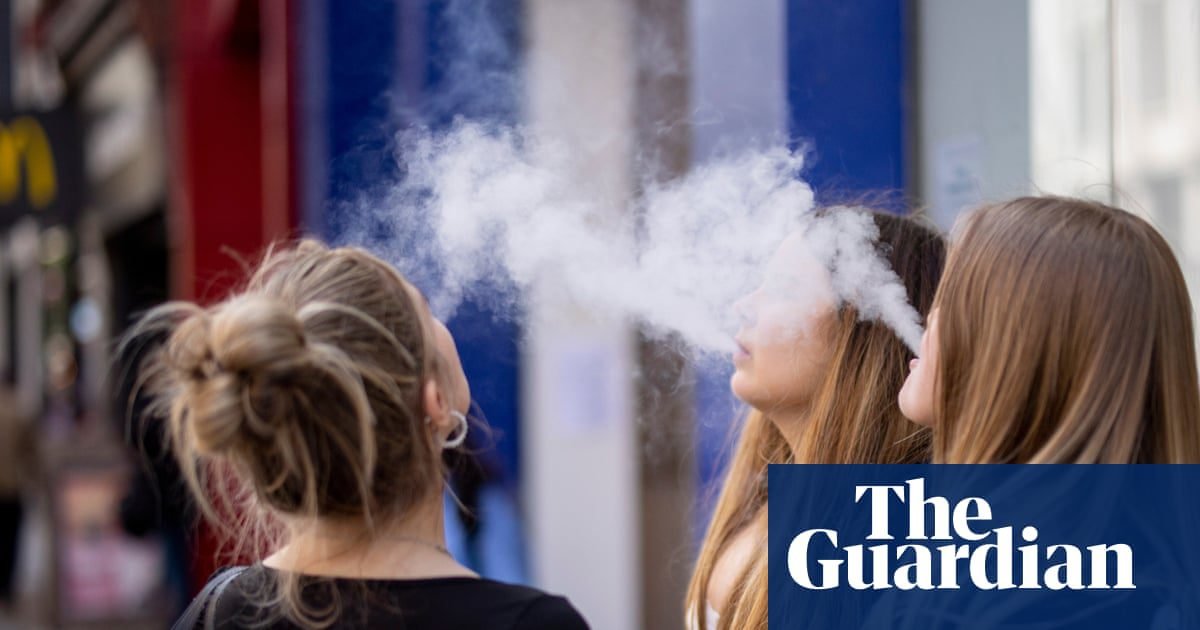
Young people who start vaping risk developing breathing problems and going on to smoke cigarettes, children’s doctors have warned.
Child vaping is consistently linked with poor respiratory health, such as coughing, wheezing, bronchitis symptoms and asthma exacerbations, while vapes have been shown to act as a gateway to smoking cigarettes, according to one of the most comprehensive reviews of the available evidence so far undertaken by the Royal College of Child and Paediatrics Health.
The review’s co-author, Prof Will Carroll, said: “Vaping should not be seen as a harmless part of growing up. The evidence shows clear links with respiratory symptoms, nicotine dependence and subsequent cigarette smoking, while concerns about wider impacts on young people’s health continue to grow.”
He urged the government to quickly implement the new measures announced in July under the Tobacco and Vapes Act, which include plain packaging, moving vapes out of sight in shops, and restrictions on vape flavour names to move away from names inspired by sweets, desserts and alcohol in favour of simpler names such as “apple”.
Carroll also called on the government to go further, including by limiting the number of flavours available.
Vaping has surged in popularity over the past decade, with rates of experimentation and regular use among young people increasing about tenfold, and use often beginning in adolescence. An estimated one in five of 11-17-year-olds in Britain have tried vaping.
Cardiologists, researchers and health experts have said they are “extremely concerned” about the harmful effects of e-cigarettes on millions of teenagers and young people around the world, including exposure to toxins and carcinogens.
The review, which is published in the Archives of Disease in Childhood and looked at 14,000 published articles and 81 studies, also identified evidence linking vaping to poor oral and dental health, including inflammation, ulcers and dry mouths; and negative mental health outcomes, such as anxiety, depression and suicidal ideation.
Emerging evidence indicated potential impacts on sleep, eye health and allergies, and adverse outcomes associated with infants and babies exposed to nicotine during pregnancy.
The RCPCH vice-president for policy, Dr Mike McKean, said that as vaping was a relatively new product, “there is much we do not yet know about its long-term impact on children and young people”.
He added: “But a clear and concerning picture is emerging. Continued research and monitoring essential if we are to properly understand the risks and respond to emerging evidence.
“The Tobacco and Vapes Act is an important step towards protecting children from nicotine addiction, but it must not be seen as a one-and-done solution. We need to keep pace with a rapidly evolving market and continue to take action to protect children from nicotine products that are deliberately made and marketed to appeal to them.”
Andrew McCracken, the director of external affairs at Asthma + Lung UK, called for more research on the impact of vaping, and a quicker response from policymakers to protect children’s lungs, which he said were “paying the price” for vape manufacturers’ targeting through products designed to look and taste like sweets.
“Urgent action is needed to stop the brazen marketing of vapes to children. Vapes can play an important role for current smokers looking to quit, but anyone who doesn’t smoke shouldn’t vape, and that is especially true for children,” he said.
“More research on the impact of vaping is needed, and as our understanding develops, policymakers need to be ready to adapt and put in place measures to protect people’s lungs.”
Hazel Cheeseman, the chief executive of Action on Smoking and Health, said that regulations to restrict the promotion of vapes to children should not make it difficult for adult smokers to access vapes to help them quit. “As it was with tobacco, strong controls on marketing and promotion will be key to reducing youth vaping,” she said.
A Department of Health and Social Care spokesperson said: “Children should never vape and this evidence shows just some of the risks associated.
“We have already banned single-use vapes and have legislated to ban advertising and sponsorship from next year too. We’re also consulting on proposals to crack down on packaging that appeals to children.
“Through the Tobacco and Vapes Act, this government will protect children and young people from the potential harms of vaping, smoking and risks of nicotine addiction and create the UK’s first ever smoke-free generation.”
Source: https://www.theguardian.com/society/2026/aug/20/young-vapers-at-risk-of-breathing-problems-and-becoming-smokers
About the Author