Thursday was another busy day for Alan Hickman, a Bournemouth-based locksmith who works in the area around the New Forest (“though I’m currently dodging the bit between Ringwood and Eastleigh because that’s closed because of the forest fires”).
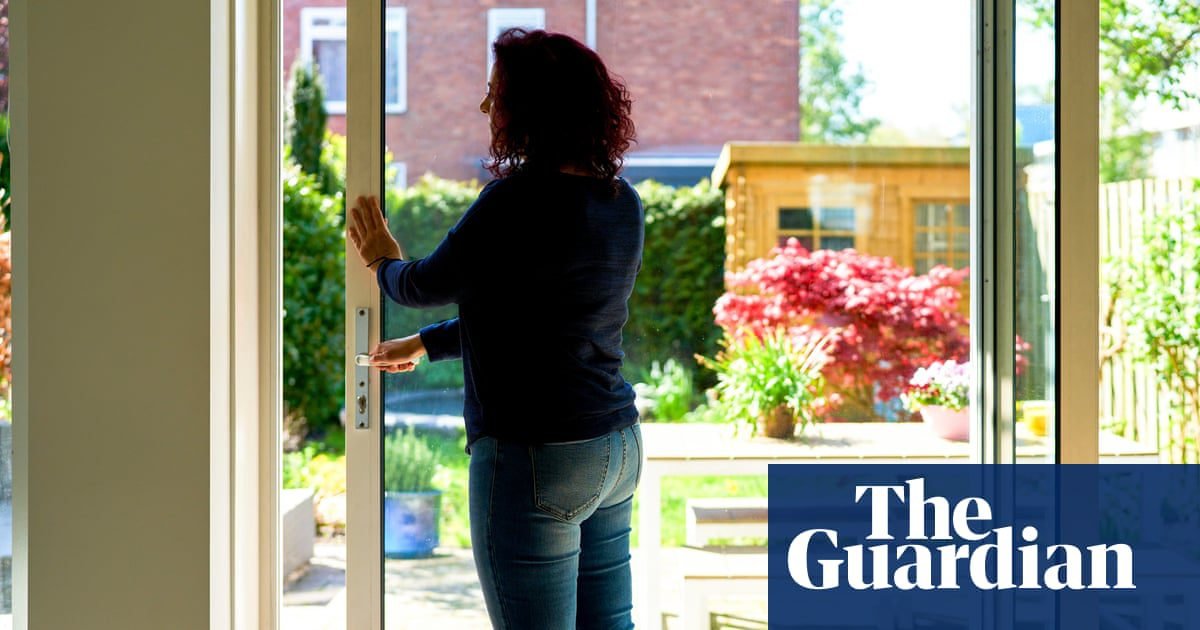
Speaking on his way to see a man who can’t close his patio doors – “probably because they’ve got some expansion issues” – he then has a callout to see an elderly woman who needs a lockbox installed for her carer, before visiting a customer in Westbourne “to sort another composite door that can’t lock”.
Such cases of sticking, unopenable or unlockable doors are much more common at the moment, says Hickman, due, like so much else, to the very hot weather across much of the UK over the past few months.
“We’re getting what feels like double the amount of calls a day because customers’ doors just aren’t able to open, or they can’t close them at the end of a hot day until they’ve cooled down again,” he says. Hickman has worked with LockRite, one of the UK’s largest networks of uniformed locksmiths, for 14 years but this summer has “definitely brought a significant increase” in heat-related callouts.
It’s a pattern repeated across the country, most noticeably in areas where temperatures have been highest, according to Steffan George, the managing director of the Master Locksmith Association, a not-for-profit trade body. A recent MLA Facebook post on the subject, entitled “Why is my uPVC door difficult to lock?”, got tens of thousands of views, about 50 times the usual traffic for its posts, presumably as a result of people Googling exactly that question. “So this is something locksmiths are very au fait with, yes,” he says.
Doors may be made of different materials but each of them can be affected by extreme temperatures, thanks to the simple physics most people learned in school. Heat can cause many products to expand, including the form of plastic that makes up uPVC and parts of composite doors.
“What happens is the door tends to bind with the frame because it’s expanding out, so it’s making it awkward to open,” says George. “It particularly happens if the door is south-facing and also if it’s a dark colour, which attracts the heat even more.”
Wooden doors, too, can be significantly affected by high temperatures, if for the opposite reason – tending to shrink rather than swell, in the heat. “A traditional timber door will start to shrink because all the moisture has been drawn out, particularly if the door’s not been well maintained and painted,” says Shane Hales, an MLA-affiliated locksmith in Sidcup, Kent. That can cause doors to drop and move, putting strain on locks that can become stiffer or impossible to operate, he says. Hales would normally do four or five heat-related door adjustments a week – currently that figure is about 10, he says. “It’s been a very busy summer with this sort of stuff.”
Whatever the cause, a locksmith can usually fix a sticking door fairly straightforwardly by realigning the door, or moving the hinges if necessary, says Hales; unsurprisingly, he advises getting professional help sooner rather than later. “If you’re leaning on the door or pulling through the letterbox to turn the mortice lock, there’s something not right; it’s not aligned. And all that happens is people put force on the key, the key snaps something inside the lock and then the bill starts to escalate.”
When temperatures start to drop going into autumn and winter, a new set of problems may arise, he says. Plastic gets harder and more brittle, and poorly sealed timber starts to swell. “This is why you’ve got to make sure that all your locks are in alignment.
“We go out to customers and say: ‘When was the last time the door was serviced?’ And they’ll say: ‘No one’s looked at it in 20 years. We just force the door shut or force the locks.’ So that’s a big part of it – people not taking care of their doors.”
Source: https://www.theguardian.com/environment/2026/aug/21/why-dodgy-doors-are-the-latest-casualty-of-the-uk-heatwaves
About the Author