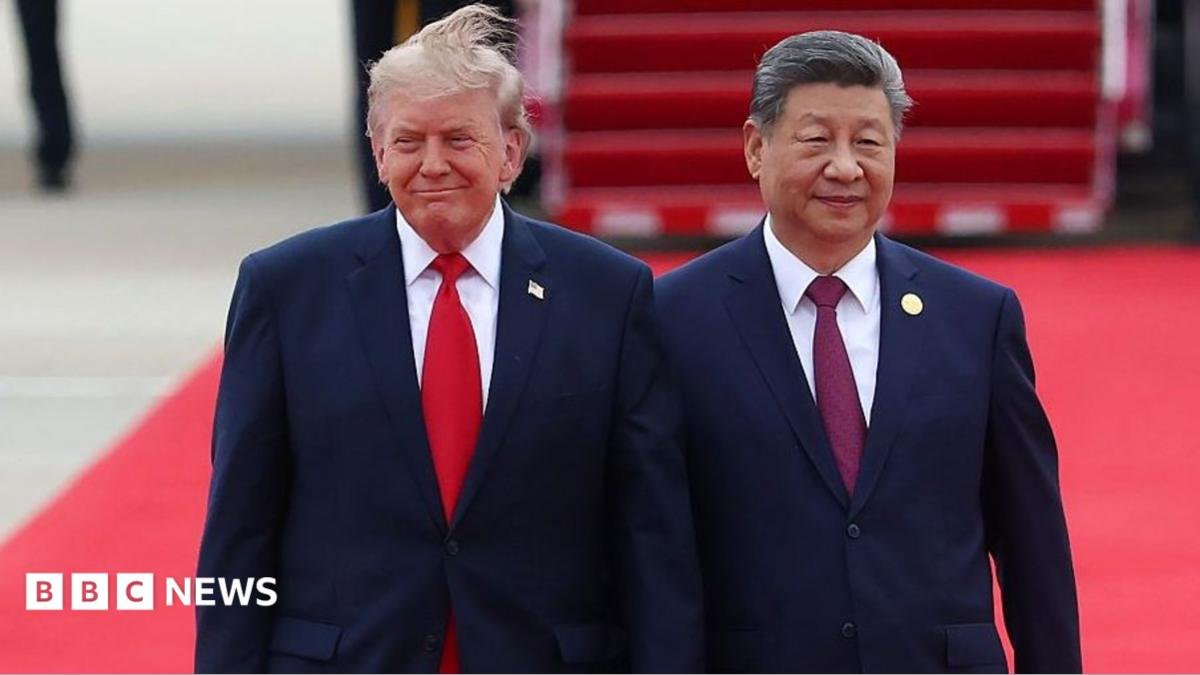
Xi will have learned many lessons from this scandal, especially about Trump’s pressure points.
For one, the fact that Huang’s reappointment came so soon after Xi’s meetings last week with Trump in Shenzhen could be read as a sign that direct engagement is an effective way to influence Washington.
Trump has said the two men discussed Huang, but did not elaborate further. Beijing has not commented.
The episode has also reinforced the view among Chinese officials that there are two camps in Washington: those in favour of restricting Chinese access to cutting edge tech to protect US national security, and those, like Huang, who believe that such restrictions will not limit Beijing’s ambitions.
Huang has repeatedly argued that US export controls will force Chinese firms like Huawei to build independent alternatives – all the while shutting American companies out of the world’s second-largest economy.
But him being back at the helm of Nvidia is no guarantee of relief for Beijing.
Rather, the sale of advanced chips will remain a key point of contention between the US and China, especially as the two sides try to reach a trade deal before another Trump-Xi meeting, which is expected in December.
Already new rules are being put in place that will worry Beijing.
The US Bureau of Industry and Security is tightening restrictions by targeting not only the direct export of advanced chips to China, but also Chinese firms’ ability to use computing power in data centres overseas.
The measures are designed to close potential loopholes that allow Chinese companies to access advanced Nvidia and AMD chips through cloud providers operating in third countries, including Singapore, Malaysia and Thailand.
China has yet to react with measures of its own. But investors will be watching closely for any escalation which could weigh on US equity markets.
Source: https://www.bbc.co.uk/news/articles/c63rgpy50x98o?at_medium=RSS&at_campaign=rss
About the Author