Key Takeaways
Maduro’s capture signals a potential shift in Venezuela’s economy. Analyze foreign investment opportunities, energy sector implications, and long-term market risks. Stay informed for future global trading.
Overview
The recent capture of Venezuelan dictator Nicolas Maduro by US forces on January 3, 2026, marks a pivotal geopolitical event with far-reaching implications for global markets, particularly the energy sector and foreign direct investment. This development could fundamentally alter Venezuela’s economic trajectory, presenting both significant opportunities and inherent risks for international investors seeking to understand the evolving Venezuela investment outlook.
For Retail Investors, Swing Traders, and Long-term Investors, this event signals a potential shift from a closed, sanction-laden economy to one possibly embracing market principles. The focus now turns to the future policy framework under a potential new leadership, with implications for commodity prices, trade relations, and regional stability.
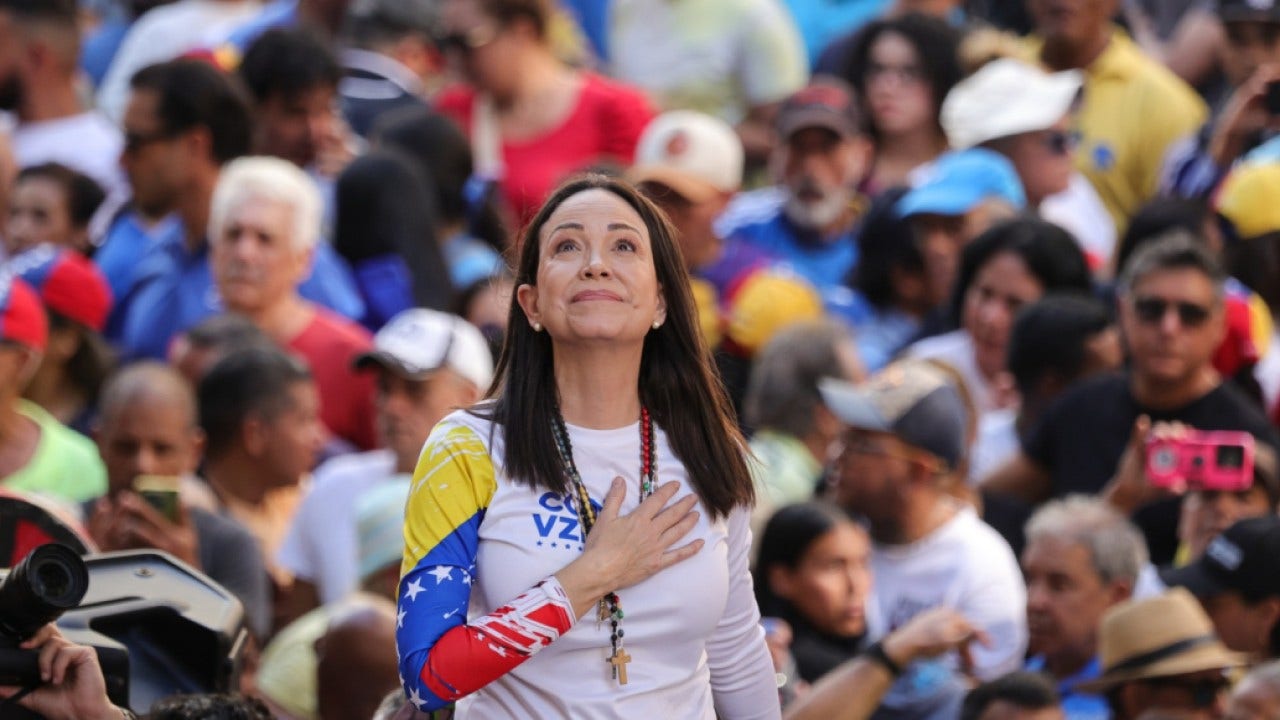
Opposition leader Maria Corina Machado outlined a vision for a ‘free Venezuela’ emphasizing a return to rule of law, open markets, and security for foreign investment. These declarations, while lacking immediate financial metrics, underscore a commitment to economic reform that could unlock substantial value.
Finance Professionals will closely monitor political stability, policy implementation timelines, and the lifting of sanctions as key indicators for assessing future investment viability and risk-adjusted returns in this historically volatile, yet resource-rich, nation.
Detailed Analysis
The geopolitical landscape of Latin America has dramatically shifted following the January 3, 2026, capture of Venezuelan dictator Nicolas Maduro by US military forces. This event, lauded by opposition leader Maria Corina Machado as a ‘day justice defeated tyranny,’ represents more than just a political upheaval; it signals a potential paradigm shift in Venezuela’s economic future. Historically, Venezuela, a nation with immense oil reserves, has been plagued by economic mismanagement, hyperinflation, and a significant exodus of its population. The protracted political crisis under Maduro led to severe international sanctions, effectively isolating the country from global financial markets and deterring foreign investment. The immediate implication for global investors is the introduction of a new layer of uncertainty, tempered by the long-term prospect of economic liberalization and stabilization in a country critical to global energy supply.
Maria Corina Machado’s vision for a post-Maduro Venezuela directly addresses several critical areas for investors. Her commitment to transforming Venezuela into an ‘energy hub of the Americas’ suggests a potential resurgence in oil and gas production, which could significantly impact global crude prices and create opportunities for energy sector companies. Furthermore, her emphasis on establishing ‘rule of law,’ ‘opening markets,’ and providing ‘security to foreign investment’ are foundational pillars for attracting international capital. These pledges imply a move towards transparent regulatory frameworks, protection of property rights, and a more predictable business environment, all vital for long-term capital deployment. The stated goal to ‘bring millions of Venezuelans… back home’ also suggests a future workforce revitalization and a boost in domestic consumption, driving internal economic recovery. While specific financial metrics or policy details are not yet available from the source, these declared intentions provide a framework for future financial analysis, focusing on the potential for asset recovery and new venture creation.
Comparing Venezuela’s potential trajectory to other emerging markets that have undergone significant political and economic transitions reveals both opportunities and challenges. Nations like Vietnam or parts of Eastern Europe, post-communist era, experienced substantial foreign direct investment inflows once political stability and market-oriented reforms were established. However, the path is rarely linear, fraught with risks of political infighting, slow institutional reform, and social unrest. For investors, the immediate future involves high volatility but also potential for substantial upside in sectors like energy, infrastructure, and consumer goods, should the transition prove successful. The re-establishment of trade relationships and the lifting of sanctions would be crucial catalysts. An investor should monitor the speed and efficacy of governance reforms and the international community’s support. [Suggested Matrix Table: Venezuela Post-Maduro Potential vs. Peer Emerging Markets: Key Economic Indicators & Investment Attractiveness (Once Data Available)]
For Retail Investors, Swing Traders, Long-term Investors, and Finance Professionals, the Venezuelan situation warrants careful observation rather than immediate aggressive positioning, given the nascent stage of the transition. Swing traders might find opportunities in commodity price fluctuations or currency movements if initial reforms show promise, though with high speculative risk. Long-term investors, particularly those focused on global diversification or specific sector exposure (like oil and gas), should consider potential entry points for future foreign investment once concrete policy outlines and a stable political structure emerge. Finance professionals will need to conduct thorough due diligence on any potential Venezuelan assets, scrutinizing geopolitical stability, regulatory clarity, and macroeconomic fundamentals as they develop. Key metrics to monitor include crude oil production figures, FDI inflows, sovereign credit ratings, and inflation rates as the country progresses toward a new economic reality. The overall investment landscape will remain dynamic, requiring a data-driven, analytical approach to navigate the evolving opportunities and risks.
About the Author