Key Takeaways
Venezuela Geopolitics: Maduro’s removal leaves power structures intact. Analyze market volatility, oil infrastructure risks, and investment implications for Indian investors.
Overview
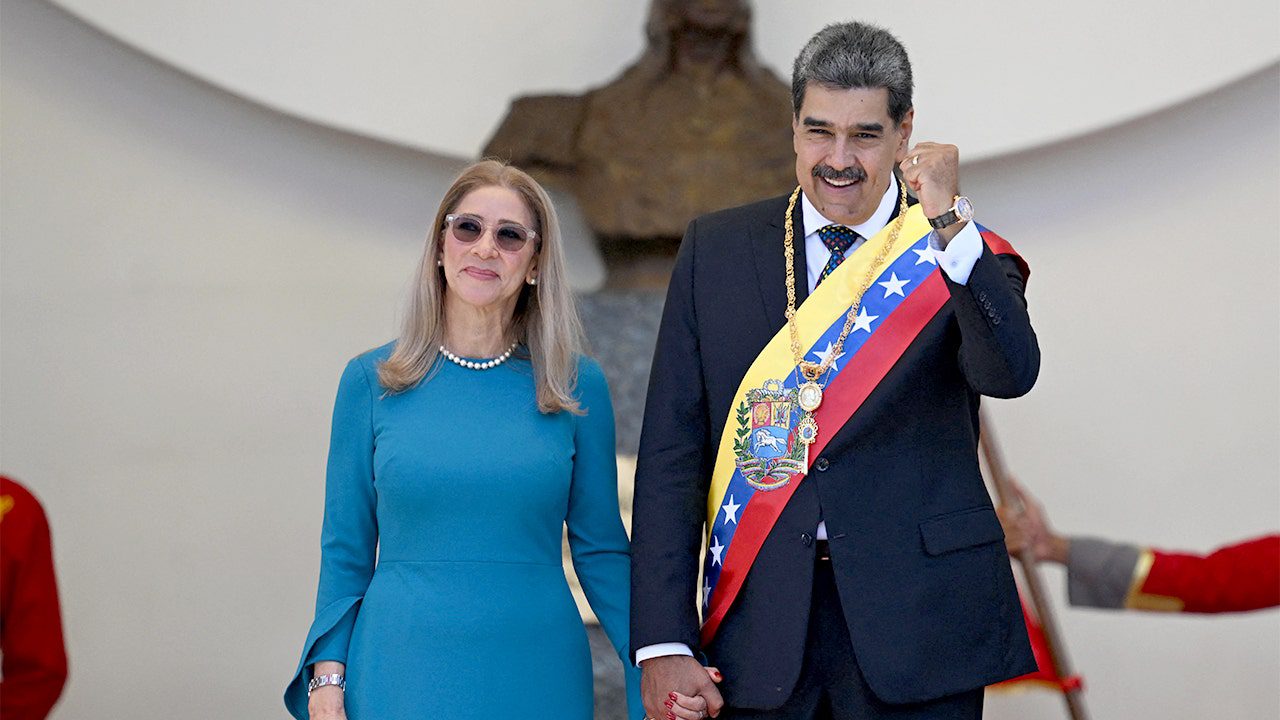
The recent apprehension of Nicolás Maduro in Venezuela, while a significant political event, has left the nation’s core power structures fundamentally intact, signaling a continuity of the existing regime. This nuanced shift introduces complex variables for global financial markets, impacting geopolitical stability and commodity price sensitivity for investors.
For Retail Investors and Finance Professionals, understanding the long-term implications of sustained power structures, deep-seated corruption, and the geopolitical chess game involving major global players is crucial. These factors directly influence sovereign risk assessment and investment strategies in emerging markets.
The operation involved roughly fifteen thousand U.S. personnel and approximately 20% of U.S. Navy assets in the region, highlighting substantial resource allocation. Over seven million people have already fled Venezuela due to ongoing instability.
This analysis will delve into how these persistent dynamics and external engagements could shape global economic stability, oil markets, and the broader outlook for investment and trading in environments prone to geopolitical risks, with relevance for the Indian Stock Market and global financial analysis.
Detailed Analysis
The recent political development in Venezuela, marked by Nicolás Maduro’s apprehension, might appear to signal a potential inflection point. However, a deeper financial analysis reveals that the underlying power structures, encompassing the vice president, senior military commanders, and other entrenched officials, remain firmly in control. This continuity underscores a critical challenge for investors: the systemic issues of governance and economic management far outweigh mere leadership changes. Historically, Venezuela’s economic trajectory has been severely hampered by deeply embedded corruption, a powerful state apparatus, and a reliance on oil revenues that has fueled rather than mitigated these issues. This creates a high sovereign risk profile, a key consideration for Long-term Investors and Finance Professionals assessing the viability of any future economic recovery or foreign direct investment (FDI).
The involvement of global powers, particularly Russia, China, and Iran, in maintaining engagement with the existing Venezuelan system adds another layer of complexity for global investment strategy. This geopolitical competition for influence and resource access inherently complicates international efforts to foster genuine political and economic transformation, increasing market uncertainty. Furthermore, the extensive degradation of Venezuela’s oil infrastructure due to years of mismanagement, coupled with the displacement of skilled workers, implies that any large-scale production recovery will be a long-term, capital-intensive undertaking. This directly impacts global oil supply projections and crude oil prices, which in turn influences inflation forecasts and the performance of energy-related sectors on exchanges like the NSE and BSE, impacting the Indian Stock Market.
The persistence of the existing power structure in Venezuela has profound and immediate financial consequences. Networks tied to drug trafficking and official corruption remain embedded within the government, undermining the rule of law and transparency, which are foundational for attracting credible foreign investment. For Retail Investors looking at global funds or companies with Latin American exposure, this signifies elevated operational and reputational risks. The severe humanitarian crisis, which has seen more than seven million Venezuelans flee, represents a catastrophic loss of human capital and a significant drain on potential future economic productivity. A depleted workforce and reduced consumer base are critical impediments to sustained market growth and economic recovery, further deterring both domestic and international investment. This makes any immediate or medium-term investment prospects highly speculative and necessitates a very high-risk premium.
The substantial commitment of the United States, involving roughly fifteen thousand U.S. personnel and approximately 20% of U.S. Navy assets in the region during the operation, highlights the high geopolitical stakes and the potential for prolonged international involvement. From a financial perspective, this represents a significant allocation of resources, and the expectation that Venezuela could quickly finance its own recovery or offset these costs is unrealistic. This situation creates a fiscal burden that has implications for the U.S. economy, and by extension, global capital flows. The continued engagement of American adversaries like China, through its consistent strategy of infrastructure, financing, and humanitarian support, further complicates the investment landscape. China’s approach positions it as a long-term investor, potentially strengthening Beijing’s regional standing and offering a different, albeit politically aligned, investment environment compared to the U.S.’s more interventionist and sanction-heavy stance. This divergence creates contrasting risk-reward profiles for international investors, affecting strategic decisions across various asset classes.
Comparing Venezuela’s enduring institutional challenges with other resource-rich economies highlights key differentiators that impact investor confidence. While many emerging markets face governance issues, Venezuela’s deeply entrenched state-embedded criminal enterprises and the absence of a credible path to democratic elections create an extreme country risk premium. This translates into significantly higher discount rates for future cash flows for any potential investment and a high probability of sovereign default or asset expropriation. This context is vital for Finance Professionals conducting detailed financial analysis and portfolio management. The lack of independent institutions and the arbitrary nature of policy decisions make long-term planning almost impossible, pushing away both institutional and long-term investors.
The juxtaposition of the U.S. strategy, which reportedly includes dismantling some economic and democracy assistance programs while deploying significant military assets, against China’s infrastructure-for-resources approach, paints a clear picture of competing models for influence. China’s long-term economic integration model in the region, while bringing its own set of governance concerns, aims to foster economic reliance rather than direct political change. This strategic competition impacts the accessibility of Venezuelan resources and the terms of engagement for international businesses. Investors evaluating commodity sectors or companies with global supply chain exposure must consider how these geopolitical dynamics could alter trade routes, regulatory environments, and commodity price stability. [Suggested Matrix Table: Comparison of US vs. China Engagement Models in Venezuela, showing resource allocation, economic approach, and long-term objectives]
For Retail Investors, the Venezuelan situation underscores the heightened volatility and sovereign risk inherent in geopolitical flashpoints, particularly those impacting global oil supply. This can translate into unpredictable movements in crude oil prices, affecting energy sector stocks and inflationary pressures within India. Diversification across geographies and asset classes remains paramount to mitigate specific country risks. Swing Traders should monitor global commodity futures with extreme caution, as news-driven events can trigger sharp price movements. Technical levels for crude oil and related indices on the NSE and BSE will respond acutely to geopolitical headlines, demanding strict risk management protocols.
Long-term Investors must meticulously factor in the elevated country risk premium for any direct or indirect exposure to Venezuela or similar politically unstable, resource-dependent emerging markets. The extended timeline for economic recovery due to degraded infrastructure and human capital flight implies heavily discounted future cash flow projections for any investment, making capital preservation a primary concern. Companies with robust balance sheets and diversified global operations are better positioned to weather such geopolitical storms. Finance Professionals, including those involved in portfolio management and investment banking, must conduct comprehensive country risk assessments and scenario planning. Monitoring international sanctions, evolving trade policies, and the shifting geopolitical influence of major powers like the U.S. and China becomes critical. These factors directly impact cross-border investment flows, asset valuations, and ultimately, the overall stability of global financial markets, with indirect but significant implications for segments of the Indian Stock Market and Investment strategies focused on global diversification.
About the Author