Key Takeaways
Uttar Pradesh voter list faces 19% uncollectable entries. Analyze the impact on Indian elections, governance stability, and the long-term investment climate by Feb 2026.
Overview
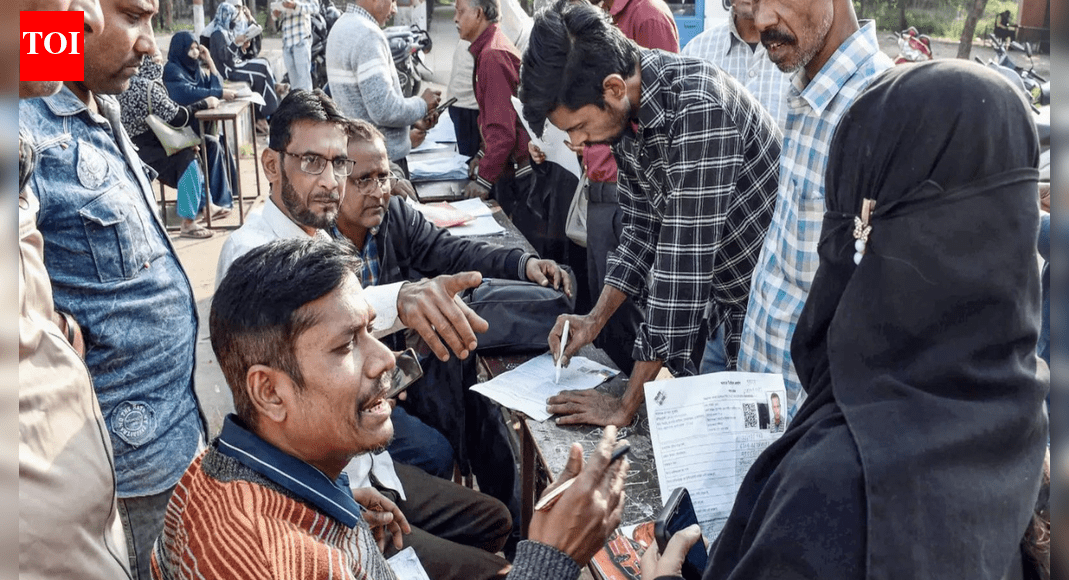
Uttar Pradesh’s Special Intensive Revision (SIR) of voter rolls has concluded, revealing a significant challenge to electoral accuracy with 18.7% or 2.89 crore voters classified as ‘uncollectable.’ This critical development directly impacts the perceived stability of democratic processes in India, a key factor for investor sentiment.
For retail investors and finance professionals, the integrity of electoral data underpins governance predictability, influencing long-term investment climate and political risk assessment. Discrepancies can introduce uncertainty, affecting the broader economic outlook.
Key findings include 1.3 crore shifted voters, nearly 45 lakh deceased, and 23 lakh duplicate entries. Lucknow district alone reported approximately 30% (12 lakh) of its registered voters as uncollectable.
The final Uttar Pradesh voter list, expected by February 2026, will be a crucial marker for administrative efficiency and its potential ripple effects on India’s financial markets.
Key Data
| Metric | Previous (Total Registered) | Current (Unverifiable Voters) | Change (% of Total) |
|---|---|---|---|
| Uttar Pradesh | 15.4 crore | 2.89 crore | 18.7% |
| Lucknow District | 39 lakh | 12 lakh | 30% |
| Madhya Pradesh | Not Disclosed | 43 lakh | N/A |
| Chhattisgarh | Not Disclosed | 27 lakh | N/A |
| Kerala | Not Disclosed | 24 lakh | N/A |
Detailed Analysis
Political stability forms the bedrock of a predictable economic environment, a prerequisite for sustained investor confidence and capital allocation in any nation. In India, the robust functioning of democratic institutions, including the integrity of electoral processes, serves as a crucial qualitative metric for both domestic and international finance professionals assessing country risk. The Special Intensive Revision (SIR) of voter rolls in Uttar Pradesh, while primarily an administrative exercise, thus holds significant implications for the broader investment climate. Given Uttar Pradesh’s colossal electorate and immense political influence, often acting as a bellwether for national political sentiment, the administrative efficiency demonstrated in purifying its voter list becomes a proxy for broader governance quality that astute investors keenly observe. Historically, voter list management in India has grappled with perennial challenges such as tracking migratory populations, identifying deceased voters, and diligently removing duplicate entries. These issues, though administrative in nature, hint at underlying systemic efficiencies or inefficiencies that can subtly influence market perceptions. The Election Commission’s proactive drive and the extensions granted for the enumeration phase underscore a commitment to accuracy, which, if successfully executed, can bolster trust in India’s democratic framework and provide a more stable outlook for investment decisions as we approach the final publication of the list by February 2026.
The latest enumeration for Uttar Pradesh exposes extensive discrepancies within its electoral database, marking a critical point for financial analysis and risk assessment. A formidable 2.89 crore individuals, representing 18.7% of the state’s 15.4 crore registered voters, are classified as ‘uncollectable.’ This figure comprises several crucial categories that warrant investor attention. Approximately 1.3 crore voters permanently shifted residence, signaling significant internal migration patterns or outdated records that can impact urban planning, infrastructure demands, and labour market dynamics, all of which are relevant to specific investment sectors. Crucially, nearly 45 lakh deceased individuals remain on active voter rolls, underscoring systemic failures in integrating death registration data. Such data integrity issues across government agencies can lead to broader administrative trust deficits, impacting the overall ease of doing business. The audit also revealed about 23 lakh voters enrolled at two locations, a scenario stemming from administrative overlaps or intentional dual registrations, which further highlights data management challenges. Additionally, 9.4 lakh Special Intensive Revision (SIR) forms went unreturned, and an alarming 84.5 lakh voters were absent during verification, subsequently deemed untraceable. These figures present a complex administrative puzzle. Lucknow district, for instance, reported an even higher rate of unverifiable entries: approximately 30% (12 lakh) of its 39 lakh registered voters. Within Lucknow, 5.4 lakh cases involved duplicate registrations, and another 4.3 lakh voters were explicitly untraceable. These granular statistics highlight persistent administrative hurdles and the urgent need for continuous data management to ensure voter roll integrity, which directly influences political stability—a non-negotiable factor for financial market predictability.
The challenges identified in Uttar Pradesh’s electoral roll revision are not isolated events but rather reflect systemic issues prevalent across the broader Indian electoral landscape. Other states undertaking similar Special Intensive Revisions also reported substantial numbers of unverifiable voters, underscoring a national administrative challenge that finance professionals should recognize. Madhya Pradesh identified 43 lakh untraceable voters post-enumeration, Chhattisgarh reported 27 lakh, and Kerala found 24 lakh. These comparative data points are crucial, transcending regional specificities and suggesting a shared national administrative challenge in maintaining dynamic and accurate electoral rolls. This consistent trend points towards deeply rooted systemic issues exacerbated by factors like high population mobility, which hinders current voter addresses, and incomplete or delayed death registrations, allowing deceased individuals to remain on active lists. The sheer volume of electoral data, diverse demographics, and varying digital literacy levels further complicate verification efforts. While Uttar Pradesh’s volume of ‘uncollectable’ entries is higher due to its population scale, the underlying administrative and demographic issues are largely shared. From an investor perspective, these systemic issues represent an ongoing administrative friction that could subtly impact the efficiency of policy implementation and the long-term economic planning horizon. This national pattern underscores the urgent imperative for more standardized, technologically integrated, and robust digitized processes, with enhanced inter-departmental data sharing. Such improvements would enhance accuracy and uphold the integrity of the Indian electoral system as a whole, thereby strengthening the foundational trust required for robust capital markets. [Suggested Matrix Table: Comparative Voter Roll Discrepancies Across Key Indian States (2025 SIR Data)]
For Retail Investors and Long-term Investors, the successful rectification of India’s voter lists is a signal of improved governance, which typically correlates with enhanced economic stability and reduced political risk. A meticulously maintained electoral roll bolsters democratic legitimacy, ensuring fair elections and a predictable policy environment, critical for long-term capital allocation. Monitoring the successful completion of this administrative exercise by February 2026 can offer insights into the broader governmental capacity for large-scale data management and reforms. Increased governance confidence can positively influence sectors sensitive to policy consistency, such as infrastructure, public sector undertakings, and regulatory-heavy industries. For Swing Traders and Finance Professionals, the upcoming dates—publication of draft electoral rolls on December 31, 2025, and the final list on February 28, 2026—represent critical junctures. Any significant controversies or administrative hurdles encountered during these periods could introduce short-term market volatility, particularly in election-sensitive stocks or broad market indices like the Nifty or Sensex. Conversely, a smooth, transparent process could provide a positive sentiment boost. Key risk factors include potential electoral disputes stemming from unresolved discrepancies, which could delay policy execution or create political uncertainty, potentially impacting foreign direct investment (FDI) inflows. The opportunity lies in identifying companies that either benefit from a more stable and transparent governance framework or those involved in providing technology solutions for enhancing administrative efficiency and data integrity. Ultimately, diligent oversight and the transparent execution of these electoral processes are paramount for securing the sanctity of the ballot box and reinforcing the predictable policy landscape crucial for India’s financial markets.
About the Author