Key Takeaways
Analyze the subtle market implications of US political discord from the Jan. 6 plaque absence. Understand global investor sentiment and macroeconomic risk.
Overview
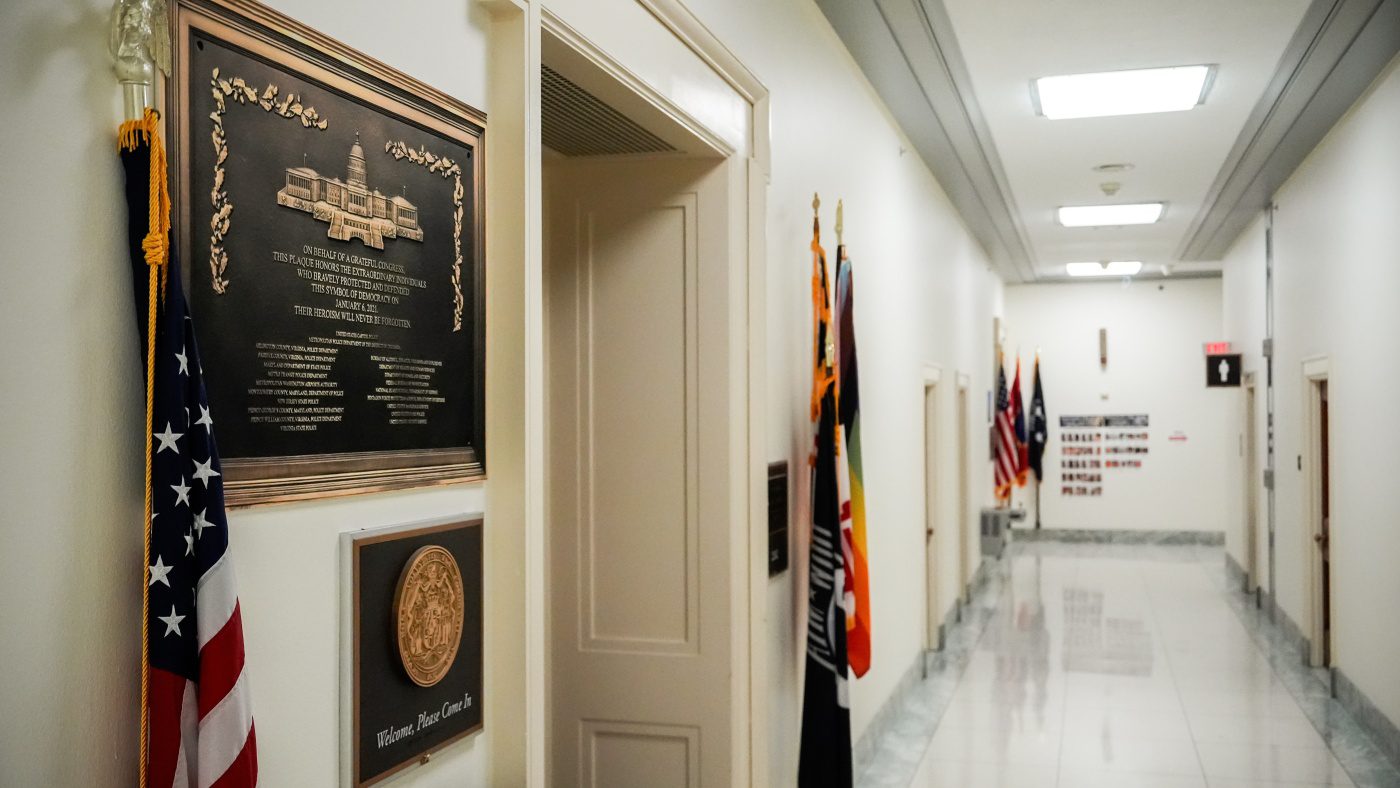
The fifth anniversary of the January 6, 2021, US Capitol attack approaches amid controversy: the official plaque honoring law enforcement, mandated by law, remains missing. Its whereabouts are not publicly known and it is believed to be in storage. This symbolic absence highlights persistent political fragmentation.
For global investors, including retail and institutional players in the Indian stock market, such domestic political discord in a major economy serves as a qualitative indicator of governance stability and broader macroeconomic risk. While not a direct market mover, the lack of consensus can subtly influence long-term investor sentiment and capital allocation strategies.
The US House Speaker Mike Johnson cites the authorizing statute as ‘not implementable,’ while the Trump administration’s Department of Justice seeks to dismiss a police lawsuit demanding its display. This underscores deepening partisan divides.
This analysis examines how these ongoing political dynamics in the US, despite their symbolic nature, may shape global investor perceptions, impacting risk assessment and strategic financial planning for assets worldwide, including the NSE and BSE.
Detailed Analysis
The ongoing dispute surrounding the missing Jan. 6 plaque in the US Capitol, five years after the attack, transcends mere symbolism; it serves as a potent, albeit qualitative, indicator for global financial analysts monitoring political risk. Major global economies, including the United States, underpin much of the international investment landscape. Any sustained period of political instability or ideological divide, even if not immediately reflected in core economic metrics, can contribute to an elevated risk premium. Historically, markets respond to clear signals of governance, unity, and adherence to legal mandates. The current scenario, where a legally mandated memorial remains unfulfilled and its necessity contested, signals a deeper fracture in political consensus.
The plaque, approved by Congress in March 2022 with a one-year installation deadline, was intended to commemorate the law enforcement officers who defended the Capitol. Its absence, coupled with Speaker Mike Johnson’s assertion that the statute is ‘not implementable’ and the Justice Department’s attempt to dismiss a lawsuit by affected officers, signifies a pronounced challenge to political cohesion. This internal US political development, while seemingly distant from daily trading on the NSE or BSE, contributes to the broader global sentiment observed by finance professionals. Market participants in India, for example, assess these indicators to gauge overall confidence in the stability of key global partners, influencing their long-term investment strategies and cross-border capital flows. The differing narratives—from the event being an ‘insurrection’ to a ‘day of love’—underscore a lack of unified historical interpretation, a critical element in national stability.
Comparing the handling of the Jan. 6 memorial to other significant national tragedies, such as the Sept. 11, 2001, attacks or the Oklahoma City bombing, reveals a notable divergence. These events saw swift and bipartisan efforts to create enduring memorials, fostering national unity. In contrast, the Jan. 6 plaque’s contested display reflects ongoing political polarization, a factor that can weigh on global investor confidence. While there are no direct financial metrics from the source content to compare, the divergence in political will and legislative adherence could imply a higher perceived governance risk for international investors evaluating the US market. This subtle shift in perception might encourage greater caution in long-term asset allocation or lead to a re-evaluation of sovereign risk factors. This absence of consensus creates a less predictable environment, which prudent financial analysis aims to quantify even in qualitative terms.
For retail investors, swing traders, and long-term investors alike, understanding such geopolitical undercurrents is crucial for comprehensive investment analysis. While immediate market movements on the Sensex or Nifty may not directly hinge on the US Capitol plaque, the underlying political health of major global powers like the United States dictates broader macroeconomic stability. Continued political fragmentation in the US could indirectly contribute to global market volatility, impacting foreign institutional investment flows into emerging markets, including India. Investors should monitor not only traditional economic data but also qualitative political indicators, legislative effectiveness, and shifts in international relations to gauge potential long-term impacts. This situation underscores the importance of a diversified portfolio and strategies that account for nuanced global political risks, ensuring investment decisions are robust against evolving geopolitical landscapes. The unresolved issues around Jan. 6 highlight the need for vigilance in assessing the subtle, yet potent, influence of political stability on investment outlooks.
About the Author