What is being decided in the midterms and why do they matter?

David Smith
The US Congress has two chambers: the House of Representatives and the Senate. Both must approve federal legislation before it can become law and both play important roles in overseeing the executive branch.
The House is elected every two years, meaning all 435 voting seats are contested at every congressional election. The Senate has 100 members serving staggered six-year terms, so roughly a third of its seats are up for election every two years.
This year’s ballot includes:
-
All 435 seats in the House of Representatives. Republicans are defending a narrow majority, with Democrats needing a net gain of four seats to take control.
-
35 seats in the Senate. Thirty-three seats are up in regular elections, along with two special elections in Florida and Ohio to fill the remainder of terms that were vacated early. Republicans currently hold 53 seats, against 47 held by Democrats and independents who caucus with them. Democrats need to gain four seats to secure a majority.
-
39 governorships. Voters will choose governors in 36 states and three US territories.
-
Thousands of state legislative seats, as well as local offices, judicial contests and ballot measures on issues including taxes, abortion rights and voting rules.
The elections for Congress will determine which party controls Congress for the final two years of Trump’s second term. The governorships and state legislative contests will shape policymaking closer to home, from education and reproductive rights to taxation and the administration of elections.
The midterms have a long history of punishing the occupant of the White House. The president’s party has lost House seats in 18 of the past 20 midterm elections, a 90% rate of loss that stretches back to 1946.
Key events
When will we know who has won?
David Smith
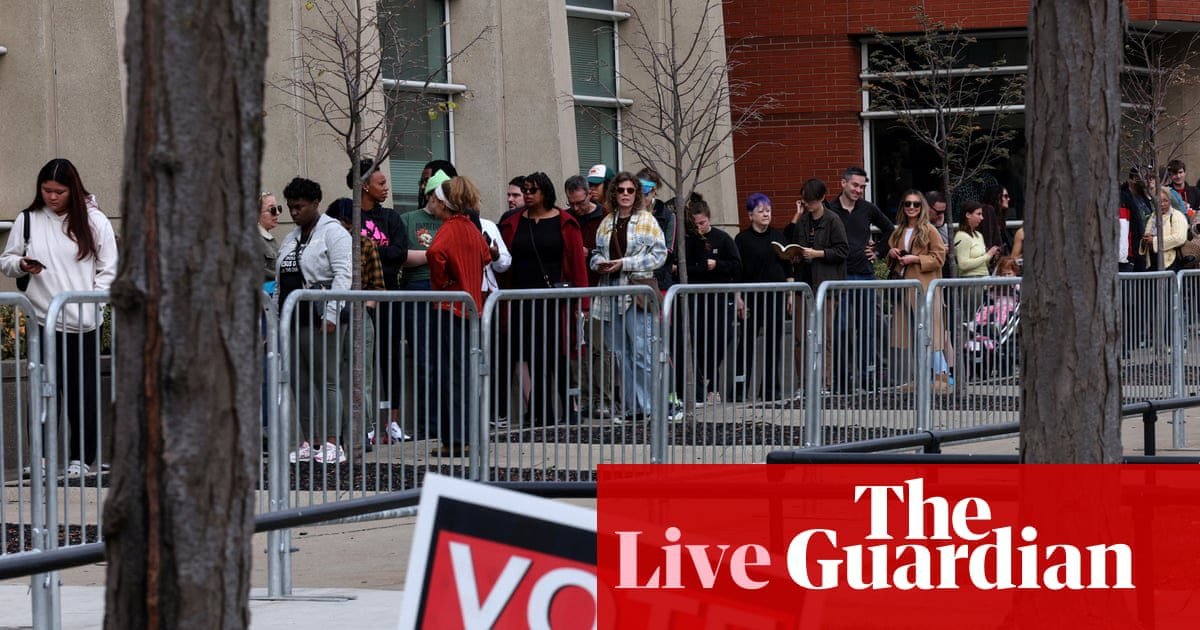
Voting is taking place today (Tuesday 3 November), but the results may not be known tonight. Close contests, different state rules for counting early and postal ballots, and possible recounts or legal challenges could delay the final outcome.
Once the dust has settled, there will be no respite in this – the land of the endless campaign. Attention will soon turn to the 2028 presidential election campaign, when both parties will seek to turn the results of this November into a foundation for the next fight for the White House.
Here’s an hour-by-hour rundown of when polls close around the US:
First polls open in US midterm elections
The first polls have opened in the pivotal US midterm elections in the eastern state of Vermont, where it has just gone past 5.15am.
The next polls to open will be at 6am ET (in 40 minutes) including in: Connecticut, Indiana, Kentucky, Maine, New Jersey, New York and Virginia.
Rachel Leingang
Rachel Leingang, a Midwest political correspondent for Guardian US, has been in Iowa, getting a sense of the political mood ahead of the crcuial elections:
Across Iowa on Monday, candidates made final pitches in a set of toss-up races up and down the ballot, noting just how close these contests were and how pivotal the state could be for the nation’s politics.
In a standing-room-only town hall in Waverly, Iowa, Democratic gubernatorial hopeful Rob Sand started off by asking people in the crowd which political party they belong to, then having people clap for all of them before directing the audience to sing “America the Beautiful” together.
The bipartisan tone underscores Sand’s pitch to Iowa voters, including those who would need to cross party lines to support him: “not redder or bluer, but better and truer”.
Wearing shirts that urged people to vote for Democrats and “rotate the crops”, about 150 voters turned out to the rally in the Republican-leaning area. Sand told the Guardian that throughout the hundreds of town halls he has seen a “yearning” from people for their politicians to work together to solve problems, even as voters are generally angry this year.
“We need to focus that anger and point it at where it ought to be pointed, which is at a broken two-choice political system that is too easily abused to allow elected officials to be corrupt and to be lazy and still hold power,” he said. “A lot of politicians want people to be angry with their neighbors.”
Down in the Des Moines suburbs in the early evening, as rain poured down and the sun set before 6pm, Sarah Booz knocked doors for Democratic candidates. On the doors, there were still a lot of undecided voters.
Some told her they’d be voting for Sand and the rest of the downballot Democrats, while others said they needed to do more research. One man who said he normally votes red said the gubernatorial race would probably be a last-minute decision.
And in the evening, at a Holiday Inn by the Des Moines airport, much of the Republican ticket rallied, culminating in a pitch from US Senate candidate Ashley Hinson. Chuck Grassley, the Republican US senator and the oldest sitting US senator, took digs at Sand, saying that the state government is well run and “we don’t need Sand in that machinery”. He also called Democrats running across the country “outlandish socialists” who want to “transform America”.
“I hope that you’ll do everything you can to make sure that I have a colleague from Iowa that won’t neutralize my vote,” he said, advocating for Hinson. Hinson, taking the stage in front of a bus she’s been campaigning in, called her opponent, Zach Turek, “Too Liberal Turek”. “We fire liberal phonies, we don’t promote them,” she said.
US strikes Iran’s Qeshm Island on eve of midterm elections
The US reportedly attacked Qeshm Island in southern Iran on Monday after Donald Trump downplayed the chances of a return to war with Tehran after the midterm elections.
“We had a war with Iran. We won,” Trump told journalists yesterday. “I don’t know if you even call it a war because we haven’t been doing any fighting for months.”
Monday’s strikes, first reported by the Wall Street Journal, were defensive in nature, according to officials, and targeted surface-to-air missiles being used against US assets, Reuters and the Associated Press reported.
But undermining Trump’s comments to the press, the WSJ reported that the US has been launching smaller-scale strikes against Iran for several weeks, but have not been publicly announcing the attacks as they did at the start of the conflict in February.
On Monday, US vice-president JD Vance claimed there had been “a number of good conversations with the Iranians” and that he was feeling good about the prospects of a “negotiated settlement”. But despite this talk of diplomatic progress, Iran has continued to enforce its closure of the strait of Hormuz and in recent weeks Trump has hinted at renewing attacks on Iran after the midterm elections are over.
Voters now have the chance to express their frustration over the inflationary impact of the president’s ill-judged war on Iran, which has sent fuel prices soaring and shown the limits of American power.
What is being decided in the midterms and why do they matter?
David Smith
The US Congress has two chambers: the House of Representatives and the Senate. Both must approve federal legislation before it can become law and both play important roles in overseeing the executive branch.
The House is elected every two years, meaning all 435 voting seats are contested at every congressional election. The Senate has 100 members serving staggered six-year terms, so roughly a third of its seats are up for election every two years.
This year’s ballot includes:
-
All 435 seats in the House of Representatives. Republicans are defending a narrow majority, with Democrats needing a net gain of four seats to take control.
-
35 seats in the Senate. Thirty-three seats are up in regular elections, along with two special elections in Florida and Ohio to fill the remainder of terms that were vacated early. Republicans currently hold 53 seats, against 47 held by Democrats and independents who caucus with them. Democrats need to gain four seats to secure a majority.
-
39 governorships. Voters will choose governors in 36 states and three US territories.
-
Thousands of state legislative seats, as well as local offices, judicial contests and ballot measures on issues including taxes, abortion rights and voting rules.
The elections for Congress will determine which party controls Congress for the final two years of Trump’s second term. The governorships and state legislative contests will shape policymaking closer to home, from education and reproductive rights to taxation and the administration of elections.
The midterms have a long history of punishing the occupant of the White House. The president’s party has lost House seats in 18 of the past 20 midterm elections, a 90% rate of loss that stretches back to 1946.
What are the races to watch in the US midterm elections?
David Smith
in Washington
Donald Trump will still be US president on the morning of 4 November. But he could be facing a very different political landscape, depending on the results of the midterm elections held the previous day.
As the name implies, midterm elections fall nearly halfway through a president’s term. They are often a telling referendum on the sitting president’s performance, something Trump is actively encouraging by telling voters “pretend I’m on the ballot”. In this case, voters will decide whether Trump’s Republican party can retain its grip on Congress.
Democrats are hoping to capitalise on growing discontent with Trump to seize control of the US House of Representatives, and possibly the Senate. Republicans are fighting to preserve their congressional majorities and prevent a fresh period of legislative paralysis and investigations into the White House.
Several Senate contests have emerged as key battlegrounds. In Michigan, progressive Abdul El-Sayed is seeking to hold an open seat for Democrats against Republican Mike Rogers, who received a last-minute endorsement from Democrat Haley Stevens. In Georgia, Jon Ossoff, a Democratic senator, enjoys a healthy poll lead over Republican challenger Mike Collins.
In Maine, a state won by Democrat Kamala Harris in 2024, Susan Collins, the Republican senator, is defending her seat against Democrat Troy Jackson. Ohio offers another major test, with Democrat Sherrod Brown seeking to return to the Senate against Republican Jon Husted.
Texas has become especially closely watched. Democrat James Talarico is taking on Republican Ken Paxton, the state’s attorney general. Republicans have spent about $210m to help the scandal-plagued Paxton. No Democrat has won a statewide election in Texas since 1994. Trump won Texas by nearly 14 points in 2024.
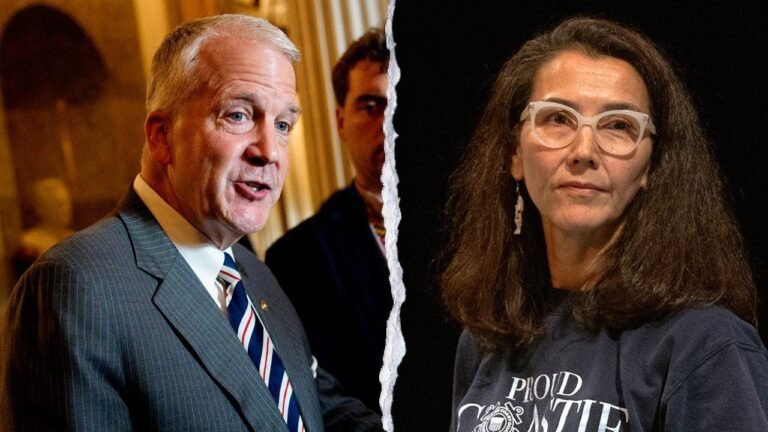
In Alaska, Democrat Mary Peltola’s Senate race against Republican incumbent Dan S Sullivan sparked controversy after Republicans accused the candidate of planting a second Dan Sullivan to confuse voters. A judge dismissed a Trump-backed lawsuit seeking to block certification of Alaska’s Senate race results if Dan Sullivan loses.
Other contests in Kansas, Iowa, North Carolina and New Hampshire could help determine which party controls the chamber (if there is a 50-50 split, JD Vance, the vice-president, a Republican, wields the tiebreaker vote). Latest polls show Democrats ahead in Maine, North Carolina and Kansas, and competitive in Ohio. Also on the map this year are South Carolina and Mississippi, two reliably Republican states that have seen aggressive Democratic challenges this year.
More on this here in David’s explainer:
Americans vote in midterms that will determine control of Congress and Trump’s agenda
It’s Tuesday 3 November, which means that after months of campaigning, debate and analysis, the critical US midterm elections that will take the political temperature of the nation halfway through Donald Trump’s second term – and determine the trajectory of the remainder of his presidency – are finally upon us. Americans, who have already voted early in record numbers, will decide the balance of power in Congress and, therefore, Trump’s ability to advance his agenda for the next two years.
With the US president almost unprecedentedly unpopular, Democrats are aiming for what would be stunning victories in seats where, for decades, turning blue would have been unthinkable. Trump is not on the ballot, but this election is very much a referendum on the direction of the country under his Republican party.
Trump’s agenda has thrown the US into a deeply unpopular – and expensive – war alongside Israel against Iran, sparking a global energy crisis and regional conflict that remains unresolved. The war has exacerbated inflation and the cost-of-living crisis, which had already been worsened by Trump’s chaotic tariff policies. The un-affordability of basic living costs from groceries and gas to childcare, housing and healthcare has been a defining issue of this election, with concerns over the economy turning even deeply conservative seats competitive.
The second Trump administration has also overseen violent surges of federal immigration enforcement across Democrat-led cities, deeply divisive operations that killed two Americans earlier this year. The administration has pursued an aggressive and cruel mass deportation policy, slashed federal government agencies and Medicaid funding, supported the restriction of abortion rights in many states, and expanded presidential power in unprecedented ways.
And now, after months of gerrymandering, efforts to curtail voting rights, and scaremongering over election integrity as Republicans cling to power, also looming over this election is the question of whether Trump and his allies will accept the results.
This will be a defining moment for American democracy, so stick with us as we bring you all the latest news, analyses and commentary as it all unfolds.
Source: https://www.theguardian.com/us-news/live/2026/nov/03/midterm-elections-live-updates-voting
About the Author