Key Takeaways
South Korea’s Lee Jae Myung meets Xi Jinping to reset ties. Explore policy implications, regional security, and trade impacts for Asia-Pacific.
Overview
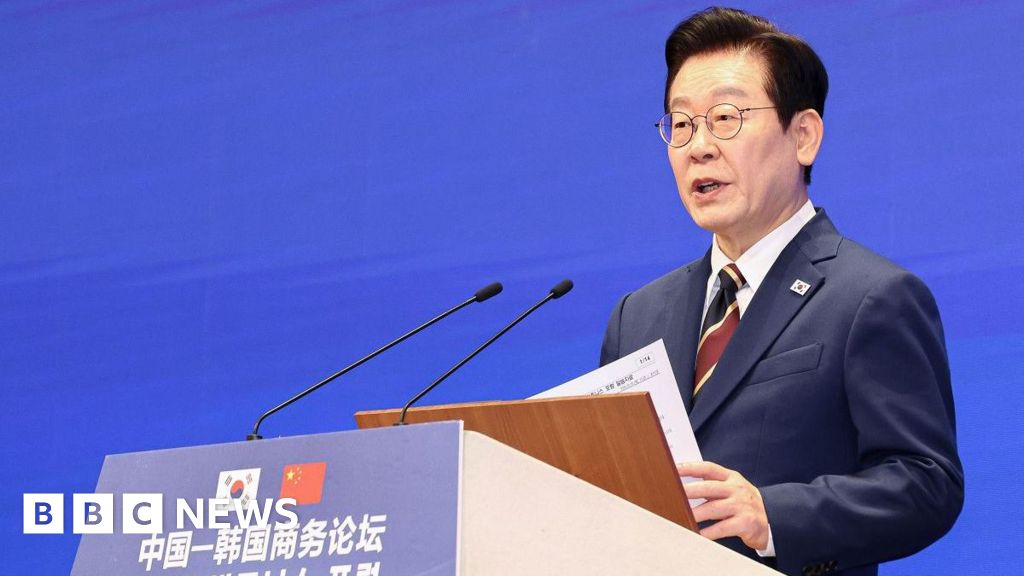
South Korean President Lee Jae Myung has commenced a critical meeting with Chinese leader Xi Jinping, marking a significant effort to reset frayed ties with the country’s largest trading partner. This diplomatic overture underscores Seoul’s complex balancing act between economic necessity and geopolitical alliances, especially as regional tensions escalate.
The meeting is crucial for News Readers, Policy Watchers, Informed Citizens, and Political Analysts to understand the evolving power dynamics in East Asia. South Korea, a key US ally, is navigating increasing pressure from both Washington and Beijing, making this bilateral engagement a bellwether for regional stability.
Key agenda items include strengthening economic partnerships, discussing regional security concerns, and addressing Beijing’s unofficial decade-long ban on Korean pop culture. This marks their second summit since November, signaling a concerted push towards dialogue.
The unfolding discussions will provide vital insights into the future of economic interdependence, the delicate balance of alliances, and potential shifts in policy approaches across the Asia-Pacific.
Detailed Analysis
President Lee Jae Myung’s visit to Beijing represents a pivotal moment in South Korea-China relations, a relationship increasingly strained by geopolitical realignments and historical grievances. His arrival on Sunday, followed by meetings with President Xi Jinping, Premier Li Qiang, and parliamentary chairman Zhao Leji, culminates in a strategic attempt to mend ties that have deteriorated significantly, particularly under Lee’s predecessor, the impeached ex-president Yoon Suk Yeol, who was known for his critical stance towards China. This visit, the first by a South Korean leader since 2019, is not merely a ceremonial exchange but a high-stakes diplomatic maneuver aimed at stabilizing a crucial economic partnership while navigating complex regional security challenges. Seoul finds itself on a diplomatic tightrope, balancing its robust alliance with the United States and its economic reliance on China, making this reset attempt a defining moment for East Asian foreign policy.
The context for this rapprochement is multi-layered. China has long been South Korea’s biggest trading partner, making economic stability a paramount concern for Seoul. However, this economic interdependence has, at times, been weaponized by Beijing, as evidenced by the unofficial decade-long ban on Korean pop culture – K-pop and K-dramas – on Chinese media platforms. This ban, though never officially acknowledged by China, is widely believed to be a retaliatory measure against South Korea’s 2016 decision to deploy a US anti-missile system (THAAD), which Beijing perceives as a threat to its military operations. Beyond trade and cultural exchanges, regional security issues loom large. The ongoing diplomatic row between China and Japan over Taiwan’s sovereignty places Seoul in an awkward position, given its alliance with the US, which supports Taiwan and supplies arms for its defense. Chinese leader Xi Jinping’s eagerness to meet Lee, despite the underlying tensions, signals Beijing’s own pressure to find a regional ally amidst its diplomatic confrontations, particularly with Japan, as noted by Park Seung-chan, a professor of China studies at Yongin University.
From a detailed analysis perspective, President Lee’s agenda is comprehensive and addresses several sore points. Economically, he seeks assurances that China will not weaponize its economic relationship with South Korea, a critical concern given the historical precedent of the K-pop ban. The lifting of these unofficial restrictions on Korean entertainment is high on Lee’s list, recognizing China as a massive market for its globally successful cultural exports. On regional security, the discussions encompass Beijing’s rhetoric against Japan concerning Taiwan, particularly after Japan’s Prime Minister Sanae Takaichi suggested Tokyo could respond with its own self-defense force in case of a Chinese attack. Seoul, like Tokyo, is a US ally, further complicating its position. Moreover, the security of the Korean Peninsula is a central theme. Lee aims to secure Chinese cooperation in pressuring North Korea’s Kim Jong Un to denuclearize, acknowledging China’s role as Pyongyang’s biggest economic and diplomatic supporter, alongside Russia. South Korea’s national security director Wi Sung-lac affirmed Seoul’s respect for the ‘One China policy,’ a diplomatic acknowledgment that Beijing is the only legitimate Chinese government, showcasing Seoul’s careful diplomatic approach. The ongoing provocations from North Korea, including recent ballistic missile and hypersonic missile tests, underscore the urgency of gaining China’s assistance.
The historical backdrop reveals a complex web of alliances and antagonisms. Seoul has consistently walked a diplomatic tightrope between Beijing and Tokyo, often caught between its powerful neighbors and its Western allies. While Lee Jae Myung seeks a reset with China, he is also reportedly planning to visit Japan later this month to meet Takaichi, indicating a strategy of strengthening ties with both regional powers. This contrasts sharply with the approach of his predecessor, Yoon Suk Yeol, whose critical stance towards China led to a significant deterioration of relations. China, for its part, has historically leveraged the shared anti-Japan sentiment from the 20th Century to influence South Korea, a tactic observed by Professor Park. Lee’s planned memorial service in Shanghai for Korean independence activists who fought against Japan reinforces this historical connection. However, South Korea’s deep security alliance with the US, characterized by decades of troop presence and recent cooperation on nuclear-powered submarines – a move that drew warnings from China – demonstrates the limits of its alignment with Beijing. The confluence of these factors highlights Seoul’s precarious but pragmatic position in the evolving geopolitics of East Asia.
For News Readers, Policy Watchers, Informed Citizens, and Political Analysts, the outcomes of Lee Jae Myung’s visit carry significant short, medium, and long-term implications. In the short term, immediate attention will be on any concrete announcements regarding the lifting of the K-pop ban or economic assurances, which could signal a tangible improvement in bilateral trust. The rhetoric surrounding Taiwan and Japan, and whether Seoul offers any explicit statements, will be closely scrutinized for shifts in its diplomatic posture. In the medium term, monitoring China’s actual response to North Korean provocations will be crucial, as Lee seeks Beijing’s leverage for denuclearization. The progress of Seoul’s simultaneous efforts to improve relations with Japan will also demonstrate the efficacy of its multi-directional diplomacy. The development of maritime structures in disputed waters, which Beijing claims are fish-farming equipment but Seoul views with security concerns, also requires sustained observation. Long-term, this reset attempt could redefine South Korea’s strategic autonomy and its role in the US-led alliance structure versus its economic reliance on China. The ability of South Korea to maintain robust economic ties with China while upholding its security commitments with the US will be a critical determinant of regional stability. Analysts should monitor specific trade figures, cultural exchange metrics, and diplomatic statements on regional security pacts. Any significant policy changes regarding the THAAD system or joint military exercises could also indicate a fundamental shift in Seoul’s foreign policy calculus. The visit, therefore, is not merely about bilateral relations but about charting a course for East Asia’s future geopolitical landscape amidst intensifying great power competition.
About the Author