Key Takeaways
Assess how recent US social unrest and federal actions impact market volatility and investor confidence. Understand key qualitative risks for informed investment decisions in 2026.
Overview
The recent incidents of federal agent shootings in Minneapolis and Portland, resulting in fatalities and injuries, introduce significant socio-political volatility that could subtly influence broader market sentiment. While not directly financial events, such developments contribute to an environment of uncertainty, a critical factor for investors.
Retail investors, swing traders, and finance professionals must consider how escalating social tensions and conflicting governmental narratives might indirectly impact economic stability and investor confidence in affected regions, and potentially nationwide. The divergence in official accounts versus public perception, particularly regarding the events in Portland and Minneapolis, highlights this instability.
Specific data on direct financial impact remains undisclosed, but the intensity of public reactions and mayoral calls for federal withdrawal signal potential for prolonged civil disruption. The federal “surge” commitment indicates sustained tension.
Investors should closely monitor these qualitative indicators for their potential ripple effects on local economies and broader investment climate, assessing evolving risk premiums and regional growth outlooks.
Detailed Analysis
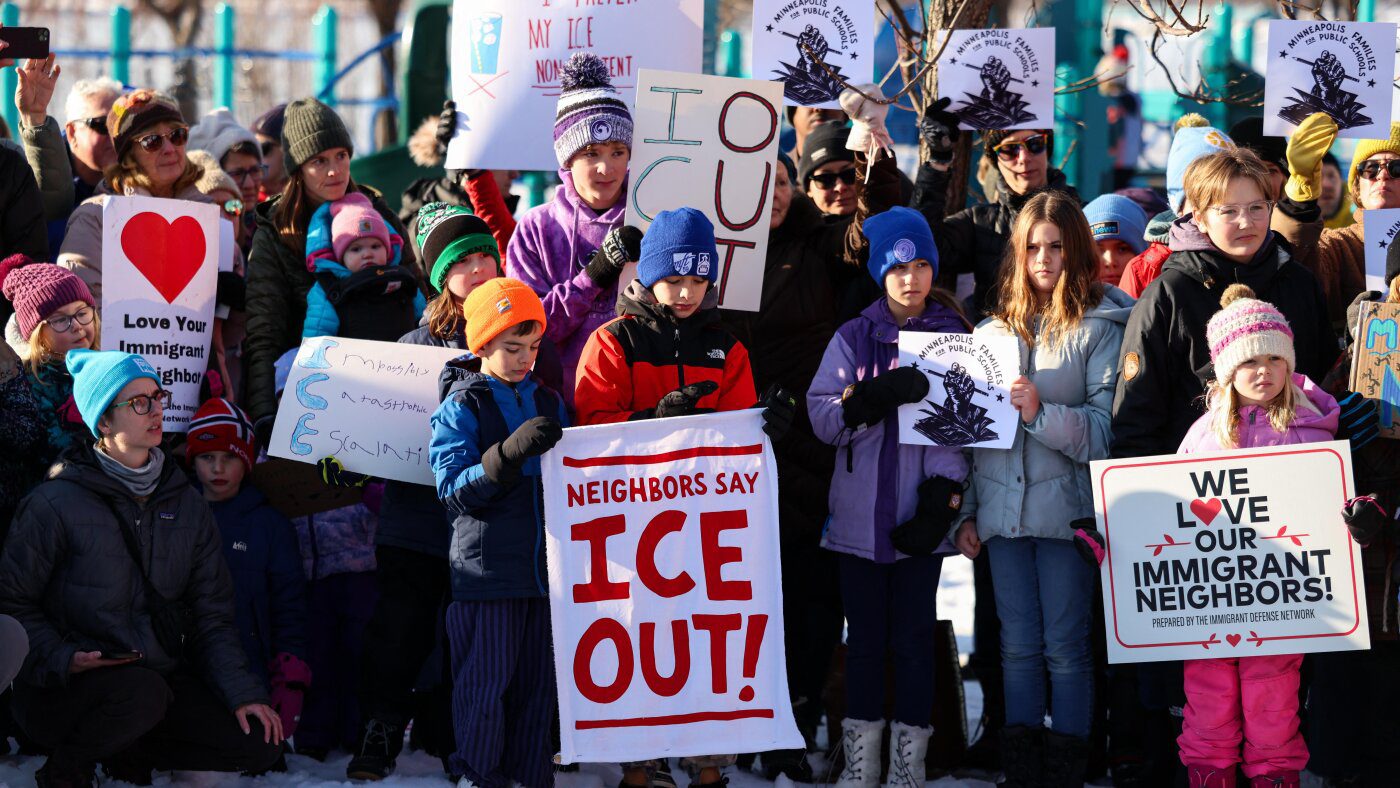
The early months of 2026 are marked by heightened social and political tensions in key US urban centers, a development that prudent investors must integrate into their macroeconomic outlook. Incidents in Minneapolis and Portland, specifically the fatal shooting of Renee Good by an Immigrations Custom and Enforcement (ICE) agent and the wounding of two individuals by U.S. Customs and Border Protection (CBP) agents, have become flashpoints in the national discourse on law enforcement and federal authority. These events are not isolated; they resonate against a backdrop of increasing civil unrest and deep societal divisions witnessed since May 2020. For market participants, understanding these non-financial yet profoundly impactful events is crucial. The immediate aftermath has seen public protests, widespread online debate, and strong condemnations from local leadership, including Minneapolis Mayor Jacob Frey and Portland Mayor Keith Wilson. Their calls for a cessation of federal operations underscore significant friction between federal agencies and municipalities, creating an environment of policy uncertainty and potential governance challenges that can invariably influence investor sentiment. While direct financial metrics are absent from the source, the potential for prolonged social disruption and political gridlock introduces qualitative risks into investment calculations. The stability and predictability of the operational environment for businesses, particularly those with localized dependencies, come under scrutiny when such widespread social and political contention emerges.
The core of the current situation lies in deeply polarized narratives, significantly contributing to market uncertainty. In Minneapolis, the shooting of Renee Good occurred amidst ICE agents dealing with a vehicle, with eyewitnesses reporting conflicting orders. Federal authorities, through Homeland Security Secretary Kristi Noem, staunchly defended Agent Jonathan Ross, citing a prior incident of being dragged by a vehicle and characterizing Good’s actions as “an act of domestic terrorism.” This sharply contrasts with Minnesota Attorney General Keith Ellison and Mayor Frey’s dismissals of “self-defense” claims as “bull****,” characterizing Good as a “compassionate neighbor” and “legal observer.” This direct contradiction from high-level officials fuels public mistrust and extends the period of unresolved tension. Similarly, in Portland, federal agents allege the driver “weaponized his vehicle and attempted to run over law enforcement agents,” leading to defensive fire. However, Mayor Wilson explicitly stated, “There was a time when we could take them at their word. That time is long past,” demanding an independent investigation and a halt to all ICE operations. For financial professionals, this chasm between federal and local perspectives highlights risks related to regulatory enforcement, judicial outcomes, and the operational environment for businesses. Prolonged societal distrust can erode consumer confidence, impacting retail sales, tourism, and real estate. Legal and social ramifications, including investigations and potential litigation, could introduce unforeseen costs or disruptions for businesses operating within volatile social contexts. The federal commitment to continue or even increase the “surge” of agents despite local opposition suggests sustained contention, demanding a protracted period of monitoring for investors.
While the source lacks direct financial metrics or corporate peer comparisons, qualitative analysis of the socio-political environment offers valuable strategic insights. Historically, periods of intense federal-local friction and sustained civil unrest have often correlated with shifts in local investment attractiveness and policy predictability. Unlike situations offering swift, unified investigative outcomes, the current scenario presents fragmented efforts. In Minneapolis, the FBI leads the federal investigation, but Minnesota’s Bureau of Criminal Apprehension “reluctantly withdrawn” due to lack of access, prompting state and local prosecutors to launch independent evidence collection. This fragmented approach implies delayed, singular resolution, likely prolonging uncertainty and maintaining a climate ripe for continued public debate. From an investor’s standpoint, such investigative complexity elevates governance risk. Companies operating within these jurisdictions, or with ties to public services, could face indirect impacts from potential policy shifts, budget reallocations due to heightened security needs, or shifts in consumer/labor dynamics. The differing mayoral calls for federal withdrawal versus the federal government’s assertion of continued “surge” presence represents a direct policy conflict. This standoff could influence legislative agendas, potentially leading to varied regulatory landscapes or changes in federal funding for cities perceived as being in conflict. Such scenarios demand investors consider a business’s “social license to operate,” and how community relations and perceived ethical conduct of related government entities might impact long-term brand value and operational continuity. [Suggested Matrix Table: Qualitative Risk Factors for Urban Investments: Policy Clarity, Public Trust, Social Cohesion, Regulatory Predictability (categorized as Low/Medium/High based on current narrative conflict).] [Suggested Line Graph: Regional Economic Sentiment Index vs. Frequency of Socio-Political Incidents (qualitative proxy for potential correlation).]
For Retail Investors, Swing Traders, Long-term Investors, and Finance Professionals, developments in Minneapolis and Portland underscore the critical importance of integrating qualitative socio-political factors into investment frameworks, especially given the absence of direct financial data. Retail Investors should recognize that while individual stocks may not immediately react, the cumulative effect of social unrest can depress broad market sentiment. Diversification across geographies and sectors can mitigate concentration risk in areas experiencing prolonged instability. Informed awareness of potential wider economic ripple effects is key, rather than panic selling. Swing Traders may find opportunities in heightened volatility if specific, localized market instruments are available, but this demands extremely agile monitoring of news flow, public sentiment indicators (e.g., social media trends related to protests), and political rhetoric for short-term shifts. Risk management and position sizing are paramount due to unpredictability. Long-term Investors should consider these events as signals of potential shifts in fundamental regional attractiveness, including labor force stability, consumer base growth, and urban development prospects. Enduring federal-local policy conflicts can influence long-term infrastructure investment, regulatory environments, and the overall ease of doing business. Assessing a company’s resilience to such social shocks, including its community engagement and supply chain robustness, is increasingly relevant. Finance Professionals must incorporate “Social” factors (S in ESG) more deeply. Beyond traditional financial analysis, this includes evaluating political stability, community relations, human rights aspects, and the potential for social unrest to impact corporate reputation and operational continuity. Scenario planning for prolonged uncertainty and fragmented governance is essential for advising clients and managing institutional portfolios, particularly when considering municipal bonds or investments in companies tied to urban development or law enforcement contracts. The absence of specific financial metrics in the source necessitates robust qualitative analysis and forward-looking risk assessment to navigate the evolving market landscape.
About the Author