Whether taking inspiration from an 18th-century portrait or a radical 1960s radio documentary, the nominees for this year’s Film London Jarman awards have looked to the past in order to create visions of the future.
The shortlist for the £10,000 prize, which recognises British artists making groundbreaking work with moving images, has been streamlined to just four artists for the 2026 edition: Sadia Pineda Hameed, Ilona Sagar, Rhea Storr and Alia Syed. Yet the subjects tackled by these artist film-makers are as wide as ever, encompassing carnival ritual, asbestos poisoning and the traditional South Asian sport kabaddi.
Filipino Pakistani artist Hameed is based in the Ebbw valley, Wales. This year’s film Anak Where Did We Stay? is a five-channel work that mixes family camcorder footage with archive material documenting Beatlemania and protests against Enoch Powell among other things. Aeroplane and road travel are also incorporated in order to tell the story of the artist’s mother’s migration from the Philippines to Britain – the finished film sits in dialogue with Joshua Reynold’s famous 1776 painting Portrait of Omai, which depicted the first Pacific Islander to visit Britain.
Syed continues the Welsh connection, having been born in Swansea and now working between London and Glasgow. Her 40 years of experimental film work includes 2019’s Snow, a video diary using footage originally shot by her father on a snowy day during the winter of 1995/6 – at the time it was filmed, the artist and her father were not on speaking terms.
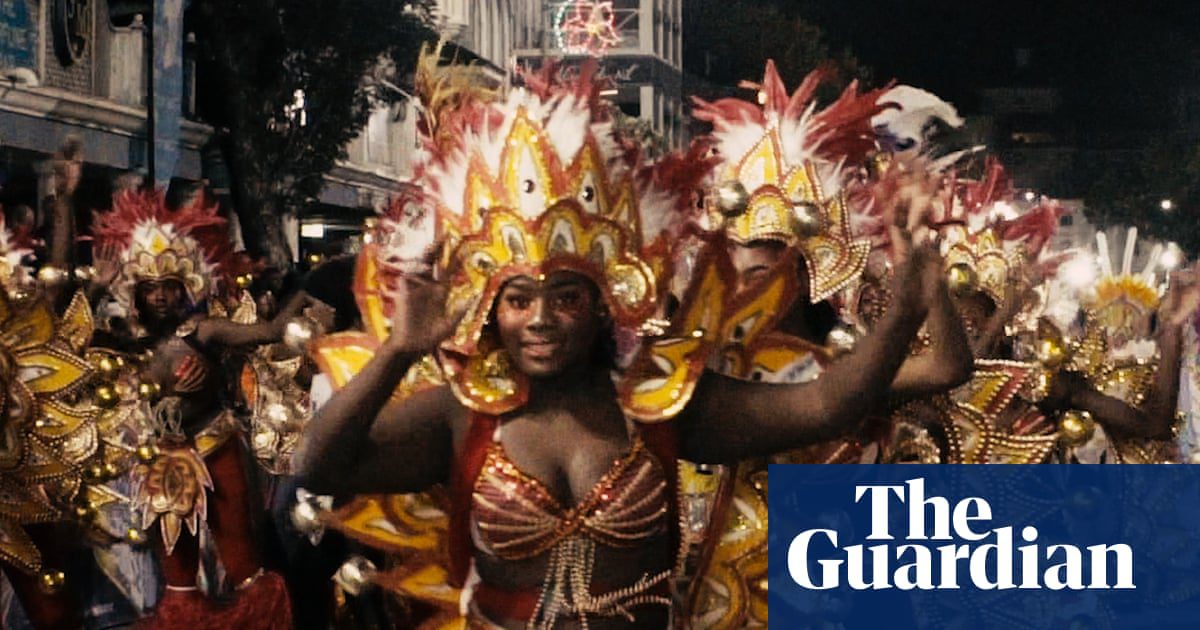
Storr also looks towards her own history, including her Bahamian-British ethnicity, with the 2025 film New Territories (Spectacle Is King). Focusing on a summer of carnivals held across the UK, the lack of sound draws the viewer in to study the contrast between the vibrant costumes – dancers in blue facepaint, outfits incorporating stilts – and the mundane British high streets they are parading through. The film is a response to (and takes its title from) Isaac Julien’s seminal 1984 documentary Territories which used the Notting Hill carnival as a basis to explore the Black experience in Britain.
Similarly, Sagar’s 2022 film The Body Blow takes its name from an innovative 1962 radio ballad created by folk singers Ewan MacColl and Peggy Seeger, along with producer Charles Parker. Whereas that groundbreaking work combined newly composed folk songs with recordings of polio survivors documenting their experience, Sagar’s two-channel film looks into asbestos and mesothelioma related illnesses in Barking and Dagenham.
In a joint statement, members of the jury, which included last year’s shortlisted artist Hope Pearl Strickland, said: “The shortlisted artists possess a confident and singular way of seeing the world, transporting the viewer through their compelling and elegantly crafted films. Their outstanding works are deeply grounded in lived experience and in-depth research. They present skilfully nuanced arguments, approaching their varied subject matters with poetic sensitivity and experimentation.”
Named after the radical film-maker Derek Jarman, the prize is known for spotting talent in the UK art scene. Now in its 19th year, previously shortlisted artists include Heather Phillipson, Lawrence Abu Hamdan, Monster Chetwynd, Luke Fowler, Imran Perretta, Charlotte Prodger, Laure Prouvost, Sin Wai Kin and Project Art Works – all of whom went on to be shortlisted for, or to win, the Turner prize. Last year’s prize was split between Onyeka Igwe and Morgan Quaintance.
The winner of the award will be announced on 24 November 2026 a ceremony in London. Work from the four shortlisted artists will be on display across the UK beforehand, as well as at the Whitechapel Gallery in London from 17 November until 13 December.
Source: https://www.theguardian.com/artanddesign/2026/jun/17/jarman-award-shortlist-announced
About the Author