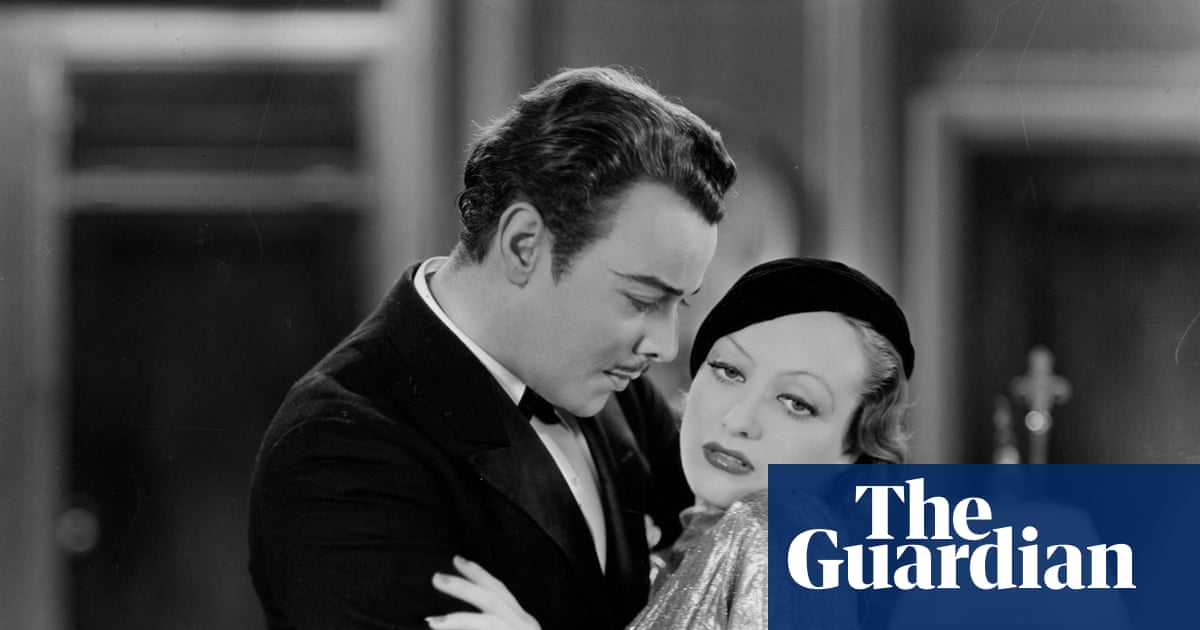
Joan Crawford was one of the biggest stars of Hollywood’s golden age, but one of her most famous, and controversial, films has not been screened legally since January 1936. Ninety years later, thanks to her grandson, that is all about to change. The 1932 MGM film Letty Lynton tells the lethal tale of a Manhattan socialite, her fiance and her vindictive ex-lover. It was a hit at the box office – although something of a conundrum for the critics. They just couldn’t understand how MGM had managed to sneak such a risque story past the censors. That was only the start of the trouble.
MGM had wanted to buy the rights to a play called Dishonored Lady, written by Edward Sheldon and Margaret Ayer Barnes. This was a hit on Broadway in 1930, but its booze, drugs and sex content meant it had already been designated by the Hays office as “unfit for motion picture adaptation”. MGM only backed out when the authors demanded $30,000 – and the Hays office made it clear they wouldn’t give an inch, not on a story about a woman they considered a “nymphomaniac”. Instead, for just $3,500, MGM bought the rights to Marie Belloc Lowndes’ novel Letty Lynton, which, just like Dishonored Lady, was inspired by the real-life case of Madeleine Smith. In 1857, Smith, a Scottish socialite, was tried for murder, accused of poisoning her lover with arsenic after he threatened to use her love letters to expose their affair and jeopardise her engagement.
MGM assigned the film to director Clarence Brown and Crawford, who was one of the studio’s new stars. She relished the role of the glamorous murderer, later describing it as “one hell of a story and script and character I could really get to grips with, thanks to Clarence Brown”. He was one of her favourite film-makers, who also directed her in Possessed (1931) and Chained (1934). She was less keen on her leading man Robert Montgomery, but she worked very well with Nils Asther, who played her spurned lover. The frisson they created resulted in some of the film’s most memorable moments, and the censors’ biggest headaches. At one point, Crawford smiles mercilessly as she watches her ex drink from a glass of poisoned champagne. Throughout her career, Crawford proved unafraid of edgy material. “I love playing bitches,” she told an audience in 1973. “There’s a lot of bitch in every woman – a lot in every man.”
A month after the film was released, Sheldon and Barnes sued MGM for plagiarism: the film was clearly based on their work and not the novel of the same name. The case dragged on for years, with MGM stoutly defending itself, but when the playwrights started going after the profits from cinemas that had shown the film, it was too much. The studio withdrew the film from circulation in 1937. A year later, Crawford herself was famously labelled “box office poison”, but she and Letty Lynton both lived to fight another day.
Even if the film disappeared from sight, the influence of Letty Lynton lingered in the fashion world. Letty Lynton oozed art deco glamour, and one of the dresses designed by Adrian for Crawford, a white organdy dress with oversized frilled sleeves, was replicated in a cheaper version for Macy’s department store and sold in vast quantities. Soon, puffed and embellished sleeves were all the rage, and British Vogue reported on the girls who “felt they would die if they couldn’t have a dress like that. With the result that the country was flooded with little Joan Crawfords.” Hollywood costume designer Edith Head named the Letty Lynton dress cinema’s single biggest influence on fashion. The trend still raged as Letty Lynton was argued over in court.
Neither did the story of Madeleine Smith vanish. Letty Lynton producer Hunt Stromberg did buy the rights to the play in the end, and made a film adaptation, Dishonored Lady, starring Hedy Lamarr in 1947. British audiences may well be more familiar with Madeleine, the excellent 1950 gaslight noir directed by David Lean and starring his then-wife Ann Todd, which is closer to the facts of the original case.
The reappearance of the film is due partly to the efforts of Crawford’s grandson, Casey LaLonde. In a post on Instagram, LaLonde wrote: “I have been keeping this secret for months, so it is wonderful to share the news with Joan fans around the world.” As the copyright on the play expired on 31 December 2025, Lalonde argued that it would now be legally safe to show the film, and Warner Bros, which owns the rights to many MGM films from before 1986, has restored the film in 4K. Letty Lynton will have its first legal screening in 90 years at the TCM film festival in Los Angeles, and will also be released on Blu-ray and DVD. LaLonde thanked Warner Bros and its library historian George Feltenstein for making the release possible. “Without them, we wouldn’t have this fabulous film to see again on big and small screens.”
Source: https://www.theguardian.com/film/2026/apr/15/joan-crawford-letty-lynton-wildest-film-90-years-on
About the Author