Key Takeaways
Over 1,230 disputed mining leases persist across Rajasthan’s Aravalis, threatening ecosystems. Understand the crisis, its impact, and what’s next.
Overview
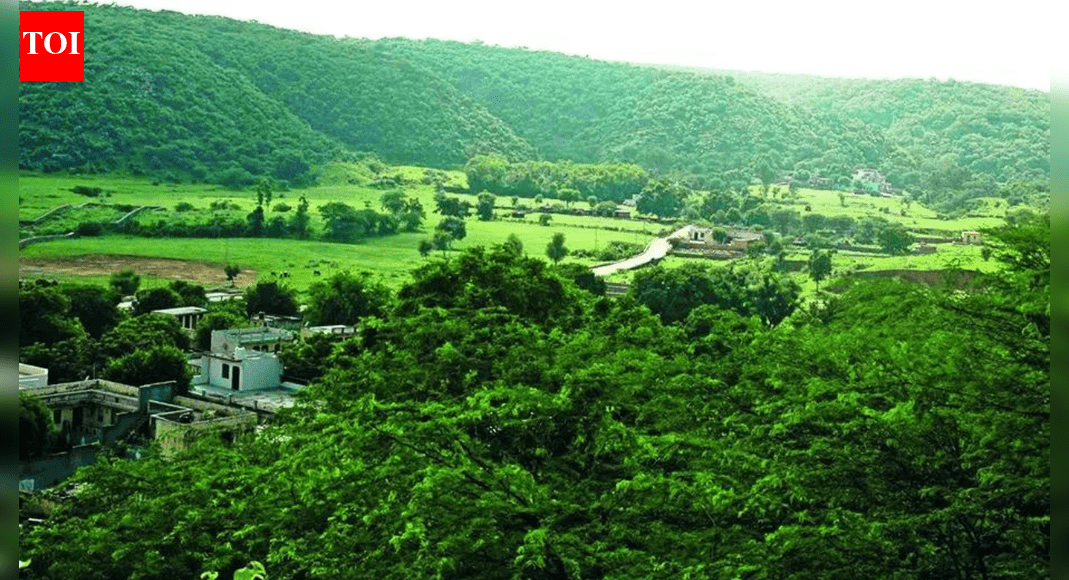
A significant environmental challenge persists over Rajasthan’s ancient Aravali mountain range, as over 1,230 mining leases continue to exist, many under dispute. These leases collectively span 17,393 hectares within the critical Aravali ecosystem, a consistent topic in recent India News and Current Affairs. Despite a blanket ban by the Centre on granting new mining leases, existing operations remain, highlighting ongoing ecological concerns.
This situation underscores a long-standing conflict between resource extraction and environmental preservation. The Aravalis, vital for regional biodiversity, face continued degradation. Experts cite irreversible damage to hills and natural drainage systems.
District-wise, Rajsamand accounts for over 540 leases, Udaipur reports 162, and Jaipur has 139. Notably, across Rajasthan, 16,116 mining leases exist, with approximately 10,060 operational, alongside nearly 18,000 quarry licenses.
The future of the Aravalis remains a critical point of interest in Today Updates. Monitoring ongoing legal resolutions and the effective enforcement of regulations will be essential for all stakeholders.
Key Data
| District | Number of Leases in Aravalis |
|---|---|
| Rajsamand | Over 540 |
| Udaipur | 162 |
| Jaipur | 139 |
| Alwar, Sirohi, Bhilwara (Combined) | Over 250 |
Detailed Analysis
The Aravali mountain range, one of the world’s oldest geological formations, serves as a crucial ecological backbone for Rajasthan and surrounding regions. It acts as a natural barrier against desertification and sustains critical biodiversity. For decades, however, these ancient hills have faced relentless pressure from mining activities, a contentious issue frequently covered in India News. The recent blanket ban imposed by the Centre on the grant of new mining leases in the Aravalis followed significant public outcry, particularly concerning a proposed “new definition” of the range that many feared would open it up further for exploitation. This proactive measure aims to curb the expansion of mining. However, the existing footprint of mining operations, many shrouded in legal disputes, continues to pose a formidable challenge to conservation efforts, creating a complex policy landscape for environmental protection.
The Aravalis host over 1,230 existing mining leases spanning 17,393 hectares, with most currently disputed in courts. While some mines are closed, others remain operational. District-wise, Rajsamand has over 540 leases, Udaipur 162, and Jaipur 139, indicating significant mining penetration. In November 2025, the Rajasthan mining department notified 126 new leases, 50 within Aravali districts, even as the Centre invoked a blanket ban on granting new leases following public outcry over a “new definition” proposal. Mining expert Pradeep Singh stresses this ban does not retrospectively cancel existing permissions, allowing hundreds of leases to continue. This leads to visible environmental degradation: hollowed hills, thinned forest cover, and disrupted drainage systems, often irreversible. This local issue contributes to Rajasthan’s overall mining footprint of 16,116 leases (10,060 operational) and nearly 18,000 quarry licenses, a frequent subject in India News discussions.
The persistence of over 1,230 disputed leases in the Aravalis, despite a federal ban on new grants, underscores a critical regulatory loophole. This situation starkly contrasts the intent of environmental protection measures with the reality of grandfathered operations. While the ban prevents future expansion, it leaves the current ecological damage unaddressed and ongoing. The source data from Kishore Kumawat provides further detail on area under mining: Udaipur accounts for 6,084 hectares, Sojat 2,575.4 hectares, Bhilwara 1,229 hectares, and Rajsamand nearly 800 hectares, showing the diverse intensity. This highlights a complex challenge for both central and state governments to reconcile environmental mandates with established economic activities. The environmental degradation, as described by experts—hollowed hills and disrupted drainage—is a direct consequence of this continued activity.
For general readers and news consumers, the ongoing mining in Rajasthan’s Aravalis represents a pressing environmental and legal quandary. While the Centre’s ban on new leases is a positive step, the continued operation of existing, often disputed, mines means the vital ecological functions of the Aravalis remain under threat. The clear evidence of environmental degradation—from habitat loss to altered hydrology—carries long-term implications for regional climate stability and water resources. Stakeholders, including local communities, environmental activists, and policymakers, face the arduous task of monitoring compliance and pushing for more comprehensive solutions. Watch for updates on pending court cases and how effectively the ban on new lease grants is enforced. This situation demands vigilance, emphasizing that a balanced future for development and conservation in India depends on addressing such complex Current Affairs.
About the Author