Key Takeaways
Russia deployed its new Oreshnik ballistic missile in Ukraine, escalating the conflict. Learn about its capabilities, impact on Kyiv, and global security implications today.
Overview
Russia confirms using its new Oreshnik ballistic missile in a massive strike against Ukraine. This critical escalation targeted regions, including Kyiv, resulting in casualties and infrastructure damage.
This event is vital for general readers and news consumers tracking current affairs. Russia cites a drone strike on President Vladimir Putin’s residence as retaliation, a claim Ukraine and Donald Trump refuted.
Kyiv officials reported four fatalities and 22 injuries. Lviv’s mayor detailed the missile’s immense speed: 13,000 kilometers per hour.
The Oreshnik’s deployment alters conflict dynamics. This news analysis explores its immediate and long-term implications for India News and global stability, a key update today.
Detailed Analysis
The recent Russian confirmation of deploying its Oreshnik ballistic missile against Ukraine marks a significant technical and strategic development in a conflict already defined by escalating warfare. Since its inception, the Russia-Ukraine war has seen a continuous introduction of new weaponry, from advanced drones to sophisticated anti-aircraft systems. The Oreshnik, first tested against a Ukrainian factory in November 2024, represents a new tier in Russia’s conventional arsenal. President Putin has repeatedly boasted about the missile’s capabilities, describing its multiple warheads as plunging at speeds up to Mach 10, rendering them virtually impossible to intercept. This speed and destructive potential, he suggested, could make a conventional Oreshnik strike as devastating as a nuclear attack, a chilling comparison that underscores its perceived power and the inherent risks for global security. This deployment signals a notable shift in Russia’s military strategy, aiming to exert increased pressure on Ukrainian forces and its international allies.
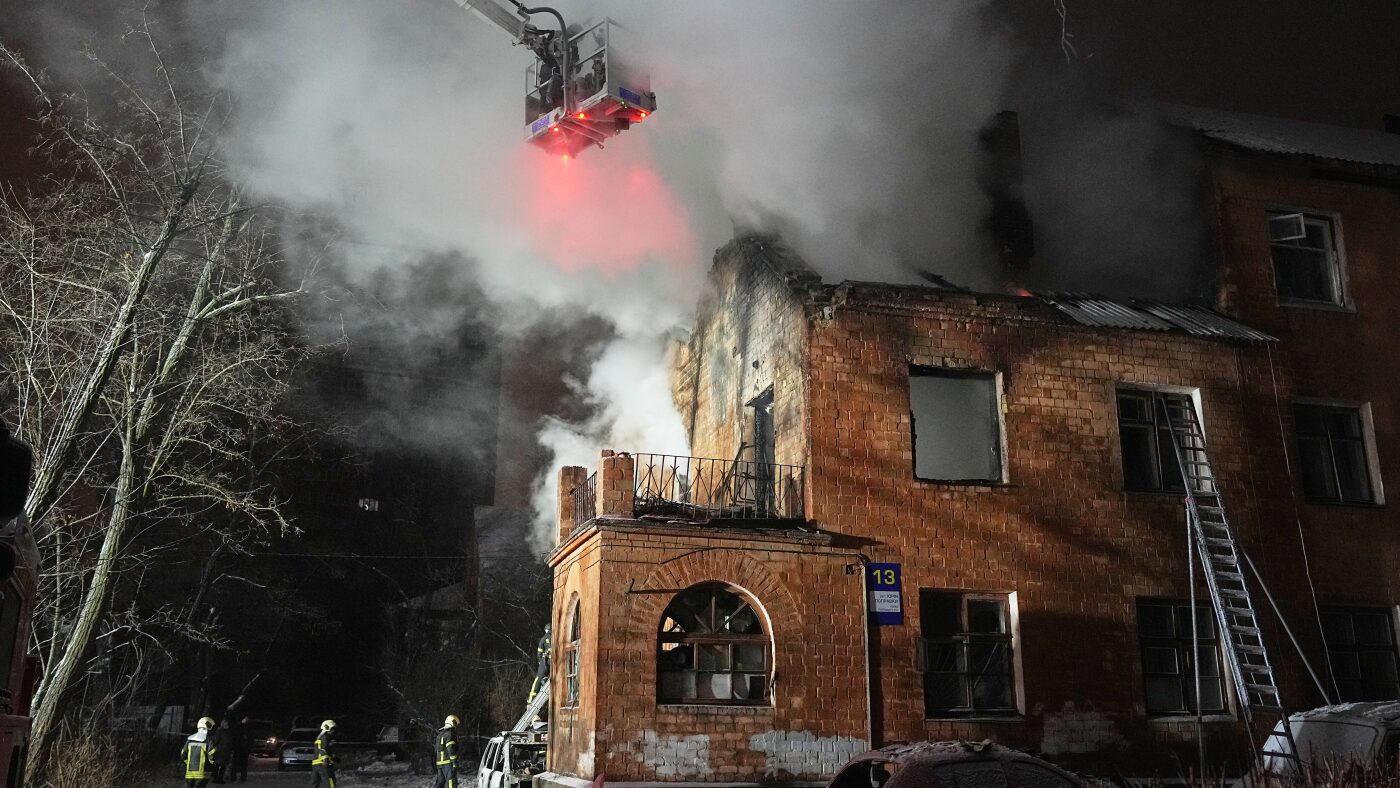
The recent attack, leveraging the Oreshnik missile alongside other weapons, targeted multiple Ukrainian locations, with Kyiv suffering heavily. Ukrainian officials confirmed four fatalities and 22 injuries in the capital. Devastation included a drone crashing onto a multi-story building roof in Desnyanskyi district and damage to residential building floors. In Dnipro, drone parts damaged another multi-story structure, igniting a fire and disrupting water and electricity in parts of Kyiv, as Mayor Vitali Klitschko reported. An emergency medical aid worker was killed, and five rescue workers injured while responding. Russia’s Defense Ministry justified the strike as retaliation for a purported Ukrainian drone attack on President Putin’s residence, a claim denied by Kyiv and former U.S. President Donald Trump. Russian military bloggers suggested the Oreshnik hit an underground natural gas storage facility in Lviv, though Russia did not specify the missile’s target.
The Oreshnik missile’s deployment introduces a formidable new element, signaling Russia’s willingness to employ its most advanced conventional weaponry. Ballistic missiles are military cornerstones, but Oreshnik’s reported speed of 13,000 kilometers per hour and uninterceptable capabilities, as claimed by Putin, significantly elevate its strategic value. This represents a leap in precision and penetrative power compared to earlier systems. The Russian leader’s warning about using Oreshnik against allies providing longer-range missiles to Kyiv further escalates geopolitical stakes, impacting global security and current affairs for India. This tactical response counters increasing Western military aid, creating a new competitive dynamic in the conflict.
For general readers and news consumers, the introduction of the Oreshnik missile underscores the unpredictable and escalating nature of the Russia-Ukraine conflict. This development highlights the persistent threat to civilian infrastructure and lives, as evidenced by the casualties and disruptions in Kyiv. Monitoring Russia’s future deployments and responses from Ukraine’s allies will be crucial. The missile’s claimed ability to bypass defenses and deliver devastating conventional payloads raises concerns about future attacks and the potential for wider geopolitical instability. With Ukrainian President Volodymyr Zelenskyy having alerted the nation to Russia’s intentions for a large-scale offensive amid frigid weather, the immediate future holds significant risks for the region. This situation demands continued vigilance and balanced news analysis to understand the evolving landscape of global security and its implications for India News.
About the Author