Key Takeaways
Nordic Storm Johannes underscores critical infrastructure risk. Analyze power outages, travel chaos, and financial implications for investors in Europe and beyond 2025.
Overview
A powerful winter storm across Nordic countries, notably Storm Johannes/Hannes, has underscored significant operational risks for interconnected industries and infrastructure. This event prompts a critical re-evaluation of investment exposures to climate-related disruptions across global markets, including those influencing the Stock Market India.
For retail investors, swing traders, and finance professionals monitoring global market stability, such events necessitate a re-evaluation of supply chain resilience, insurance sector exposure, and long-term infrastructure investment strategies. Understanding these financial implications is crucial for informed trading and investment decisions.
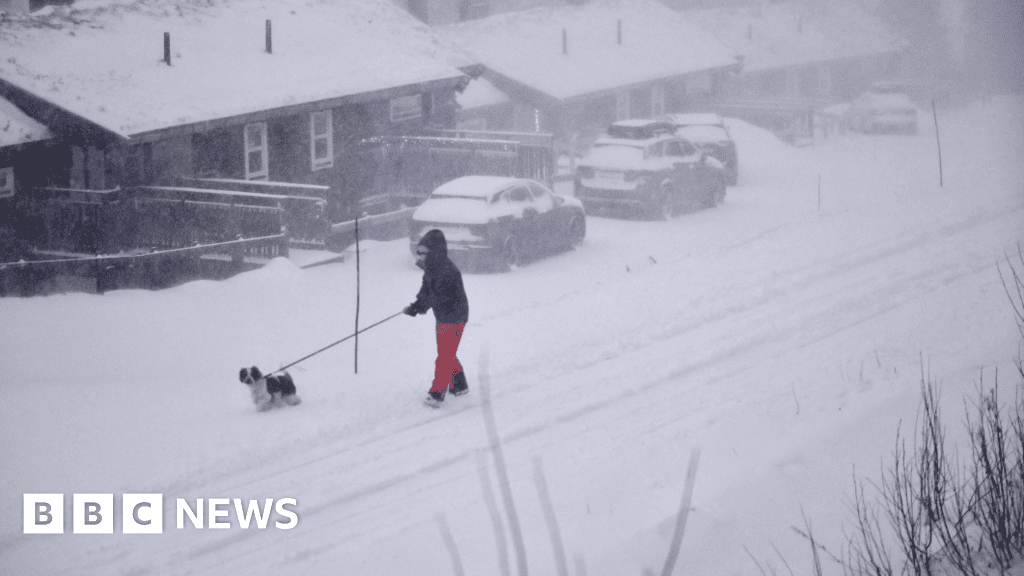
The storm led to over 40,000 homes in Sweden and 33,000 in Finland facing power outages, alongside extensive cancellations in rail, flight, and ferry services across Sweden, Norway, and Finland.
This analysis delves into the short-term market implications and the broader financial considerations for strategic investment and risk management within the Nordic region and its global interconnectedness.
Detailed Analysis
The powerful winter storm, designated Storm Johannes in Sweden and Hannes in Finland, recently sweeping across the Nordic region, serves as a compelling case study for global financial markets, highlighting the escalating and complex risks associated with extreme weather events. While the immediate human tragedy of two fatalities in Sweden remains paramount, for retail investors, swing traders, long-term investors, and finance professionals, this incident crystallizes critical operational and investment considerations. The widespread disruption, encompassing power outages for over 40,000 homes in Sweden and 33,000 in Finland, coupled with extensive cancellations across rail, flight, and ferry services in Sweden, Norway, and Finland, underscores a palpable vulnerability within even highly developed economies. This incident, while localized geographically, resonates profoundly with broader global trends of increasing climate volatility. Historically, Nordic countries are well-equipped to manage harsh winters; however, the synchronized and severe impact across multiple nations suggests that the intensity and scale of these events may be surpassing traditional resilience benchmarks. This evolving landscape necessitates a robust re-evaluation of current risk management frameworks, asset valuation models, and long-term investment strategies. The financial community increasingly views climate-related disruptions not merely as external externalities but as integral factors influencing corporate performance, supply chain integrity, and ultimately, shareholder value. This storm reinforces the growing imperative for integrating Environmental, Social, and Governance (ESG) criteria into investment analysis, prompting a closer look at corporate preparedness and governmental infrastructure resilience spending as key determinants of future financial stability within exposed sectors. The event adds to the accumulating evidence that physical climate risks are transforming from theoretical concerns into tangible financial liabilities, directly impacting the investment calculus for various sectors globally. Investment decisions in the coming years will increasingly weigh a company’s and a region’s ‘climate beta,’ assessing their sensitivity to these environmental shifts, a critical factor even for the Stock Market India given global interconnections.
Examining the detailed aftermath, the storm’s extensive impact on vital infrastructure components merits specific financial scrutiny, revealing immediate and cascading economic consequences. The reported power outages, affecting over 40,000 homes in Sweden and 33,000 in Finland, translate directly into quantifiable financial losses. For utility providers, this represents lost revenue from power sales and substantial unbudgeted operational expenditures for emergency repairs, personnel deployment, and network restoration. Such unforeseen costs can compress profit margins in the short term, impacting quarterly earnings reports for publicly traded utility companies in the Nordic region. Furthermore, the extensive travel cancellations—encompassing numerous rail services in Sweden, and suspended flights and ferry services across Sweden, Norway, and Finland—create significant business interruption losses. Logistics companies face delays and re-routing costs, tourism operators experience cancellations, and manufacturing firms dependent on just-in-time supply chains could see production disruptions. The grounding of a passenger jet and a smaller plane at Kittila airport in Finland, while fortunately without reported injuries, underscores the acute operational risks faced by the aviation sector during such events, necessitating costly recovery operations and potential temporary capacity reductions. For investors, these disruptions highlight the importance of assessing a company’s operational resilience and its ability to absorb external shocks. While specific financial figures for these accumulated losses are not immediately disclosed, the sheer breadth of the disruption implies a material impact on regional economic activity. Finance professionals and portfolio managers must consider these direct and indirect costs when evaluating regional portfolio performance, assessing the solvency of smaller businesses, and projecting future earnings for entities exposed to these sectors. Monitoring technical levels of major European utility and transportation sector indices for potential downward pressure or shifts in investor sentiment could provide early indicators of how the market is pricing in these unforeseen operational risks, influencing global trading perspectives.
Comparing the scale of Storm Johannes/Hannes to more typical winter weather events, its impact stands out due to the synchronized, multi-national disruptions across Sweden, Norway, and Finland. This coordinated system places immense pressure on regional coordination and resource allocation, revealing potential weak points in interconnected critical infrastructure. Unlike localized events that might affect a single utility or transportation hub, this broad sweep significantly amplifies the aggregate financial impact. From an investment perspective, this scenario tests the robustness of national grid operators and transportation networks, highlighting those with superior resilience planning and capital expenditure in infrastructure hardening. Companies that have invested proactively in climate adaptation measures, such as undergrounding power lines or upgrading communication systems, may demonstrate greater operational continuity, thus presenting a lower risk profile to long-term investors. Conversely, entities with aging infrastructure or inadequate emergency response protocols could face sustained pressure on their stock valuations. The insurance and reinsurance sectors are particularly sensitive to such widespread events. An uptick in claims related to property damage, business interruption, and general liability is highly probable, potentially affecting the short-term earnings and solvency ratios of regional insurers. Global reinsurers, which often absorb significant portions of catastrophic risk, will also keenly observe the total economic losses, which could influence future premium pricing and coverage availability for climate-exposed regions. This incident serves as a crucial data point for peer comparison, allowing financial analysts to assess relative operational strength among Nordic utilities and logistics firms. It also underscores the importance of regulatory frameworks that incentivize infrastructure resilience. A [Suggested Matrix Table: Nordic Utility Sector Resilience Benchmarks, comparing key operational metrics such as average outage duration, capital expenditure on grid modernization, and disaster recovery timelines across major regional utility providers] could offer valuable insights for strategic investment decisions, impacting broader capital allocation in global markets.
For retail investors seeking to navigate the evolving market landscape, and for swing traders looking for short-term opportunities or hedges, the Nordic storm disruptions underscore the immediate need for vigilance. Monitoring the stock performance of key Nordic utility companies, regional logistics firms, and insurance providers in the aftermath will provide critical insights into market resilience and recovery dynamics. Swing traders might identify short-term volatility in these sectors, while long-term investors should prioritize companies demonstrating robust climate adaptation strategies and diversified operational footprints. For finance professionals managing larger portfolios, this event necessitates a deeper integration of physical climate risks into their quantitative models and scenario planning. Opportunities may well emerge in sectors poised for growth in a climate-stressed world, including companies specializing in climate-resilient infrastructure development, smart grid technologies, advanced meteorological forecasting, and specialized catastrophe insurance. The shift towards renewable energy sources could also be seen as an opportunity for decentralized energy grids to mitigate large-scale outages from single points of failure. Conversely, risk factors include continued supply chain fragilities, potential governmental or regulatory pressures for increased climate adaptation spending (which could impact corporate balance sheets), and rising insurance premiums, which might erode profitability across various industries. Specific upcoming metrics to monitor include official damage assessments, power restoration progress, resumption rates of major transportation services, and any forthcoming guidance from affected companies regarding financial impact. Furthermore, investors should closely watch for policy responses from Nordic governments concerning infrastructure upgrades and climate resilience funding. This incident serves as a potent reminder that environmental factors are no longer peripheral but central to comprehensive financial analysis and strategic investment planning in global markets, shaping both risks and nascent opportunities for the foreseeable future. The ability to integrate such ‘grey swan’ events into investment frameworks will increasingly differentiate successful financial strategies.
About the Author