Key Takeaways
Venezuelan President Nicolas Maduro allegedly captured after US strikes. Unpack his political journey, US policy, and global implications for citizens and analysts.
Overview
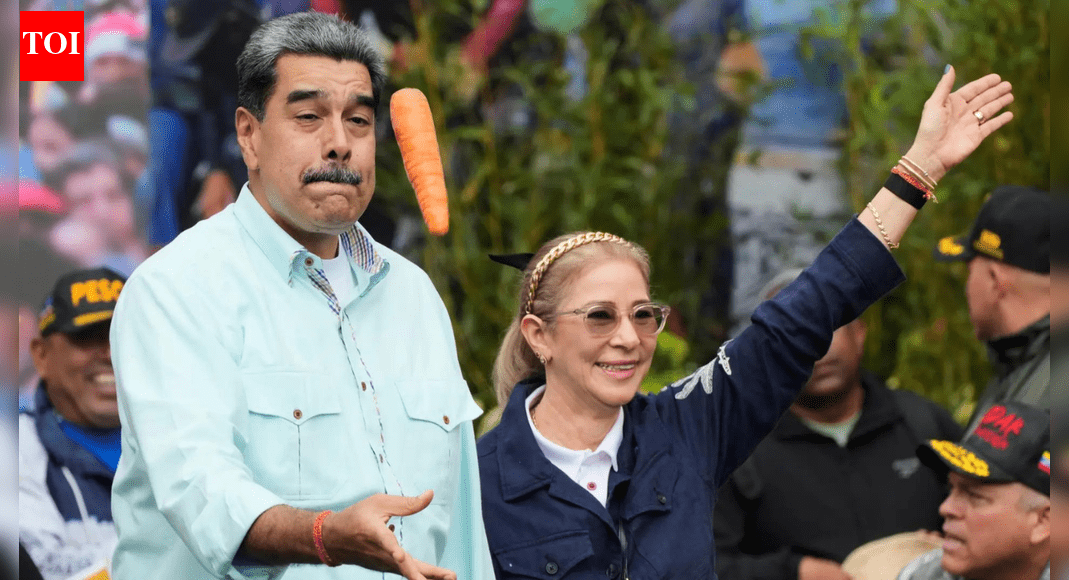
Reports emerged recently of Venezuelan President Nicolas Maduro and his wife, Cilia Flores, being captured by the United States following a “large-scale strike” on Venezuela. US President Donald Trump announced this dramatic development via Truth Social, claiming the operation was conducted in conjunction with US Law Enforcement. This unconfirmed claim has sent immediate ripples through international diplomatic circles, sparking urgent questions about global political stability.
This alleged capture, if verified, would have profound implications for global power dynamics, especially for News Readers, Policy Watchers, Informed Citizens, and Political Analysts monitoring international relations and the sovereignty of nations. The narrative surrounding such an event carries significant weight, influencing future foreign policy and international law interpretations.
The US government formally charged Maduro in 2020 and later designated his administration a foreign terrorist organization in 2025. This historical backdrop frames the current claims, which followed multiple explosions in Caracas and low-flying aircraft sightings, though Venezuelan authorities have not confirmed the incident.
The subsequent analysis explores Maduro’s political trajectory, the intricate history of US-Venezuela relations, and the potential short-term, medium-term, and long-term implications of these unverified reports on governance and policy globally.
Detailed Analysis
The recent unconfirmed reports concerning Nicolas Maduro’s alleged capture by US forces introduce a new, volatile chapter in the complex, often contentious, relationship between Venezuela and the United States. Maduro’s political career commenced far from the presidential palace, beginning as a bus driver and a formidable metro union leader in Caracas in 1962. His ascent through Venezuela’s left-wing political landscape was intrinsically linked to his close alliance with Hugo Chávez, the charismatic leader who reshaped Venezuelan politics. Maduro served as foreign minister from 2006 to 2013, a period marked by his efforts to forge regional blocs like ALBA and CELAC, emphasizing Latin American integration and independence. Appointed vice-president in 2012, he assumed interim presidency after Chávez’s death in 2013, winning a narrowly contested election later that year. This trajectory from grassroots activist to head of state provides essential context for understanding the deeply entrenched political divisions and international scrutiny defining his rule, including recurrent allegations of electoral fraud and human rights abuses that have consistently drawn the ire of the United States government.
Nicolas Maduro’s presidency, which began following a contentious 2013 election, has been characterized by a confluence of internal challenges and external pressures. His administration has faced severe international isolation, crippling economic collapse, and widespread mass protests domestically. These conditions have contributed to an ongoing humanitarian crisis within Venezuela, prompting significant regional migration. The United States and its allies have consistently challenged the legitimacy of his rule, escalating their opposition over the years. Washington formally charged Maduro in 2020 with accusations including human rights abuses, electoral manipulation, and narco-terrorism. Further compounding the pressure, the US government officially designated his administration as a foreign terrorist organization in 2025. These accusations underscore the profound policy disagreements and ideological clashes that have defined the diplomatic breakdown between the two nations, setting the stage for the dramatic and unverified claims of his capture. The reported ‘large-scale strike’ on Caracas, while unconfirmed by Venezuelan authorities, adds another layer of geopolitical tension.
The situation in Venezuela under Nicolas Maduro offers a stark parallel to historical instances of US foreign policy in Latin America, where interventions and sanctions have frequently aimed to influence political outcomes. Unlike other nations that have seen shifts in leadership through electoral means or internal political transitions, Venezuela’s current political standoff is deeply entrenched, marked by a US policy of isolating Maduro’s government, accusing it of undermining democratic institutions and human rights. The application of sanctions, a key policy tool, has severely impacted Venezuela’s economy, yet has not dislodged Maduro from power, leading to a prolonged stalemate. This contrasts with scenarios where targeted sanctions led to different political resolutions or economic reforms. The enduring international isolation, coupled with internal discontent and unverified external military actions, positions Venezuela as a critical case study in complex global governance challenges. [Suggested Matrix Table: Key Milestones in US-Venezuela Relations (1999-2025) including Sanction Dates, Diplomatic Actions, and Major Political Events].
For News Readers, Policy Watchers, Informed Citizens, and Political Analysts, the current unverified reports from Venezuela necessitate cautious assessment and critical engagement with official statements. The immediate risk lies in the potential for escalating misinformation, which could fuel regional instability or misinterpretations of international law. Monitoring official confirmations from Venezuelan authorities, as well as any subsequent press conferences or statements from the US government, becomes paramount. Key metrics to watch include any shifts in international diplomatic stances, reactions from regional blocs like ALBA, and the fluidity of oil markets, given Venezuela’s significant reserves. This situation underscores the fragile nature of international relations and the profound impact of unconfirmed claims in the digital age, demanding a vigilant and fact-based approach to understanding evolving global political narratives and their long-term governance implications.
About the Author