Key Takeaways
Navi Mumbai Airport commences operations today, December 25, 2025. Explore flight schedules, passenger services, and its impact on India’s aviation future.
Overview
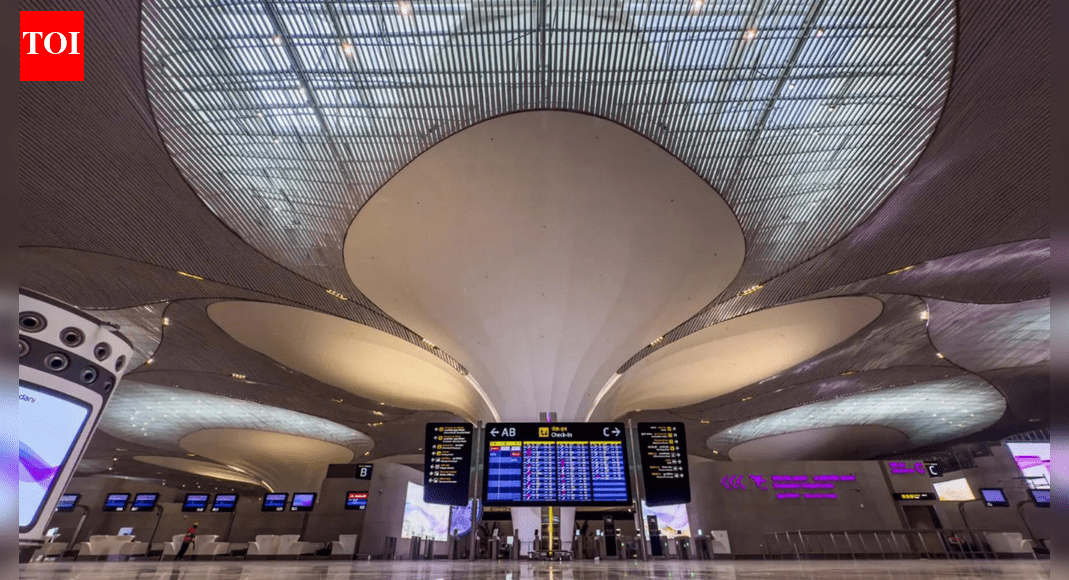
The Navi Mumbai Airport (NMIA) officially begins commercial flight operations today, December 25, 2025, opening a critical second aviation gateway for the Mumbai Metropolitan Region. This long-awaited facility is poised to become a major Indian aviation hub.
Its inauguration marks a significant Current Affair, promising enhanced connectivity and alleviating pressure on Mumbai’s existing airport. NMIA anticipates serving over 4,000 passengers on its opening day.
Initially, NMIA features approximately 30 daily domestic flights to 9 destinations, with IndiGo, Air India Express, Akasa Air, and Star Air as key operators.
This Breaking News piece details the inaugural flight schedule, passenger services, and future capacity, offering essential Today Updates for News Consumers.
Detailed Analysis
The Navi Mumbai International Airport project has been a long-standing vision for regional development, experiencing numerous delays over the years. Its inauguration today marks a significant turning point in India’s continuous efforts to enhance vital air travel infrastructure, particularly within the bustling Mumbai Metropolitan Region. Historically, Chhatrapati Shivaji Maharaj International Airport (CSMIA) in Mumbai has consistently faced severe capacity constraints, leading to significant air traffic congestion and limiting future growth potential. The concept of a second airport emerged decades ago as a strategic imperative, aiming to decongest CSMIA and adequately cater to the ever-increasing passenger demand. This new Navi Mumbai Airport is not merely an expansion but signifies a fundamental shift in regional connectivity. It underscores India’s strong commitment to building world-class infrastructure to support its robust economic growth and cater to its rising middle class, for whom air travel is becoming increasingly essential across India.
On its inaugural day, the Navi Mumbai Airport is set to handle approximately 30 domestic flights, equally split between arrivals and departures, indicating a measured yet impactful commencement of services. An NMIA spokesperson confirmed that terminal operations for departing passengers began around 6:40 am. Initially, commercial services will operate between 8 am and 8 pm, with comprehensive plans for a progressive scale-up to round-the-clock operations by February 2026. The airport is fully equipped to manage up to 10 aircraft movements per hour and will serve 13 destinations with 24 scheduled daily departures in its initial phase. Four major domestic airlines—IndiGo, Air India Express, Akasa Air, and Star Air—will spearhead operations, with IndiGo expected to emerge as the dominant carrier across most routes. Key routes to New Delhi, Bengaluru, and Goa are anticipated to experience the highest activity, reinforcing their status as critical air corridors within India’s domestic network.
The Navi Mumbai International Airport’s (NMIA) inauguration significantly complements the existing Chhatrapati Shivaji Maharaj International Airport (CSMIA) in Mumbai, long grappling with capacity limitations. While CSMIA manages high traffic, NMIA’s initial capacity of 20 million passengers per annum (MPPA) immediately expands the region’s overall aviation throughput. This 1,160-hectare greenfield project reflects a strategic, long-term infrastructure investment. Its ownership, with Adani Airports Holdings at 74% and CIDCO at 26%, showcases a robust public-private partnership, a common model for large-scale India News initiatives. This dual-airport strategy addresses critical demands, positioning the Mumbai Metropolitan Region as an even more formidable aviation hub in Current Affairs.
For general readers and news consumers, the opening of the Navi Mumbai Airport signifies more than just a new travel option; it represents improved connectivity, potentially reduced travel times, and a tangible boost to local economies in Navi Mumbai and surrounding areas. For those living in the Mumbai Metropolitan Region, this translates to better access to flights and potentially more competitive airfares due to increased capacity. Passengers can also anticipate modern conveniences like Digi Yatra-enabled contactless processing from day one, enhancing the overall travel experience. Looking ahead, monitoring the airport’s operational efficiency, the successful rollout of round-the-clock services by February 2026, and the expansion to international flights will be crucial. This critical infrastructure development promises to reshape regional demographics and boost local employment, underscoring its long-term impact on India’s growth trajectory and making it a key update for Today Updates on the national stage.
About the Author