Key Takeaways
Elon Musk warns NYC Mayor over FDNY appointment, sparking a debate on Tech Leadership Expertise. Understand implications for innovation & public safety.
Overview
In a significant social media intervention, Tech Titan Elon Musk has issued a stark warning to New York City Mayor-elect Zohran Mamdani. Musk asserts that the appointment of Lillian Bonsignore as the new FDNY Commissioner will compromise public safety and “will” lead to deaths, sparking a vital discussion on critical leadership expertise relevant to Technology India and global innovation circles.
For tech enthusiasts and startup founders, this controversy underscores a perennial challenge: the balance between specialized, hands-on experience and broad managerial expertise in critical leadership roles. This debate is highly pertinent in rapidly evolving tech domains where foundational knowledge directly impacts innovation success.
Musk’s concern centers on Bonsignore’s 31-year career, built entirely within the FDNY’s Emergency Medical Services (EMS). Despite EMS handling over 70 percent of all emergency calls, critics emphasize her lack of active firefighting experience.
This article delves into the future implications of such leadership decisions, analyzing the emphasis on verifiable, specific expertise for high-impact roles in modern innovation and risk management.
Key Data
| Aspect | Musk/Critics’ Stance | Mamdani/Supporters’ Stance |
|---|---|---|
| Commissioner’s Core Experience | Required: Active Firefighting | Provided: 31-year EMS background |
| Implication of Appointment | Public safety compromised, “people will die” | Historic milestone, strategic managerial role |
| Relevance of EMS Background | Insufficient for FDNY leadership | Relevant, given >70% emergency calls are EMS |
| Role of Commissioner | Requires tactical firefighting command | Civilian managerial role, focused on budgets/strategy |
Detailed Analysis
The controversy sparked by Elon Musk’s warning regarding the New York City Fire Department (FDNY) commissioner appointment serves as a profound case study for the global technology and innovation sector. This incident directly mirrors critical leadership debates endemic to startups and established tech giants: specifically, the optimal balance between deeply specialized, hands-on operational experience and broader, strategic managerial acumen for leadership in high-stakes environments. For tech enthusiasts, innovators, early adopters, and developers, this discussion resonates deeply because it reflects the inherent challenges in fields such as AI safety, autonomous vehicle development, or critical cybersecurity infrastructure, where the very reliability and public trust of new technologies hinge upon the verifiable expertise of their architects and leaders.
Musk’s direct and unvarnished challenge, echoed by fellow prominent tech founder David Sacks, stems from the appointment of Lillian Bonsignore. She built her impressive 31-year career entirely within FDNY’s Emergency Medical Services (EMS) division, crucially lacking active firefighting experience. This distinction is at the heart of the disagreement. Musk’s emphatic statement, “People will die because of this. Proven experience matters when lives are at stake,” is more than a casual remark; it encapsulates a core philosophy prevalent in innovation-driven cultures. In these ecosystems, specific, verifiable, and often tactical expertise is frequently considered the non-negotiable bedrock of reliability, safety, and future-proofing, especially when the outcomes directly impact human life or critical systems. The principle extends beyond public service into how tech companies vet their engineering leads, product managers for life-critical devices, or even the ethical oversight boards for advanced AI systems. This complex assessment of leadership profiles and operational requirements is a vital lesson for a burgeoning Technology India, as it navigates its own rapid expansion in critical tech infrastructure, talent development, and the implementation of smart city solutions, all of which demand precise and future-focused leadership definitions.
From a detailed tech analysis perspective, this controversy can be deconstructed as a debate over the “functional specification” of a critical leadership role. Elon Musk’s argument is rooted in the conviction that leading an organization like the FDNY, fundamentally a firefighting entity, requires specific, ground-level, active firefighting experience. He implicitly draws a parallel to the necessity of a CTO having deep coding experience or a hardware lead possessing intricate knowledge of electrical engineering. Bonsignore’s career, beginning as an EMT in 1991, saw her rise through the ranks to become chief of EMS, notably overseeing crucial operations during the peak of the COVID-19 pandemic before her retirement in 2022. While undeniably a testament to her capabilities within the emergency medical domain, Musk’s critique centers on the perceived gap in the precise tactical knowledge he believes the Commissioner position demands.
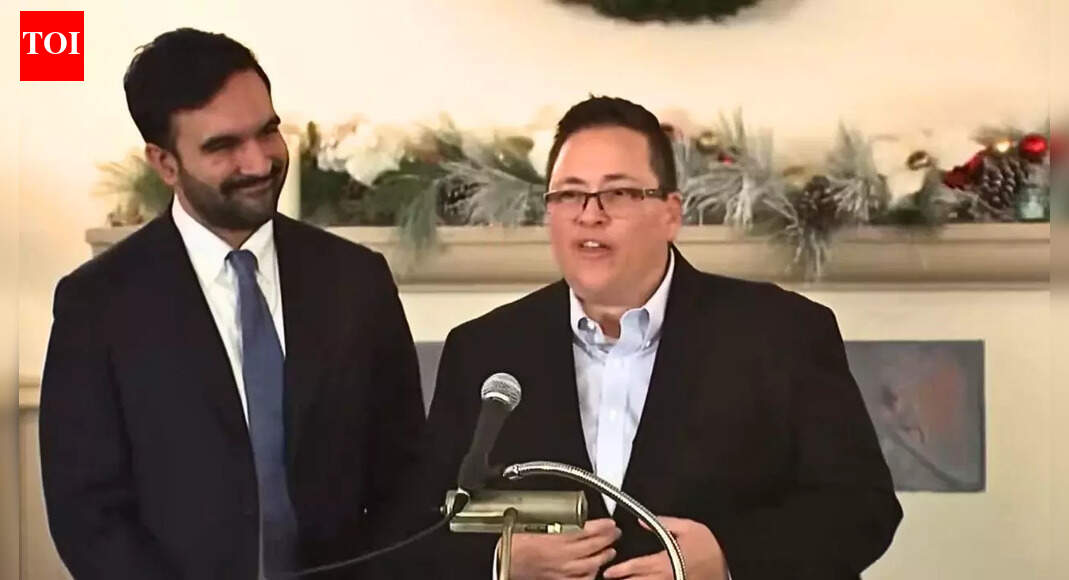
Bonsignore, however, articulates her value proposition from a different angle. She states, “I know the job. I know what the firefighters need and I can translate that to this Administration who’s willing to listen. I know what EMS needs. I have been EMS for 30 plus years.” This defense emphasizes a strategic, translational and advocacy role, positioning herself as a bridge between frontline operational realities (both EMS and understanding firefighting needs) and administrative policy. This perspective aligns with Mayor-elect Mamdani’s framing of the appointment not just as a leadership choice but as a historic milestone, with Bonsignore becoming the department’s first openly gay commissioner. Such appointments, while progressive, must also withstand scrutiny on merit-based and experiential grounds, especially in life-critical sectors. Crucially, FDNY’s own operational data further informs the debate, revealing a significant shift in emergency response. EMS units now handle more than 70 percent of all emergency calls, not traditional fire engines. This statistic offers a powerful counter-narrative, suggesting that the FDNY’s actual operational footprint has significantly evolved beyond its historical firefighting-centric identity. Supporters leverage this data to argue that the Commissioner’s role similarly evolved into a more civilian managerial capacity, focusing on budgets, strategic resource allocation, and inter-agency coordination, while tactical firefighting decisions appropriately remain with senior uniformed fire officers. This highlights how an organization’s “mission profile” can shift over time, demanding an adaptive leadership profile that may prioritize different forms of expertise, a phenomenon frequently observed in tech companies pivoting their core offerings.
Comparing this leadership debate to analogous scenarios within the technology industry reveals striking parallels in how “expertise” is defined for critical roles. Consider the appointment of a CEO for a deep-tech startup: would an investor prefer a leader with a profound engineering background directly related to the product, or a seasoned business manager with a track record of scaling companies across diverse sectors? Elon Musk, himself a founder with deep engineering expertise in his companies, consistently advocates for technical proficiency at the helm. Many innovators share this ethos, believing that true understanding of a product’s limitations and potential can only come from hands-on development experience. In contrast, the argument for Bonsignore reflects a trend towards valuing strategic management skills—budgeting, inter-agency coordination, and policy translation—over granular tactical know-how, especially for roles that are defined as civilian and administrative.
This dynamic is not unique to New York City or the FDNY; it is a global trend affecting public and private sectors. In the rapidly expanding Technology India landscape, startups and established firms constantly weigh the pros and cons of promoting technical architects versus experienced project managers to lead critical divisions. The “specs vs. strategy” argument becomes even more acute when regulatory frameworks, safety standards, and public trust are paramount. For instance, in the development of AI in healthcare or autonomous logistics, the lead decision-makers must possess a clear understanding of both the technological capabilities and the potential failure modes, demanding a synthesis of technical depth and strategic foresight. The FDNY data, highlighting over 70% EMS calls, acts as a critical benchmark, forcing a re-evaluation of the department’s primary operational focus and, by extension, the most relevant expertise for its top leadership.
This discussion also touches upon the concept of “organizational pivoting.” Just as a tech company might pivot its product strategy based on market demands, the FDNY appears to have organically pivoted towards a heavier EMS workload. The leadership choice, then, could be seen as an attempt to align top-level expertise with current operational realities. However, critics argue that a core capability (firefighting) must always be led by those who deeply understand its exigencies, regardless of shifting call volumes. This complex interplay of evolving organizational needs, historical mandates, and the definition of essential leadership experience will continue to shape how both public services and innovative tech firms structure their critical command chains.
For tech enthusiasts, innovators, early adopters, developers, and startup founders, the core takeaway from this controversy is the heightened importance of defining and validating critical leadership expertise. This isn’t merely a New York City public safety issue; it’s a foundational principle for any innovation-driven organization striving for resilience and safety in its products and services. The risk implied is clear: a perceived mismatch in leadership experience could lead to operational inefficiencies or, as Musk warns, potentially dire consequences. In the startup world, this translates to scrutinizing the technical depth of a CTO overseeing complex software or hardware development. For developers, it reinforces the value of their specialized skills and the need for their voices to be heard at strategic levels.
The opportunity lies in fostering a transparent framework for evaluating leadership roles based on measurable competencies and evolving organizational needs. Organizations, whether a public safety department or a cutting-edge AI company in Technology India, must consistently assess whether their leadership structures truly align with their most pressing operational realities and future strategic directions. Metrics to monitor going forward include any publicly available performance indicators of the FDNY under Bonsignore’s leadership, specifically response times for both firefighting and EMS calls, and any reported incidents attributed to command decisions. These real-world outcomes will provide critical data points for validating either side of the “experience” argument.
Ultimately, this incident prompts a forward-looking reflection on talent acquisition and leadership development within the tech ecosystem. As technology advances, the lines between different forms of expertise blur and new specializations emerge. Innovators should consider how to cultivate leaders who not only possess deep domain knowledge but also demonstrate the adaptability and foresight to manage evolving operational profiles. The dialogue initiated by Elon Musk serves as a powerful reminder that while innovation drives progress, rigorous attention to foundational expertise in leadership remains paramount for ensuring safety, efficiency, and public trust in any critical system or service, whether digital or physical.
About the Author