Key Takeaways
Kodiak AI and Bosch collaborate to scale autonomous trucks. Analyze market impact, growth potential, and investment implications for investors in 2026.
Overview
The collaboration between Kodiak AI, a specialist in autonomous driving, and global automotive supplier Bosch marks a pivotal moment for the autonomous logistics sector and its investment outlook for 2026. Unveiled at the 2026 Consumer Electronics Show, this strategic partnership aims to integrate comprehensive self-driving hardware and software into standard big rigs, accelerating deployment and scalability in a market ripe for efficiency gains globally and in India. For astute financial market participants, this alliance transcends a mere technological announcement; it represents a significant inflection point with far-reaching implications for supply chain dynamics, operational cost structures, and future capital allocation strategies.
Retail Investors, Swing Traders, Long-term Investors, and Finance Professionals must recognize this partnership as a powerful validation of the autonomous trucking sector’s commercial viability. It marries Kodiak’s advanced autonomous intelligence with Bosch’s unparalleled industrial-scale hardware prowess, creating a robust, modular solution poised to overcome historical deployment hurdles. The partnership effectively de-risks Kodiak’s path to scalability while expanding Bosch’s footprint into a high-growth, next-generation mobility segment. This development warrants close scrutiny as it influences investment decisions across the automotive, logistics, and technology sectors, particularly within the Indian stock market landscape.
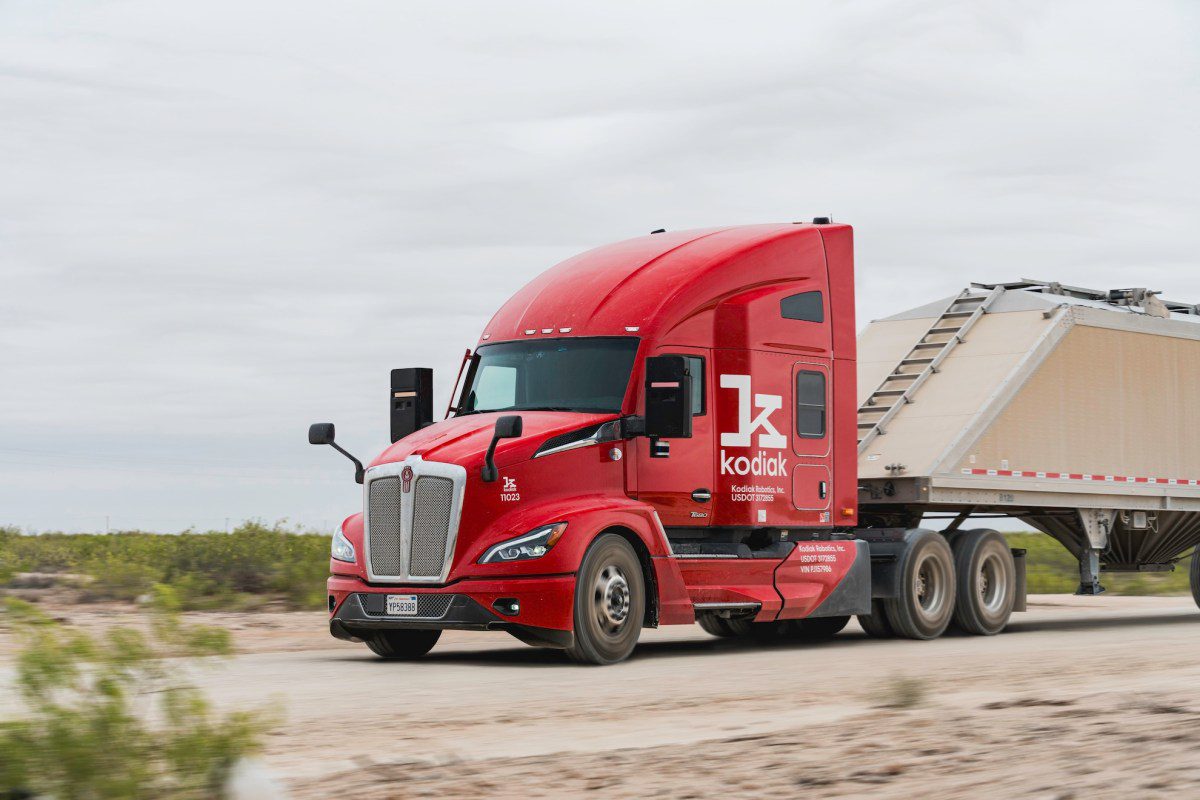
Kodiak, which successfully went public via a SPAC merger in September 2025, has already demonstrated tangible operational capability by commencing driverless deliveries for Atlas Energy Solutions since January 2025. Out of an initial 100-truck order, eight trucks are currently deployed. Bosch’s contribution will involve critical components such as advanced sensors and steering technologies. This combination of early commercial success and established industrial partnership provides a compelling narrative for investors assessing market penetration and competitive positioning.
The subsequent analysis will delve into the strategic depth of this alliance, comparing its modular integration model against vertically integrated competitors. It will assess the short-term market reactions, medium-term ripple effects on the logistics ecosystem, and long-term structural changes across the mobility sector, offering specific metrics and events investors should monitor to navigate this evolving investment landscape.
Key Data
| Milestone/Component | Detail | Significance |
|---|---|---|
| Public Listing | SPAC Merger (September 2025) | Capital injection for scalability; investor confidence. |
| Commercial Operations | Driverless deliveries for Atlas Energy Solutions (January 2025) | Transition from testing to actual commercial deployment. |
| Deployment Scale | 8 trucks deployed (initial 100-truck order for Atlas) | Tangible evidence of operational capability and scaling potential. |
| Strategic Partner Contribution | Bosch supplies advanced sensors, steering technologies | Access to high-quality, standardized components for mass production. |
| Safety & Reliability Feature | Kodiak’s redundant systems (braking, steering, sensors, computing) | Addresses key concerns for regulators and commercial operators. |
Detailed Analysis
The autonomous trucking sector is not merely an evolutionary step in logistics; it represents a revolutionary shift poised to redefine a multi-trillion-dollar global heavy-duty trucking industry. Driven by an intensifying demand for logistical efficiencies, persistent driver shortages across major economies, and exponential advancements in AI and sensor technology, the sector stands at a critical juncture. Historically, the journey from conceptualization to widespread commercial deployment for autonomous vehicles has been arduous, marked by formidable technological hurdles, a labyrinth of regulatory complexities, and colossal capital requirements. Companies venturing into this domain typically face immense pressures to validate their technology’s safety, reliability, and economic viability.
Kodiak AI’s trajectory underscores the immense potential and validation of this nascent market segment. Its early foray into driverless deliveries within the Permian Basin for Atlas Energy Solutions, commencing in January 2025, transcended mere testing. This move into actual commercial operation, deploying eight trucks out of an initial 100-truck order, signifies a pivotal milestone. It offers tangible evidence of the technology’s maturity beyond controlled environments, demonstrating real-world operational capability. The subsequent decision to go public via a SPAC merger with Ares Acquisition Corporation II in September 2025 provided the crucial capital injection necessary to scale operations, signaling strong investor confidence in a sector previously viewed with considerable skepticism. This financial move, coupled with operational success, establishes Kodiak as a vanguard in the long-haul freight and industrial applications of autonomous technology. The alliance with Bosch, a manufacturing titan renowned for its automotive components and engineering expertise, serves as a powerful validation of the autonomous trucking sector’s robust trajectory. It also highlights the industry’s increasing adoption of a modular approach to autonomous system development, leveraging specialized strengths rather than purely vertically integrated models.
The strategic underpinnings of the Kodiak-Bosch partnership are both technically astute and commercially compelling, designed specifically to accelerate the scalability of autonomous trucking. Bosch’s contribution is foundational, encompassing a critical array of production-grade hardware components. These include advanced sensors—the “eyes” of the autonomous system—and sophisticated vehicle actuation systems, particularly in steering technologies. Bosch’s long-standing reputation for manufacturing scale, reliability, and precision engineering in the automotive world grants Kodiak access to high-quality, standardized components indispensable for transitioning from pilot projects to mass production. This supply chain collaboration significantly mitigates the manufacturing risks often associated with emerging technologies.
Conversely, Kodiak brings its cutting-edge proprietary self-driving system, distinguished by its notable incorporation of redundant systems for braking, steering, sensors, and computing. This layered redundancy is not merely an engineering feature; it is paramount for ensuring unparalleled safety and operational reliability in driverless scenarios, directly addressing a primary concern for both regulators and commercial fleet operators. The flexibility inherent in the system’s integration—whether directly on the vehicle production line or through a third-party upfitter—unlocks an expansive market opportunity. This adaptability allows Kodiak’s technology to be seamlessly adopted by a broader spectrum of semi-truck manufacturers and existing fleet operators, accelerating market penetration.
Don Burnette, Kodiak’s founder and CEO, articulated the strategic essence of this collaboration, emphasizing its provision of “the modularity, serviceability, and system-level integration crucial for commercial success.” Paul Thomas, president of Bosch Mobility Americas, reciprocated this sentiment, acknowledging the invaluable opportunity to deepen Bosch’s understanding of real-world autonomous vehicle requirements, thereby enhancing their offerings for the broader autonomous mobility ecosystem. This alliance not only substantially de-risks Kodiak’s ambitious path to scalability but concurrently expands Bosch’s strategic footprint within a rapidly expanding, next-generation mobility segment. The partnership effectively creates a symbiotic relationship where technological innovation meets industrial-scale manufacturing, a synergy critical for widespread adoption.
In the fiercely competitive landscape of autonomous trucking, the Kodiak-Bosch partnership’s modular, open-platform strategy offers a distinct competitive advantage over many rivals. Unlike certain competitors that prioritize highly vertically integrated solutions – developing all hardware and software in-house – this collaboration strategically leverages the core strengths of both a technology specialist (Kodiak) and a Tier-1 automotive supplier (Bosch). This differentiated approach promises to significantly accelerate market adoption by delivering a more adaptable, versatile, and potentially more cost-effective solution for diverse truck manufacturers and fleet operators.
Vertically integrated models, while offering tight control, often face inherent challenges such as slower scalability, higher capital expenditure requirements, and longer development cycles. Kodiak’s strategy, by contrast, externalizes hardware production to an established giant like Bosch, allowing Kodiak to intensely focus on its core competency: advancing its proprietary AI and software. This division of labor can drastically reduce barriers to entry for commercial clients, as the technology can integrate into existing vehicle architectures rather than mandating entirely new truck designs. The ability to integrate systems either at the factory level for new vehicles or via aftermarket upfitting for existing fleets provides unparalleled flexibility, a crucial differentiator in a fragmented market.
The global trend towards smart logistics and supply chain optimization further underpins the value of such advancements. As industries increasingly demand efficiency, safety, and reduced operational costs, players offering flexible integration models are strategically positioned for robust growth. Regulatory frameworks, while still nascent and evolving globally, generally favor systems that demonstrably offer robust safety features and high levels of redundancy—attributes that Kodiak’s existing system and its enhanced partnership with Bosch are explicitly designed to deliver. This collaborative model has the potential to become a benchmark for future partnerships in the autonomous sector, driving innovation through synergy rather than monopolistic control.
[Suggested Matrix Table: Comparison of Autonomous Trucking Integration Models: Vertical Integration vs. Modular Partnership (Key Metrics: Scalability, Cost-Efficiency, Manufacturer Flexibility, Safety Redundancy, Time-to-Market)]
For Retail Investors, the Kodiak-Bosch partnership presents a compelling long-term growth opportunity within the burgeoning autonomous trucking sector, albeit accompanied by the inherent risks typical of early-stage technology and market adoption cycles. Investors should meticulously monitor forthcoming announcements regarding specific production timelines, new commercial contracts beyond the initial Atlas Energy deal, and any expansions in geographic operational reach. These milestones will serve as tangible benchmarks for the partnership’s commercial success.
Swing Traders may encounter heightened volatility around news pertaining to regulatory approvals, significant technological advancements, or shifts in the competitive landscape. The absence of an immediate, widely publicized production timeline, as acknowledged in the source, introduces a period of intrinsic uncertainty that could indeed fuel short-term price movements. Prudent traders will watch for technical levels and volume indicators following such news.
Long-term Investors, especially those building a broader investment thesis around future mobility and logistics, should deeply analyze Kodiak’s proven ability to secure additional strategic partnerships and expand its commercial footprint. Equally critical is Bosch’s sustained strategic commitment to this segment. The successful deployment of driverless trucks since January 2025 with Atlas Energy provides crucial, verifiable evidence of operational capability and revenue generation potential, a key metric for evaluating the company’s progress and the viability of its business model.
Finance Professionals will find particular interest in how this partnership could structurally impact the broader automotive and logistics sectors. Bosch’s standardized hardware approach has the potential to foster a more open and competitive market for autonomous trucking components, thereby reshaping traditional automotive supply chains and forging new revenue streams for technology integrators. Key metrics for monitoring include the pace of regulatory harmonization across diverse regions for autonomous vehicle deployment, the growth rate of autonomous miles driven commercially, and any subsequent strategic partnerships or acquisitions within the autonomous logistics sector. While specific financial projections were not disclosed, this robust alliance clearly delineates a path toward substantial market expansion and sustained innovation in self-driving technology. The ability to integrate advanced self-driving capabilities into existing infrastructure, rather than mandating entirely new vehicle designs, offers a highly compelling investment narrative for those focused on efficient capital deployment in the future of transportation and its associated financial analysis.
About the Author