Key Takeaways
Explore Jana Gana Mana’s evolution from its 1911 debut to 1950 adoption as India’s National Anthem. Understand its political context and legacy.
Overview
On December 27, 1911, ‘Jana Gana Mana’ was publicly sung for the first time at the Indian National Congress session in Calcutta. This pivotal moment initiated the journey of a composition by Rabindranath Tagore that would nearly four decades later be formally adopted as India’s National Anthem, becoming a shared national voice and symbol of sovereignty.
For News Readers, Policy Watchers, and Informed Citizens, understanding this historical progression offers crucial insights into the evolution of national identity and political symbolism during India’s anti-colonial movement. The anthem’s adoption was a significant decision by the Constituent Assembly, balancing nationalist sentiment with practical considerations.
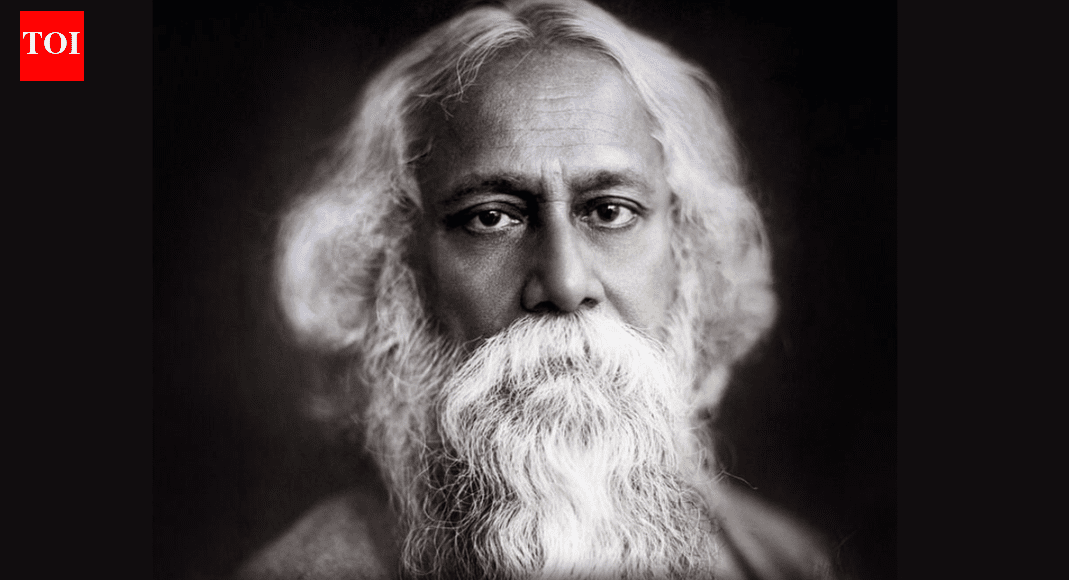
Originally a patriotic composition in Bengali, the song gained resonance through various nationalist circles and was later translated into English by Tagore himself in 1919, titled ‘The Morning Song of India’. Its eventual selection over other revered songs like ‘Vande Mataram’ underscores a complex process.
This analysis will explore the political context of its debut, its journey through the freedom struggle, and the constitutional debates that culminated in its official recognition, providing a balanced historical perspective for political analysts.
Detailed Analysis
The genesis of ‘Jana Gana Mana’ is deeply embedded in the political and cultural currents of early 20th-century India. The 1911 Calcutta session of the Indian National Congress, where the song first resonated, marked a critical juncture in India’s anti-colonial movement. At this time, the Congress functioned not as a modern electoral political party, but as a broad national organization uniting diverse leaders, intellectuals, and activists. Its annual gatherings served as platforms for articulating political resolutions and expressing nationalist sentiments through cultural forms. This context is crucial for understanding the song’s initial reception and purpose, amidst a burgeoning national consciousness that sought to define India’s future independent identity.
The performance itself, led by Tagore’s niece Sarala Devi Chowdhurani, was registered in contemporary Congress records as a patriotic composition titled “Janaganamana Adhinayaka.” Written in highly Sanskritised Bengali, its language resonated particularly with the Brahmo Samaj and Bengali intelligentsia. However, the timing of its debut, following the Delhi Durbar of December 1911, which celebrated King George V and Queen Mary and announced the nullification of the Bengal partition and the shift of the Imperial Capital to Delhi, led to immediate political controversy. Some newspaper accounts incorrectly suggested the song was a tribute to the British monarch. Rabindranath Tagore vehemently rejected these claims in subsequent letters, clarifying that the “Adhinayaka” referred to an eternal guiding spirit of the Indian people, not a temporal ruler, emphasizing the song’s spiritual and universal appeal over any colonial allegiance.
The journey of ‘Jana Gana Mana’ towards national anthem status involved a complex interplay with other patriotic compositions, most notably ‘Vande Mataram’. While ‘Vande Mataram’ held widespread popularity from the Swadeshi movement, the Constituent Assembly, after India gained independence, grappled with selecting an anthem that could represent the nascent nation globally. Prime Minister Jawaharlal Nehru highlighted ‘Vande Mataram’s’ challenges for orchestral performance in international settings, favoring ‘Jana Gana Mana’ for its musical adaptability and inherent movement. This comparison of attributes was central to the final decision. Additionally, ‘Jana Gana Mana’ gained significant political resonance when adopted by Subhas Chandra Bose’s Indian National Army (INA) during World War II, further mainstreaming its association with anti-colonial resistance. Tagore himself penned another national anthem, ‘Amar Sonar Bangla,’ for Bangladesh, underscoring his unique contribution to global national identity. [Suggested Matrix Table: Comparative Journey of India’s National Anthems, highlighting adoption contexts, composers, and roles in the freedom struggle]
For Policy Watchers and Informed Citizens, the adoption of ‘Jana Gana Mana’ on January 24, 1950, by the Constituent Assembly, just two days before India became a republic, marked a profound policy implication. This decision, formally announced by Dr. Rajendra Prasad, codified a crucial national symbol, balancing historical contributions (like ‘Vande Mataram’s’ equal status as a national song) with practical considerations for international representation. The choice of only the first stanza of Tagore’s original five-verse composition and its standardization for orchestral performance reflects a pragmatic approach to nation-building. The enduring legacy of ‘Jana Gana Mana’ extends beyond its lyrical beauty; it represents a constitutional choice, a testament to India’s unique path to self-determination, and a unifying voice that continues to resonate across generations, embodying the spirit of a diverse nation.
About the Author