Key Takeaways
Israel approves 19 new West Bank settlements, fueling regional tensions. This move challenges international law & the two-state solution, impacting global diplomacy.
Market Introduction
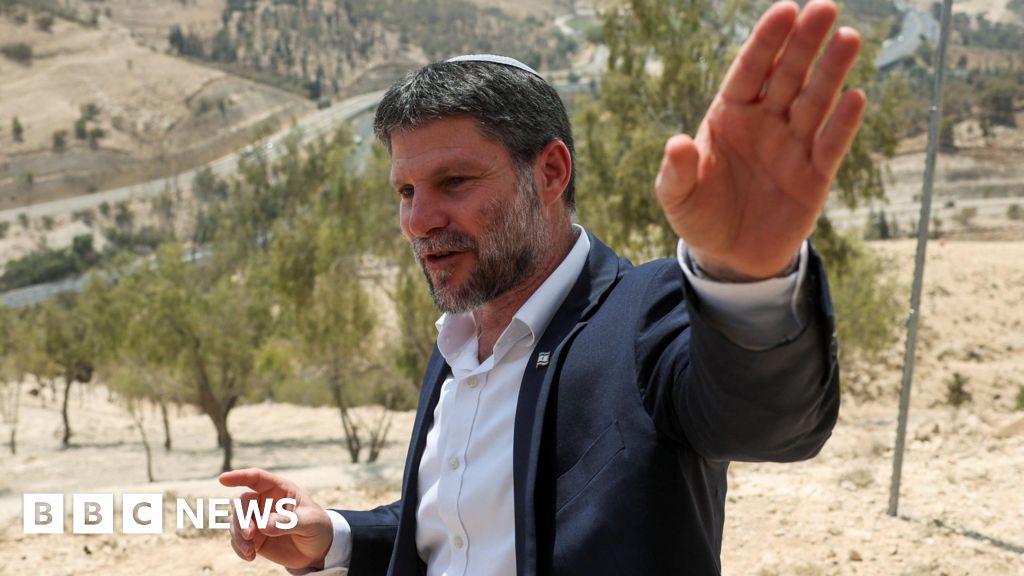
Israel’s security cabinet recently approved the recognition of 19 new settlements in the occupied West Bank, marking a significant escalation in the government’s settlement expansion strategy. This decision aligns with far-right Finance Minister Bezalel Smotrich’s stated goal of obstructing the establishment of a Palestinian state.
This move carries substantial weight for News Readers, Policy Watchers, Informed Citizens, and Political Analysts, as it deepens the occupation, fuels regional tensions, and directly challenges international law, which considers such settlements illegal. It also directly undermines the viability of a two-state solution, a long-standing diplomatic objective.
The approvals contribute to a total of 69 settlements sanctioned by the current Israeli government over the past three years. This rate has led the United Nations to report settlement expansion reaching its highest level since 2017.
Understanding the historical context, stakeholder reactions, and policy implications of this decision is crucial for comprehending the evolving political landscape in the Middle East and its broader international repercussions.
Data at a Glance
| Settlement Expansion Metric | Details/Status | Policy Implication |
|---|---|---|
| Recent Approvals (Dec 2025) | 19 new settlements recognized | Directly challenges international law |
| Total Approvals (Past 3 Years) | 69 settlements (cited by Smotrich) | Significant increase under current government |
| Previous Approvals (May 2025) | 22 new settlements, largest in decades | Highest expansion level since 2017 |
| Re-establishment of Settlements | Ganim and Kadim (dismantled 20 years ago) | Reverses previous disengagement policies |
| E1 Project Housing Plans (Aug 2025) | Over 3,000 homes approved between Jerusalem & Maale Adumim | Long-frozen project, viewed as severing Palestinian continuity |
In-Depth Analysis
The recent approval by Israel’s security cabinet to recognize 19 new settlements in the occupied West Bank signifies a critical juncture in the ongoing Israeli-Palestinian conflict. Historically, Israeli settlements in the West Bank are considered illegal under international law, a stance echoed by numerous international bodies and countries. This latest move follows a consistent pattern of expansion by the current Israeli government, which took office in 2022. Since then, it has not only increased new settlement approvals but also initiated legalisation processes for previously unauthorised outposts, reclassifying them as ‘neighbourhoods’ of existing settlements. This systematic approach forms part of a broader policy framework aimed at solidifying Israel’s presence in the territory and, as explicitly stated by far-right Finance Minister Bezalel Smotrich, to actively impede the establishment of a sovereign Palestinian state, fundamentally altering the political geography defined broadly by pre-1967 borders.
The current detailed analysis of the expansion reveals specific actions that carry profound implications. The approval of 19 new settlements directly contributes to the 69 settlements sanctioned by this government over the past three years. This figure underscores the rapid acceleration of settlement activity, which the United Nations has identified as reaching its highest level since 2017. Notably, the decision includes the re-establishment of Ganim and Kadim, two settlements dismantled nearly two decades ago. This reversal of prior disengagement policies reflects a hardening of political will. Furthermore, the August 2025 approval of plans to construct over 3,000 homes in the E1 project, situated between Jerusalem and the Maale Adumim settlement, represents another significant development. This project had been frozen for decades due to intense international opposition, as its completion would effectively sever the territorial continuity of a future Palestinian state, rendering the two-state solution practically unfeasible. Smotrich’s assertion that the E1 plan would ‘bury the idea of a Palestinian state’ highlights the explicit political objectives behind these construction policies.
Comparing this current wave of expansion to historical precedents and international reactions provides critical context. The UN Secretary-General Antonio Guterres has consistently warned that Israel’s ‘relentless’ settlement expansion fuels tensions and restricts Palestinian access to land. Saudi Arabia has condemned the recent actions, reflecting a broader dissatisfaction among Arab nations who view such moves as detrimental to peace prospects and a two-state solution. While previous US administrations, such as under President Donald Trump, issued warnings against potential Israeli annexation of the West Bank, suggesting it could lead to a loss of US support, the international community remains largely divided on effective deterrents. In contrast, countries like the UK, Australia, and Canada have recently undertaken symbolic steps, such as recognizing a Palestinian state, signaling evolving diplomatic pressures despite Israeli Prime Minister Benjamin Netanyahu’s opposition. The approximately 700,000 settlers residing in 160 settlements across the West Bank and East Jerusalem, on land Palestinians envision for their future independent state, underscore the deeply entrenched nature of this complex issue. [Suggested Matrix Table: Comparative International Stances on Israeli Settlements, showing positions of UN, Saudi Arabia, US (past), UK (recent), and International Law framework with relevant policy impact]
For News Readers, Policy Watchers, Informed Citizens, and Political Analysts, these developments signal a continued erosion of the prospects for a viable two-state solution. The Israeli government’s explicit policy objectives and sustained settlement expansion risk further entrenching the occupation and exacerbating violence, which has already surged in the occupied West Bank since the Gaza war began in October 2023. This situation also raises serious concerns about the potential for de facto or de jure annexation of the West Bank, an outcome with profound regional and global implications. Monitoring future reactions from the United Nations, the European Union, and key regional players will be essential. Further, observing any shifts in US policy regarding settlement activity, particularly in light of previous warnings against annexation, will be crucial. The trajectory of negotiations, if any, and the ongoing human rights situation in the occupied territories are key metrics to watch as this complex geopolitical challenge continues to unfold.
About the Author