Key Takeaways
UN experts and global figures urgently press Iran to halt the execution of woman activist Zahra Tabari. Understand human rights implications and international policy concerns.
Overview
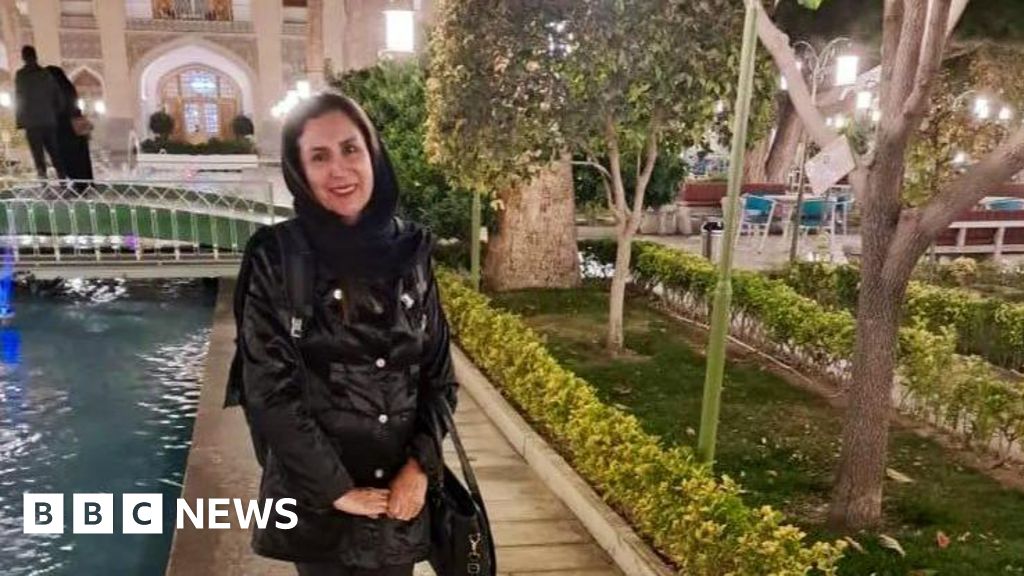
UN experts and 400 prominent women have issued an urgent plea to Iran to halt the impending execution of Zahra Tabari, a 67-year-old electrical engineer and women’s rights activist. This high-profile case highlights escalating international concerns over human rights in the country and its judicial practices.
Ms. Tabari faces a death sentence after a trial lasting less than 10 minutes, accused of “armed rebellion” and collaboration with a banned opposition group, the People’s Mujahideen Organisation of Iran (PMOI). Her family describes the evidence presented as “extremely limited and unreliable,” raising significant questions about due process.
UN experts reveal at least 51 other individuals currently face the death penalty in Iran for national security offences, including similar charges. In a broader context, Iran executed 1,426 people, including 41 women, in the first 11 months of 2025, marking a stark 70% increase from the previous year’s figures for the same period.
This article examines the severe procedural violations in Ms. Tabari’s case, the broader patterns of executions in Iran, and the profound implications for global human rights policy and international advocacy efforts.
Key Data
| Execution Metric | Count (Jan-Nov 2025) | Context/Notes |
|---|---|---|
| Total Executions | 1,426 | 70% increase vs. previous year (same period) |
| Women Executed | 41 | Included in total executions |
| Drug-Related Offenses | ~713 | Approximately 50% of total executions |
| National Security Offenses | 53 | Includes charges like ‘armed rebellion’ |
Detailed Analysis
The global community has intensified its focus on Iran’s judicial system and human rights record, particularly concerning the application of the death penalty. The United Nations, through its Human Rights Council and special rapporteurs, consistently highlights systemic patterns of arbitrary arrests, profound deficiencies in due process, and the extensive use of capital punishment within the country. The urgent international plea to stop the execution of Zahra Tabari serves as a critical illustration of these overarching issues. Her case, therefore, represents a microcosm of broader narratives wherein activists, especially women advocating for fundamental rights, face severe state repression for their civic engagement. Accusations such as “armed rebellion” and alleged collaboration with opposition groups like the People’s Mujahideen Organisation of Iran (PMOI) have historically functioned as instruments to suppress dissent and political opposition. The Iranian government perceives such groups as significant security threats, leading to stringent legal consequences for alleged affiliates and those accused of undermining national stability. The involvement of UN experts carries substantial weight, underscoring their critical role in monitoring state compliance with international human rights law. Their joint statement, which explicitly warns of “a pattern of serious violations of international human rights law,” unequivocally signals a clear and concerning divergence between Iran’s current practices and established global legal norms. This situation further highlights specific concerns related to women’s rights activism in Iran, situating Tabari’s actions, such as possessing a cloth bearing the words “Woman, Resistance, Freedom,” within the broader struggle for gender equality. This frames her alleged “crime” not merely as a national security transgression but as a direct challenge to the state’s stringent control over women’s public and political expression, thereby raising serious questions about the targeting of gender equality advocacy.
A detailed examination of Zahra Tabari’s case, as meticulously documented by UN experts, reveals a troubling series of procedural violations. Her arrest, executed during a home raid without a judicial warrant, directly contravenes international legal standards designed to protect individual liberty and security of person, representing a fundamental breach of due process. Following her arrest, Ms. Tabari endured a month of solitary confinement, during which she reportedly faced significant pressure to confess to charges of taking up arms against the state and membership in an opposition group. Such prolonged isolation and coercive interrogation tactics raise serious concerns, potentially amounting to psychological torture and severely undermining the voluntariness and reliability of any confession, thereby violating the core tenets of fair trial principles. Crucially, Ms. Tabari was denied access to a lawyer of her choosing and was instead represented by a court-appointed lawyer. This distinction is vital in politically sensitive cases, where the independence, expertise, and unwavering commitment of legal counsel are paramount to ensuring a robust defense against state accusations. The trial itself, conducted via video link and lasting an “extraordinarily brief” period of “less than 10 minutes,” represents a profound subversion of judicial due process. Such a truncated hearing severely curtails any genuine opportunity to present a defense, cross-examine witnesses effectively, or contest the evidence, rendering the entire judicial process fundamentally unfair. Furthermore, the “extremely limited and unreliable evidence” cited – consisting of a piece of cloth and an unpublished audio message – is, as the UN experts assert, unequivocally insufficient to substantiate a charge as grave as “armed rebellion,” which typically implies active participation in violent acts. The UN experts’ condemnation, asserting that “The severe procedural violations… render any resulting conviction unsafe,” is not a mere technical observation but a profound challenge to the legitimacy and ethical foundation of the entire judicial process that culminated in a death sentence.
Ms. Tabari’s case, while alarming, unfortunately is not an isolated incident but indicative of Iran’s broader application of the death penalty. UN experts confirm that “at least 51 other people are known to be facing the death penalty in Iran” for similar national security offences, encompassing charges such as “enmity against God,” “corruption on Earth,” and espionage. This pattern is further exemplified by the case of Pakhshan Azizi, another Kurdish rights activist and social worker, also facing the death penalty on similar charges, whose sentencing “appeared to be solely related to her legitimate work.” These comparisons underscore a systemic approach to suppressing activism and dissent through the harshest judicial means. The statistics from Iran Human Rights (IHR) are stark, reporting 1,426 executions, including 41 women, in the first 11 months of 2025 – a staggering 70% increase compared to the same period last year. An analysis of these executions reveals that “almost half” were for drug-related offences, while 53 were for national security offences. This wide application of capital punishment, often for non-violent acts or charges like “armed rebellion” based on tenuous evidence, fundamentally contradicts the established international law principle that restricts the death penalty to the “most serious crimes,” typically meaning intentional killing. The public appeal from over 400 prominent women, including Nobel laureates and former heads of state, highlights a chilling aspect: the assertion that “Iran is today the world’s number one executioner of women per capita.” This places Iran in a uniquely alarming position regarding gender-based judicial punishment, directly corroborating the UN experts’ view that criminalizing women’s activism for gender equality constitutes a “grave form of gender discrimination.” The accelerated rate and sheer volume of executions, coupled with the broad and often ambiguous nature of the charges, reveal a systemic pattern that starkly distinguishes Iran from many other nations in its use of capital punishment and its adherence to international human rights standards.
For News Readers, the immediate and crucial takeaway from this situation is the severe human rights crisis actively unfolding within Iran, starkly exemplified by the urgent international outcry surrounding Zahra Tabari’s case. It powerfully underscores the increasingly precarious situation faced by activists, particularly women, and highlights the critical importance of sustained global awareness and robust advocacy efforts to address these escalating concerns. Policy Watchers will find that this situation presents significant and complex policy implications for international relations and diplomatic engagements with Iran. The Iranian government’s apparent disregard for international human rights law, as meticulously detailed by UN experts, inevitably strains Iran’s standing on the global stage and complicates any efforts towards constructive engagement or the implementation of targeted sanctions. Policymakers face the challenging task of carefully weighing profound humanitarian concerns against broader geopolitical considerations. The collective action of 400 prominent women, including former heads of state, undeniably signals a growing international consensus on the severity and urgency of the issue, which will likely inform and shape future diplomatic strategies. For Informed Citizens, it becomes paramount to diligently monitor statements and reports from influential international human rights bodies, such as the UN Human Rights Council, and reputable non-governmental organizations like Iran Human Rights. Paying close attention to similar cases and documented patterns of judicial proceedings provides invaluable insight into the evolving broader political landscape and the state of civil liberties within Iran. Understanding the precise details of cases like Tabari’s, including the nature of the evidence presented and the specific trial processes, empowers a more nuanced and informed perspective on critical global justice issues. Finally, for Political Analysts, the case serves as a critical data point in assessing the Iranian government’s internal stability and its strategies for responding to dissent. The observed increase in the rate of executions, particularly for national security and drug-related offenses, strongly suggests a hardening and more repressive state stance. Analysts must consider how these internal judicial policies might reverberate through regional dynamics and influence Iran’s interactions with established international legal frameworks. The intersection of gender discrimination with state repression, as prominently highlighted by the UN, offers a crucial analytical lens for evaluating the regime’s approach to maintaining social and political control. Continued scrutiny of any potential legal reforms, or the notable absence thereof, remains absolutely paramount for understanding Iran’s future trajectory.
About the Author