Key Takeaways
NHAI pioneers India’s first wildlife-safe road corridor. Analyze the investment implications for construction firms, sustainable infrastructure, and future tenders in the Indian market.
Overview
India’s infrastructure landscape is witnessing a pivotal shift towards sustainable development, exemplified by the National Highways Authority of India (NHAI)’s introduction of the country’s first integrated “wildlife-safe” road corridor on NH-45 in Madhya Pradesh. This initiative redefines conventional highway construction, embedding ecological conservation directly into project design, holding significant implications for infrastructure investment in India.
For retail investors, swing traders, and finance professionals, this project signals an evolving tender environment. Companies adept at integrating advanced environmental mitigation strategies may gain a competitive edge, reshaping long-term capital allocation strategies within the construction and engineering sectors.
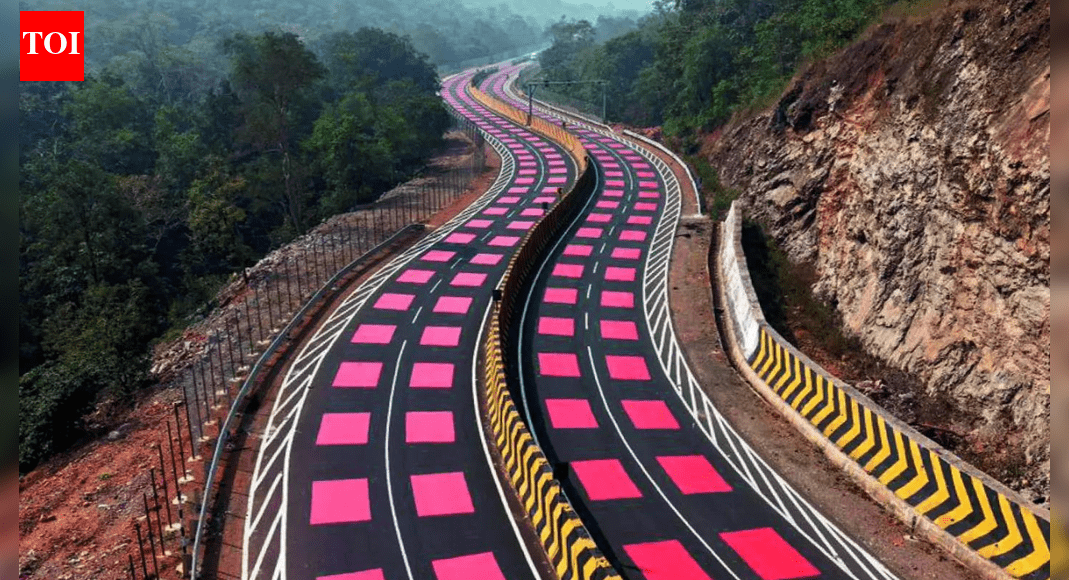
The project features a 12km stretch through the Veerangana Durgavati Tiger Reserve, including a 2km zone with 5mm thick raised red thermoplastic markings, 25 strategically located wildlife underpasses, and continuous iron fencing.
This development necessitates a detailed financial analysis of the project’s impact on public works, sector-specific opportunities, and the broader trend of ESG integration in the Indian stock market.
Detailed Analysis
The rapid expansion of India’s national highway network, a cornerstone of economic growth and logistical efficiency, has often been a double-edged sword, presenting challenges to environmental conservation. Historically, infrastructure projects have prioritized speed and cost-efficiency, occasionally at the expense of ecological balance. However, a noticeable paradigm shift is underway, driven by increasing environmental consciousness and global ESG investment mandates. NHAI’s latest venture on the Bhopal-Jabalpur national highway (NH-45) represents a proactive response to this evolving landscape. This project, situated within a critical tiger habitat in Madhya Pradesh, goes beyond traditional road-building, setting a new benchmark for environmentally conscious infrastructure. It reflects a growing understanding that long-term economic prosperity is intrinsically linked to ecological sustainability, influencing future public and private sector tenders and capital allocation decisions across the nation.
The “wildlife-safe” road corridor on NH-45 integrates several innovative engineering and design features. Spanning a 12km stretch within the Veerangana Durgavati Tiger Reserve, the project’s core innovation lies in a 2km zone. Here, the asphalt is overlaid with 5mm thick raised red thermoplastic markings, creating what NHAI regional officer S K Singh describes as a “table-top” surface. This visually alerts drivers to a wildlife-sensitive area and physically encourages speed reduction through mild vibrations, unlike abrupt speed breakers. Complementing this, 25 wildlife underpasses have been constructed, strategically located based on observed animal movement, rather than engineering convenience. Continuous iron fencing guides animals towards these safe crossing points. These design choices, unprecedented on Indian national highways for wildlife zones, underscore a significant investment in specialized construction techniques and materials, potentially raising initial capital expenditure but promising substantial long-term gains in ecological preservation and public safety. Former IFS officer Jagdish Chandra notes this project’s potential for “positive results,” highlighting its pioneering nature.
Compared to conventional highway projects, the NH-45 wildlife corridor embodies a distinct shift in project economics and engineering priorities. Traditional highway construction primarily focuses on traffic flow, material costs, and build times. This new model, however, incorporates specialized environmental mitigation elements, which, while adding to upfront costs, could significantly reduce ecological damage and associated long-term liabilities. Internationally, such wildlife-sensitive designs are more common, suggesting India is now aligning with global best practices in sustainable infrastructure development. This trend signals a potential competitive advantage for construction and engineering firms that can integrate advanced environmental impact assessment, ecological design, and specialized construction techniques into their service offerings. The project’s success could pave the way for similar mandates in future NHAI tenders, influencing project specifications and budget allocations across the sector. This also highlights a broader industry trend where environmental compliance is no longer an afterthought but a core component of infrastructure planning.
[Suggested Matrix Table: Comparison of Traditional vs. Wildlife-Safe Road Corridor Project Features with Estimated Cost Implications]
For retail investors and long-term investors, this development underscores the growing importance of ESG factors in evaluating infrastructure-related investment opportunities. Companies with robust environmental governance and capabilities in sustainable construction are likely to see increased demand for their services. Monitoring NHAI’s future tender documents for similar ‘wildlife-safe’ clauses will be crucial for identifying emerging market leaders. Swing traders and finance professionals should observe the adoption rate of these innovative techniques across the broader construction sector and assess how it impacts project timelines and cost structures. While specific cost data for this project is not disclosed, the specialized nature of the work suggests a premium. Investors should look for listed companies that announce new capabilities or secure contracts involving advanced ecological engineering. The increasing regulatory emphasis on environmental protection, as demonstrated by this NHAI initiative, positions sustainable infrastructure as a key growth area within the Indian investment landscape for the coming years, warranting close attention to policy shifts and corporate strategies.
About the Author