Key Takeaways
Indore water contamination crisis sees 200 hospitalised and commissioner removed. Understand the implications for public health and urban governance in India today.
Overview
In a decisive response to Indore’s tragic water contamination crisis, the Madhya Pradesh government removed municipal commissioner Dilip Kumar Yadav and suspended additional commissioner Rohit Sisoniya. This administrative shake-up follows a severe outbreak in Bhagirathpura impacting residents since December 29.
The incident highlights critical public health and municipal accountability in India, especially for a city lauded for its cleanliness. General readers closely monitor these current affairs updates.
Currently, 201 patients remain hospitalised, with 32 in ICUs. State reports cite four deaths, contrasting with the mayor’s acknowledgement of 10 fatalities.
This article examines immediate government actions and broader implications for urban governance in India.
Detailed Analysis
The tranquil image of Indore, a city repeatedly celebrated as India’s cleanest, now contends with a profound public health crisis. The current Indore water contamination incident in Bhagirathpura, which began silently on December 29, has rapidly escalated, exposing alarming vulnerabilities in essential urban infrastructure. For years, Indore has symbolized civic excellence, setting national benchmarks for waste management and sanitation. This hard-earned reputation now faces intense scrutiny as hundreds fall ill and lives are tragically lost due to contaminated tap water. The initial reports of diarrhoea and vomiting in late December quickly snowballed, indicating a systemic problem rather than isolated cases. This delayed recognition or response to the early signs points towards potential critical gaps in early warning systems or routine public health monitoring, especially concerning a fundamental service like potable water.
The timeline of events highlights a concerning progression from local complaints to a mass hospitalization event, compelling the state government to undertake significant administrative action. This public health emergency unfolds in a context where public trust in municipal services is paramount. Residents of Bhagirathpura, who relied on the public water supply, suddenly found themselves battling severe gastrointestinal distress. The crisis serves as a stark reminder that even in cities lauded for their overall cleanliness, specific localities can harbor hidden threats, particularly concerning essential utilities. The focus has decisively shifted from celebrating past achievements to critically examining the foundational elements of urban liveability and ensuring the unwavering sanctity of basic amenities. This deeply unsettling episode demands immediate resolution and a thorough post-mortem to prevent recurrence, offering a cautionary tale for urban management across India.
The immediate and most distressing impact of the Indore water contamination has been the severe health crisis gripping Bhagirathpura. Health department data reveals a significant 294 patients admitted for treatment, with 201 individuals still requiring hospital care. Among these, 32 patients are currently in Intensive Care Units (ICUs), underscoring the critical nature of their conditions. The official count of fatalities remains a contentious point; the state government reported four deaths to the Madhya Pradesh High Court, while Indore Mayor Pushyamitra Bhargava publicly acknowledged information suggesting 10 deaths attributed to the diarrhoea outbreak. This discrepancy in death tolls between official state reports and local civic leadership raises significant questions about data accuracy, transparency, and the true scope of the tragedy, complicating effective crisis management. The human toll is evident in cases like that of 68-year-old Geetabai Dhruvkar, who succumbed to diarrhoea, vomiting, and subsequent kidney failure, as reported by her family.
In response to the escalating crisis, the Madhya Pradesh government swiftly initiated major administrative changes. Dilip Kumar Yadav, the Indore municipal commissioner, was removed from his post, and additional commissioner Rohit Sisoniya received a suspension, signaling serious accountability measures. Pradeep Nigam, the in-charge superintendent engineer of the IMC’s water distribution department, also faced removal. To bolster leadership, three additional commissioners, including Akash Prakhar Singh and Ashish Kumar Pathak, were posted to the IMC after a high-level meeting chaired by additional chief secretary Sanjay Dubey. Chief Minister Mohan Yadav addressed the gravity of the situation on X, stating the government took the case with “utmost seriousness,” promising “strict action” against those found negligent, and emphasizing “no compromise when it comes to health of the people.”
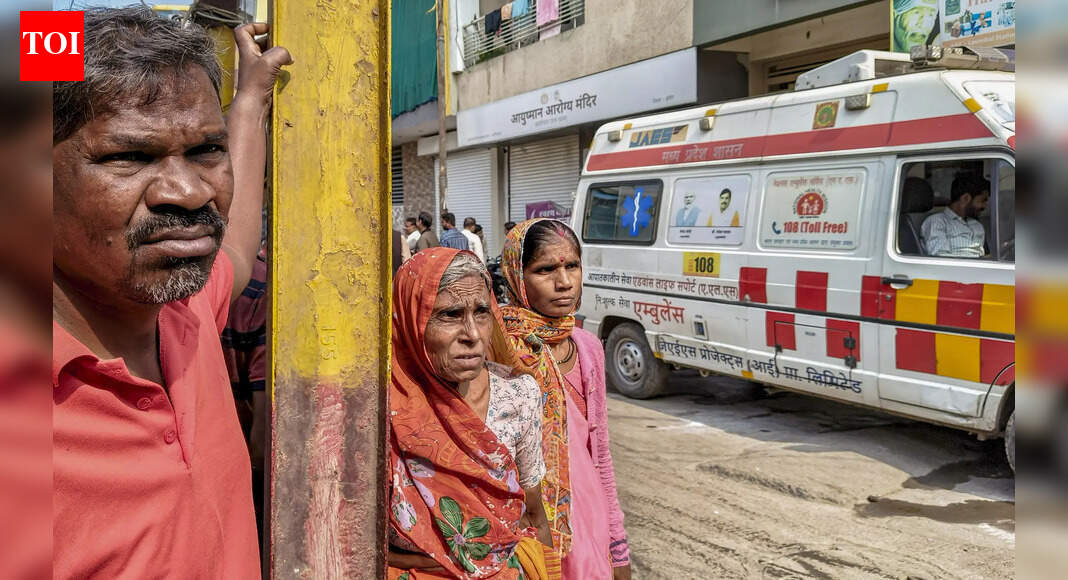
On the ground, Bhagirathpura witnessed a comprehensive mitigation effort. IMC workers cleaned streets and supplied safe water via tankers. Health workers actively checked patients and distributed medicines, while ASHA workers conducted door-to-door surveys, focusing on children. IMC vehicles announced advice to avoid tap water, which was undergoing flushing and testing after leakages were plugged. Residents were crucially told to boil all drinking water, a fundamental precaution.
The Indore water contamination incident, with its rapid escalation and severe impact, invites comparison with numerous past urban health crises both within India and internationally. Recurring themes consistently highlight the inherent vulnerability of public water infrastructure, the complexities of managing rapid urbanisation, and the paramount importance of timely and effective municipal responses. For Indore, a city that has consistently garnered accolades for its cleanliness, this crisis presents a particularly jarring reality. It suggests that broad cleanliness achievements, often primarily driven by solid waste management practices and aesthetic upkeep, might not adequately reflect the granular realities of public utility management or the actual water quality accessible across all its diverse localities. A city’s meticulously crafted clean image, therefore, does not automatically guarantee potable water flowing from every tap. This crucial disparity serves as a stark and urgent warning to other Indian cities aspiring to, or currently holding, similar ‘cleanest city’ titles. It vigorously emphasizes the undeniable need for comprehensive and continuous audits of all public services, with a particular focus on critical infrastructure directly impacting public health, such as water supply networks.
The administrative shake-up, exemplified by the removal of a municipal commissioner and the suspension of an additional commissioner, distinctly reflects a decisive and high-level intervention from the state government. Such swift and visibly strong accountability measures are not consistently standard practice in similar crises, where investigative processes can often be protracted. This immediate action, coupled with Chief Minister Mohan Yadav’s unequivocal public commitment to “fix responsibility and ensure strict action,” sets a potentially influential precedent that could shape how future public health emergencies are addressed at the municipal level, not just within Madhya Pradesh but possibly nationwide. It vividly underscores the political imperative to demonstrate immediate responsiveness when public trust is severely eroded by such a catastrophic failure of basic services. However, the troubling conflicting reports on the number of fatalities—four officially from the state government versus ten acknowledged by the mayor—reveal a critical systemic gap in emergency data harmonisation. This inconsistency fundamentally complicates an accurate understanding of the crisis’s true scale and can significantly hinder both effective policy formulation and clear public communication, identifying an area demanding urgent policy review and structural reform.
For general readers and news consumers across India, the Indore water contamination crisis serves as a potent and sobering reminder of the inherent fragility of urban living standards and the non-negotiable importance of fundamental amenities like safe drinking water. It unequivocally underscores that public health is not merely a governmental responsibility but demands collective vigilance from all stakeholders. Citizens must proactively remain informed about their local municipal services, meticulously reviewing water quality reports, and actively participating in local governance mechanisms to demand accountability. The troubling discrepancy in death tolls reported by the state government and the mayor highlights the urgent need for transparent, unified communication channels during emergencies to build and maintain public trust. This incident should fundamentally prompt individuals to critically question the robustness of their local water supply systems, advocating strongly for regular testing, maintenance, and infrastructure upgrades within their own communities. Simple, yet crucial, precautions like boiling all drinking water or investing in reliable water filtration systems gain renewed significance and urgency in light of such events.
In the short term, residents of the affected Bhagirathpura area in Indore must prioritize their health above all else, rigorously adhering to official advisories regarding water consumption and immediately seeking medical attention for any concerning symptoms. The immediate focus will intensely be on monitoring the health status of the 200 hospitalised patients and the progress of the 32 critically ill individuals in ICUs. The medium-term implications include an intensified and sustained scrutiny of Indore’s municipal corporation, and potentially other urban bodies across Madhya Pradesh, leading inevitably to enhanced oversight mechanisms and more stringent water quality checks. This will likely involve significant technological upgrades to aging pipelines, improved leak detection protocols, and more rigorous enforcement of public health standards. Local authorities will undoubtedly face immense pressure to present a comprehensive, actionable plan that addresses not just immediate relief but also robust long-term prevention strategies.
Long-term, this profound tragedy could serve as a powerful catalyst for broader policy reforms in urban water management across India. It has the potential to push for greater transparency in reporting public health data, establish more robust accountability frameworks for municipal officials, and significantly increase investment in modernizing aging, vulnerable infrastructure. Other cities across the nation might proactively review their own water distribution networks, preemptively identifying and addressing potential contamination points before crises emerge. The key metrics for the public to monitor next include official findings from the ongoing investigations into the exact source of the contamination, continuous updates on the health recovery of affected individuals, and any further administrative or legal actions taken against negligent parties. Ultimately, the Indore crisis is a stark reminder that sustained public trust and well-being fundamentally rely on efficient, transparent, and health-centric urban governance, demanding continuous engagement and proactive measures from both authorities and citizens to prevent future tragedies and ensure safe living conditions for all.
About the Author