Key Takeaways
India’s Centre defers GST cut on air purifiers despite Delhi HC. Explore government policy stance, health ministry view, and implications for citizens and tax reforms.
Overview
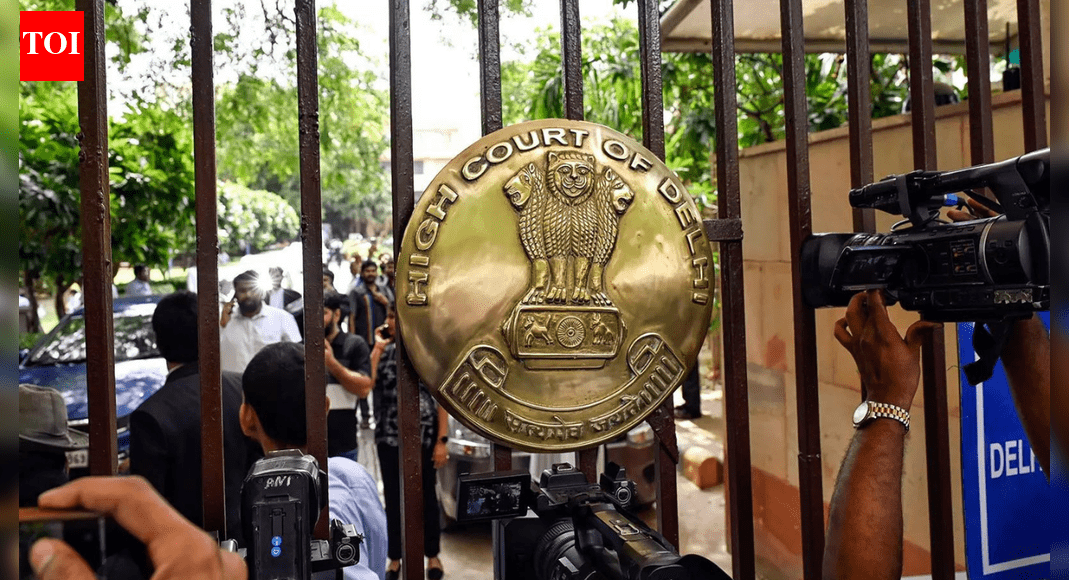
The Union government on Friday deferred reducing the GST on air purifiers, explicitly stating they are not medical devices. This decision, following a Delhi High Court suggestion, came with a stern warning against opening a ‘Pandora’s Box’ of similar tax cut requests across sectors.
This policy update highlights the intricate dynamics between judicial recommendations, public health imperatives, and the Union government’s fiscal autonomy, critically relevant for policy watchers and informed citizens alike regarding India’s taxation system.
The Centre cited the Health Ministry’s classification and the GST Council’s statutory process for rate changes. The court questioned making these ₹10,000-₹15,000 devices more affordable for less privileged families, noting pollution’s nationwide impact.
As the government prepares its detailed response within 10 days for a January 9 hearing, political analysts keenly observe the evolving interplay between policy and judicial intervention in India.
Key Data
| Stakeholder | Key Stance | Underlying Argument | Policy Implication |
|---|---|---|---|
| Centre (Union Government) | Defers GST cut; Air Purifiers not medical devices. | Health Ministry classification, statutory GST process, “Pandora’s Box” risk, high-level policy review. | Maintain higher GST, prevent widespread tax reduction demands, uphold GST Council’s authority. |
| Delhi High Court | Suggested GST review; flagged public health impact. | Severe pollution in Capital, affordability barrier for ₹10k-₹15k devices, nationwide implications for public health. | Advocate for increased accessibility, consider public welfare over strict classifications. |
| Petitioner (Advocate Kapil Madan) | Seeks reclassification under lower GST slab. | Air purifiers wrongly placed; should be treated like medical devices (lower GST applies). | Align classification with public utility, lower consumer burden, rectify perceived miscategorization. |
Detailed Analysis
The deferral of GST reduction on air purifiers by the Union government underscores a persistent policy dilemma within India: balancing public health imperatives with fiscal prudence and established administrative procedures. India, particularly its capital Delhi, grapples with alarmingly high levels of air pollution, a public health crisis that consistently draws judicial intervention and public discourse. Historically, courts have often stepped in when executive action appears insufficient to address critical environmental and health challenges, leading to directions or suggestions that intersect with policy-making domains. The current plea before the Delhi High Court, suggesting a re-evaluation of GST rates for air purifiers, emerged from this very context of severe pollution. This situation also highlights the unique position of the GST Council, a constitutional body comprising the Centre and state representatives, whose decisions on tax rates are typically arrived at through extensive consultations, making judicial directives on such matters inherently complex for governance in India.
The Centre’s detailed arguments against the GST reduction reveal several layers of policy considerations. Firstly, the core contention rests on classification: air purifiers, according to the Health Ministry’s determination, are not medical devices. This classification is crucial as medical devices typically attract a lower GST rate. Secondly, the government emphasized the procedural sanctity of the GST Council, a body tasked with fixing rates through a “detailed statutory process.” This includes consultations, licensing, and regulatory scrutiny, which cannot be “fast-tracked through a writ petition.” The Centre further warned that entertaining such pleas could open a “Pandora’s Box,” inviting similar demands from multiple sectors and potentially destabilizing the entire Goods and Services Tax framework. Finance Minister-level review had already taken place, indicating the issue’s examination at the highest policy echelons. The Centre maintains that courts cannot directly compel the GST Council to alter tax rates, highlighting a potential overreach into legislative and executive prerogatives.
This situation mirrors broader policy debates where public welfare clashes with administrative and fiscal frameworks. Consider past discussions on GST rates for essential medicines or disability aids, where pressure for reductions was balanced against revenue implications and classification complexities. Unlike these, air purifiers fall into a grey area: critical for public health in polluted zones, yet not strictly “medical” by current definition. The GST Council’s role as a federal body, requiring consensus between the Centre and states, differentiates it from a typical ministry that can be directly ordered by a court. A judicial directive to reduce GST rates would set a precedent, potentially undermining the Council’s autonomy and the careful balancing act involved in federal fiscal policy. This episode also highlights the proactive role of the judiciary in interpreting constitutional duties related to public health, juxtaposed against the executive’s responsibility for economic governance.
For News Readers and Informed Citizens, this deferral means that crucial devices for combating air pollution remain at a higher tax slab, impacting affordability, especially for less privileged families. Policy Watchers should monitor the government’s detailed response and the Delhi High Court’s subsequent hearing on January 9 for nuanced insights into the evolving inter-institutional dialogue. This case sets a precedent for how India’s government and judiciary navigate public interest litigation involving fiscal policy. Future metrics to observe include potential legislative or executive actions on pollution control, any further deliberations by the GST Council regarding “public health” classifications, and the final judicial pronouncements. The outcome will shape future advocacy for tax relief on public health goods and clarify the boundaries of judicial intervention in policy matters.
About the Author