I would’ve bought a wearable health tracker a lot sooner if they all weren’t so ugly.
I don’t want a glowing screen on my wrist, and the woven Whoop bracelet looks like something I would’ve made at summer camp. But in the last few months, both RingConn and Oura have launched slimmer hardware that actually blends in with jewelry, so you don’t have to scream to the world that you’re currently monitoring your blood-oxygen level.
So, against my better judgement — and the knowledge that I am giving a tech company my health data for no reason — I bought my first daily wearable health tracker: the RingConn 3. Roughly ten days later, I was relieved to find out that I was still within the two-week return period and dropped it off at the post office.

Between the RingConn 3 and the Oura Ring 5, I opted for the RingConn simply because it is less expensive, starting at $349 compared with Oura’s $399 starting price. That’s not a huge difference, but Oura also requires users to pay for a $6 monthly subscription to use a device they already paid for, which is the sort of blatant money-grabbing tactic that I think a CFO devises as he twirls his mustache and cackles. I do not want to appease the mustache-twirling man.
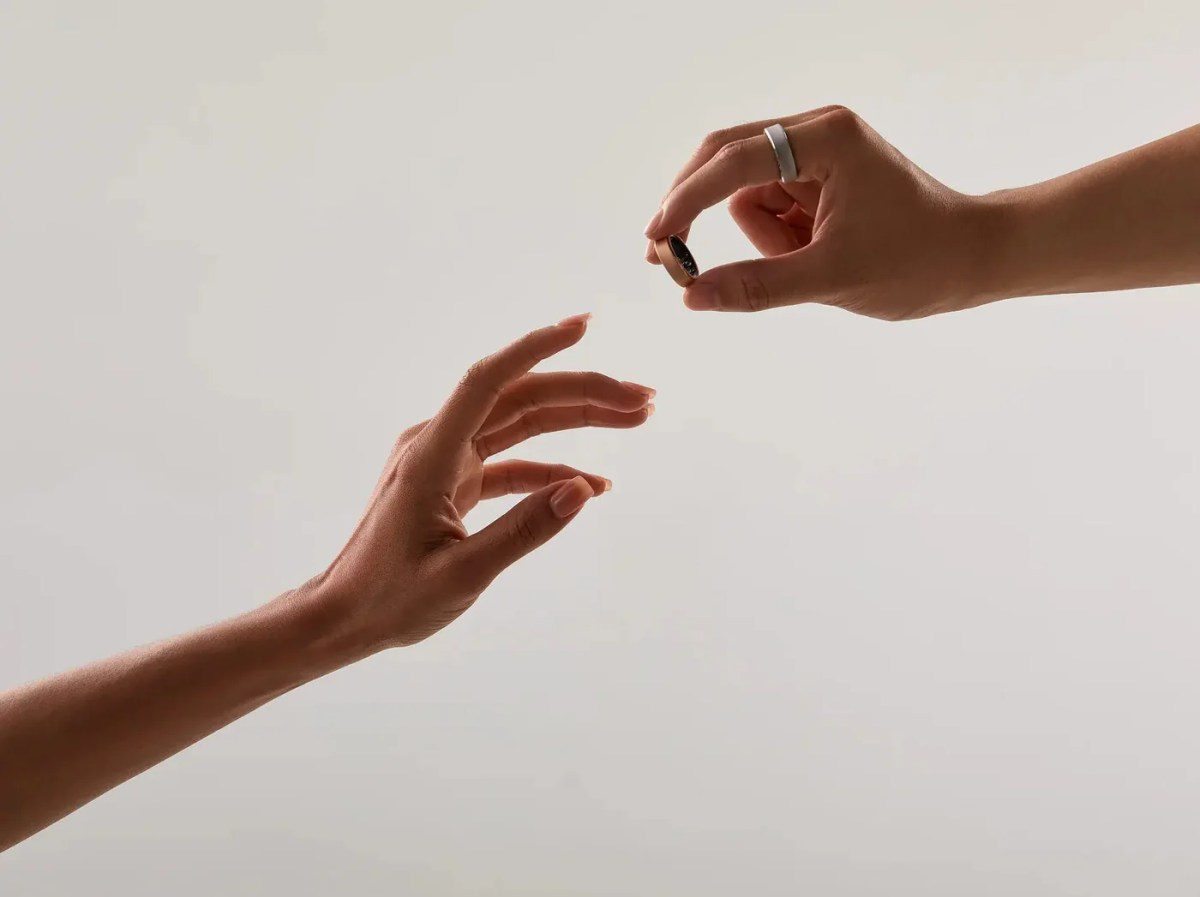
At first glance, the rose gold RingConn 3 surpassed my expectations. It’s actually pretty! Matching the Oura Ring 5 with a thickness of 2.3 mm, it’s still a little bulkier than your standard ring, but it’s still comfortable to wear.
It actually passes as a normal piece of jewelry, especially if you pair it with another stackable ring. When you order the ring, you’re first sent a sizing kit, which is worth the extra step — I was tempted to just order my normal ring size, but I found that I actually had to choose a bigger size for a comfortable fit.
The RingConn 3’s build feels solid. While some people online say their rings quickly showed scratches, I found that the brushed metal version felt more resistant. I didn’t have the ring long enough to confirm its claims that its battery can last 14 days on one charge, but I didn’t run into any battery issues.
While the ring is water-resistant — you can even wear it swimming! — I decided to just plop it in its charging case whenever I took a shower.
Aesthetics aside, the RingConn 3’s screen-less form factor appealed to me because it’s something that I could wear passively, check once a day at most, and reflect on the data later. I’m not alone in having such preferences: American spending on fitness trackers grew 88% year-over-year, largely due to screenless wearables like the Oura ring and Whoop wristband, per market research firm Circana.
But in terms of health tracking, the RingConn 3 wasn’t as helpful as I’d hoped.
For the first few days, the data the ring recorded was like a shiny new toy. I enjoyed checking the app to see if my heart rate or stress levels changed as I went about my day. It seemed my stress levels remained stable, but spiked when I did my laundry (accurate, if I’m being honest).
I found the sleep insights interesting, but they mostly confirmed what I already knew without spending $349: I sleep badly when I drink, and better when I maintain a consistent bedtime.

Still, I was disappointed to find that the RingConn 3 requires a good deal of manual intervention. It only detects workouts if you are physically moving through space — so if you’re at the gym or doing Pilates, the ring won’t automatically realize you’re working out. At the same time, it’ll flag any two-minute walk across your apartment building as a brief workout. (I promise you, my heart rate is not significantly impacted by getting the mail.)
I thought the RingConn would’ve been worth it if only for its headache detection feature, which supposedly warns you of oncoming headaches by monitoring your heart rate variability. I suffer from unpredictable migraines, so if I could get notified to proactively take my migraine medicine, the ring would have been revolutionary for me. Surely worth the $349.
But about a week into my RingConn ownership, I suffered the worst migraine attack of my life. It lasted an entire weekend, and the pain was so severe that I sold my tickets to see one of my favorite bands.
All the while, the ring told me I was in “top form.” If the headache detection feature wasn’t going to work for me, I just couldn’t see myself wanting to wear the RingConn everyday. I decided to return it while I could still get my money back.
When you purchase through links in our articles, we may earn a small commission. This doesn’t affect our editorial independence.
Source: https://techcrunch.com/2026/07/14/ringconn-3-review/
About the Author