Key Takeaways
Former US President Trump insists on Greenland ownership to counter Russia and China. Explore the geopolitical implications, Denmark’s stance, and future diplomatic talks.
Overview
President Donald Trump recently stated that the US must “own” Greenland to prevent Russia and China from seizing it. This bold assertion comes as Greenland, a semi-autonomous territory of Denmark, remains steadfastly “not for sale.”
This declaration highlights growing geopolitical tensions over Arctic strategic interests, impacting international relations and defense alliances. General readers and news consumers are monitoring these current affairs as they unfold.
Trump emphasized defending “ownership” over “leases,” despite the US already stationing over 100 military personnel at its Pituffik base since World War Two, with existing agreements allowing more troops.
The subsequent discussions with Denmark, expected next week, will be crucial in understanding the immediate diplomatic fallout and the broader implications for Arctic security in today’s updates.
Detailed Analysis
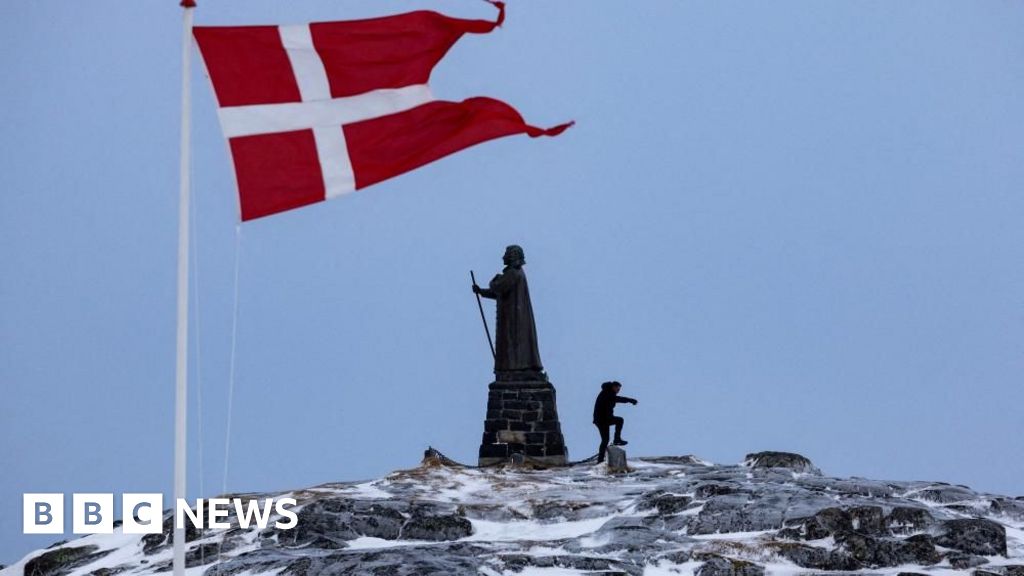
Trump’s recent demand for outright US ownership of Greenland reignites a complex geopolitical debate with roots stretching back decades, reflecting a persistent strategic interest in the Arctic. This assertion, driven by explicit concerns over potential Russian and Chinese influence in the crucial polar region, mirrors a previously unsuccessful attempt by the former president to purchase the vast island territory in 2019 during his first term. Greenland, a semi-autonomous territory of fellow NATO country Denmark, holds immense strategic value due to its pivotal location between North America and the Arctic. This unique positioning makes it an ideal spot for early warning systems against potential missile attacks and for effectively monitoring vessels traversing the region. The US already maintains a significant military footprint there, operating the Pituffik base since World War Two under long-standing agreements with Denmark, underscoring the enduring geopolitical importance.
Trump’s rationale for demanding ownership centres on the belief that a mere lease agreement provides insufficient security, explicitly contrasting “ownership” with simply “defending leases.” He claimed, without presenting specific evidence, that Greenland was “covered with Russian and Chinese ships all over the place,” reinforcing his perceived threat to US national security. This aggressive position directly contradicts Denmark’s unwavering stance that Greenland is unequivocally “not for sale,” with Danish officials warning that any attempt at military action to annex it would irreparably dismantle the trans-Atlantic defence alliance. While the US currently enjoys extensive rights to deploy as many troops as it deems necessary at its Pituffik base under existing Danish agreements, Trump insists this arrangement is fundamentally inadequate for ensuring long-term national security interests, asserting that “countries can’t make nine-year deals or even 100-year deals.”
The US demand for Greenland stands in stark contrast to the unified position articulated by Denmark and its NATO allies. Major European countries, alongside Canada, have explicitly rallied to Denmark’s support, reaffirming that “only Denmark and Greenland can decide on matters concerning their relations.” These allies, equally committed to ensuring Arctic security, stress that this objective must be achieved “collectively” through alliance cooperation, not unilateral actions. They further emphasized “upholding the principles of the UN Charter, including sovereignty, territorial integrity and the inviolability of borders.” This collective diplomatic push highlights the international community’s firm adherence to established norms and international law, directly challenging the notion of acquiring territory by force. Concerns over the future of the territory also resurfaced after Trump’s use of military force against Venezuela on Saturday to seize its president, Nicolás Maduro.
For general readers and news consumers, these unfolding developments underscore the increasing strategic importance of the Arctic region and the delicate balance of international diplomacy. The discussion around Greenland’s status highlights fundamental principles of national sovereignty versus the perceived security imperatives of major global powers, creating significant implications for current affairs and global stability. Beyond its geopolitical value, the island also holds vast untapped natural resources, including rare earth minerals, uranium, iron, and potentially significant oil and gas reserves, which are becoming more accessible as climate change accelerates ice melt. This adds a crucial economic and environmental layer to the geopolitical contest. Audiences should closely monitor the upcoming talks between US Secretary of State Marco Rubio and Denmark next week, as these discussions will provide crucial insights into potential diplomatic resolutions and shape the trajectory of Arctic security and international alliances in today’s updates.
About the Author