Key Takeaways
New US envoy signals push for Greenland annexation, sparking diplomatic row with Denmark. Understand the policy implications and international reactions.
Overview
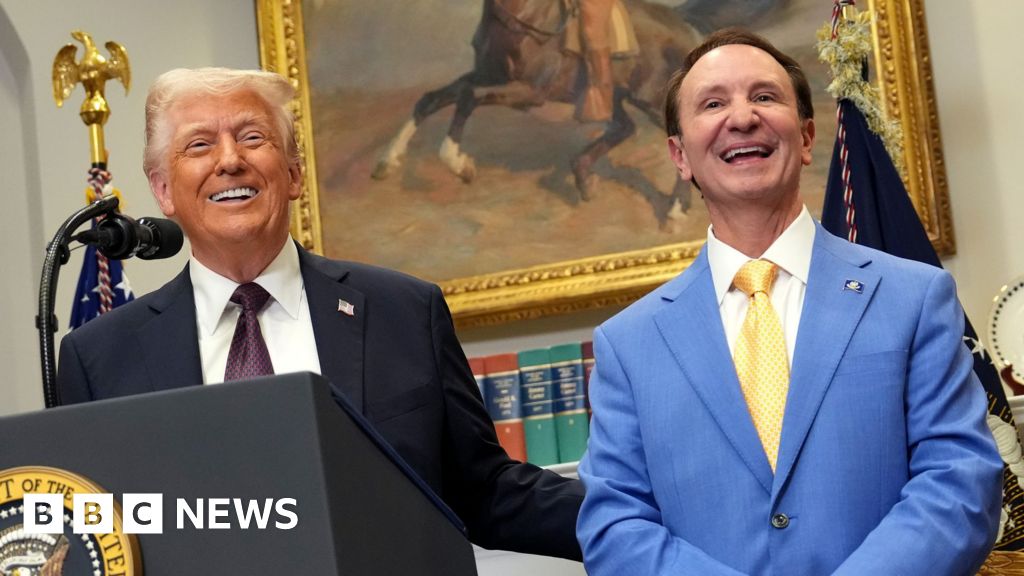
Former US President Donald Trump has reignited a significant diplomatic disagreement with Denmark following the appointment of a special envoy to Greenland. Republican Governor of Louisiana, Jeff Landry, confirmed his volunteer role with the explicit aim to “make Greenland a part of the US,” a move that has quickly escalated international tensions.
This development immediately prompted strong rebukes from both Denmark and Greenland. Copenhagen announced it would summon the US ambassador for an explanation, while Greenland’s leadership firmly asserted its right to self-determination and territorial integrity. For News Readers, Policy Watchers, and Political Analysts, this underscores evolving geopolitics.
Trump’s long-standing interest in Greenland stems from its strategic location for national security and its potential mineral wealth. He has previously not ruled out using force, a stance concerning to NATO ally Denmark. Opinion polls in Greenland show overwhelming opposition to US annexation.
The situation demands a balanced political analysis, considering historical context, stakeholder perspectives, and the wider policy implications for international law and sovereignty in the Arctic region.
Key Data
| Greenlandic Sentiment | Stated Position | Implication for US Proposal |
|---|---|---|
| Towards Independence from Denmark | Most Greenlanders favour | Desire for self-determination |
| Towards becoming part of US | Overwhelming opposition (poll data) | Strong local resistance to annexation |
Detailed Analysis
The appointment of a special envoy dedicated to the annexation of Greenland signals a significant, if unofficial, shift in US foreign policy intentions under former President Trump’s renewed term. This move thrusts Greenland, a semi-autonomous territory within the Kingdom of Denmark, into the spotlight of global geopolitical strategizing. Historically, US interest in Greenland predates recent pronouncements, with the US establishing a military base during World War Two after Nazi Germany occupied Denmark. This historical footprint continued with the reopening of a consulate in Nuuk, Greenland’s capital, in 2020 during Trump’s first term, signaling persistent strategic interest. The context of Greenland’s extensive self-government since 1979, with defence and foreign policy remaining under Danish purview, frames the delicate balance of power and sovereignty at play.
Donald Trump’s consistent articulation of Greenland’s “national security” importance, coupled with its mineral wealth and strategic location, forms the core rationale behind this renewed push. The selection of Louisiana Governor Jeff Landry, who has publicly advocated for Greenland’s integration into the US, as a volunteer special envoy, amplifies this intent. However, this informal appointment, which does not require approval from the host country, has elicited strong diplomatic reactions. Denmark’s Foreign Minister Lars Lokke Rasmussen called the appointment “deeply upsetting” and warned Washington to respect Danish sovereignty, stating unequivocally that actions undermining the territorial integrity of the Kingdom of Denmark are unacceptable. Greenland’s Prime Minister Jens-Frederik Nielsen echoed this sentiment, emphasizing the island’s right to decide its own future, asserting that “Greenland belongs to Greenlanders, and territorial integrity must be respected.” This categorical rejection from both Copenhagen and Nuuk highlights the immediate diplomatic challenge facing Washington.
This latest development unfolds against a backdrop of escalating strategic competition in the Arctic, a region increasingly vital due to melting ice opening new shipping routes and enhancing access to valuable mineral resources. Greenland’s unique geographical position, situated between North America and Europe, positions it as crucial for US and NATO security planning, notably lying on the shortest missile route between Russia and the US. While the US maintains a historical military presence, evidenced by Vice-President JD Vance’s recent visit urging Greenland to “cut a deal with the US,” these overtures contrast sharply with the prevailing sentiment among Greenlanders. Opinion polls consistently indicate overwhelming opposition to becoming part of the US, even as most favour eventual independence from Denmark. This disparity underscores a fundamental challenge for any annexation bid: the lack of local consent. The informal nature of Landry’s envoy role, while sidestepping diplomatic protocol, simultaneously highlights the unilateral character of the US initiative and its disregard for established international norms.
For News Readers, Policy Watchers, Informed Citizens, and Political Analysts, this situation presents a multi-faceted case study in international relations, sovereignty, and self-determination. The immediate implication is a significant strain on the relationship between two NATO allies, the US and Denmark, demanding a careful diplomatic response from Copenhagen beyond merely summoning the US ambassador. For Greenlanders, the debate over their future intensifies, balancing aspirations for greater autonomy against external pressures for annexation, with their territorial integrity now explicitly challenged. The long-term policy implications extend to the broader international community, raising questions about the respect for national sovereignty and self-determination in an era of renewed geopolitical competition, particularly in resource-rich and strategically critical regions like the Arctic. Stakeholders should closely monitor further diplomatic exchanges, any formal responses from the UN or other international bodies, and the evolving rhetoric from all parties, as this could set precedents for territorial claims globally.
About the Author