Key Takeaways
Moscow’s security incident sparks global market risk concerns. Analyze implications for Stock Market India, investor sentiment, and long-term financial stability.
Overview
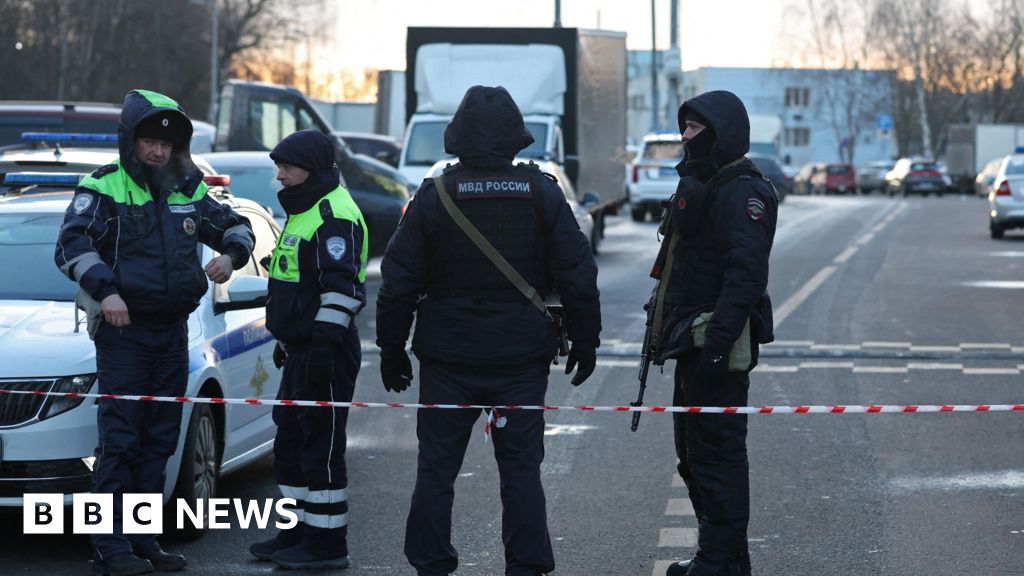
A Moscow explosion tragically claimed two police officers’ lives, immediately injecting geopolitical uncertainty into global financial markets. This incident, amidst Russia’s escalating internal security challenges, demands investor attention for its potential impact on Stock Market India.
For Retail Investors, Swing Traders, and Finance Professionals, such geopolitical shocks necessitate critical risk premium re-evaluation. These events often trigger market volatility, directly influencing trading and long-term investment strategies.
The incident, reportedly killing the suspect, followed a senior general’s assassination. These security breaches in Moscow highlight persistent internal threats, signaling broader instability.
This analysis examines immediate market reactions, potential ripple effects on capital flows, and long-term strategic shifts relevant for financial analysis and investment decisions.
Detailed Analysis
The recent Moscow explosion, resulting in the tragic deaths of two traffic police officers, serves as a critical indicator for assessing global market risk. In financial analysis, geopolitical events, even if geographically distant, can exert significant pressure on investor sentiment, commodity markets, and capital flows, particularly in an interconnected global economy. Historical patterns demonstrate that periods of heightened geopolitical tension often correlate with increased market volatility, impacting indices like the NSE and BSE. Russia’s internal security landscape, marked by this explosion and the prior assassination of Lt Gen Fanil Sarvarov, signals an elevated risk environment. Such incidents, especially in a major power’s capital, contribute to a perception of instability that directly influences investment outlooks, prompting a re-evaluation of country-specific risk premiums and broader emerging market exposure for both long-term investors and swing traders. This persistent pattern of security breaches necessitates a deeper understanding of macro-level implications.
The specifics of the Moscow incident—where officers Ilya Klimanov (24) and Maxim Gorbunov (25) were killed approaching a suspicious individual on Yeletskaya Street before an explosive device detonated—offer critical qualitative data for risk modeling. While direct financial metrics are absent, the human cost and the operational methodology underscore the severity of the threat. A key driver for market uncertainty stems from the stark divergence in narratives: Russia’s Investigative Committee frames it as a criminal attack, while Ukrainian military intelligence (HUR) attributes it to a “local resident” protesting Kremlin policy, even alleging the officers’ involvement in war crimes. This informational asymmetry creates an opaque environment, making definitive risk assessment challenging for finance professionals. The lack of official Russian comment on Ukrainian claims further fuels speculative trading and impacts investor trust. Compared to a clear, singular event, this ambiguous context amplifies perceived risk, a crucial element for financial analysis.
Comparing these Moscow incidents with past geopolitical flashpoints offers crucial investment insights. Historically, persistent security challenges in major economies spur flight-to-safety dynamics, boosting safe-haven assets and impacting currency valuations. Repeated bomb attacks, including three military officials within a year, suggest Russia faces an escalating internal threat, signaling systemic risk. This impacts energy and defense sectors, influencing global supply chains and commodity prices. For Indian finance professionals, understanding such vulnerabilities in a global power’s capital provides a benchmark for evaluating domestic security strategies. This situation underscores how political instability affects global capital allocation and investor risk appetites.
For Retail Investors, navigating global geopolitical risk requires a balanced approach. While immediate impact on Indian indices like Nifty and Sensex may be limited, vigilance on energy prices and currency fluctuations is key. Diversification can mitigate localized geopolitical shocks. Swing Traders should anticipate increased volatility, monitoring news flow for short-term opportunities or defensive positioning in commodity-linked stocks. Long-term Investors and Finance Professionals should reassess country-specific risk premiums, considering how sustained instability in global powers reshapes trade and capital flows. Key metrics to monitor include global commodity benchmarks, especially crude oil, and major currency pair movements. Official confirmations or escalations in Russia’s security will be crucial indicators for market sentiment and financial analysis throughout 2025.
About the Author