Key Takeaways
US-Venezuela tensions and swift socialist mobilization highlight rising geopolitical risks. Analyze market impact, energy sector outlook, and investor strategies.
Overview
The recent capture of Venezuela’s Nicolás Maduro by U.S. forces has ignited a complex geopolitical scenario, immediately triggering a coordinated information warfare campaign within the United States by a network of socialist organizations. This rapid mobilization, aimed at undermining U.S. actions, introduces a novel layer of uncertainty into global political stability and, by extension, financial markets, demanding heightened vigilance from Retail Investors, Swing Traders, Long-term Investors, and Finance Professionals.
Such swift, ideologically-driven responses to international events can create significant market volatility, especially impacting sectors sensitive to geopolitical shifts like energy, defense, and emerging markets. The speed and discipline of this information operation, likened by experts to a military maneuver, underscore the evolving nature of global risks that investors must now integrate into their financial analysis.
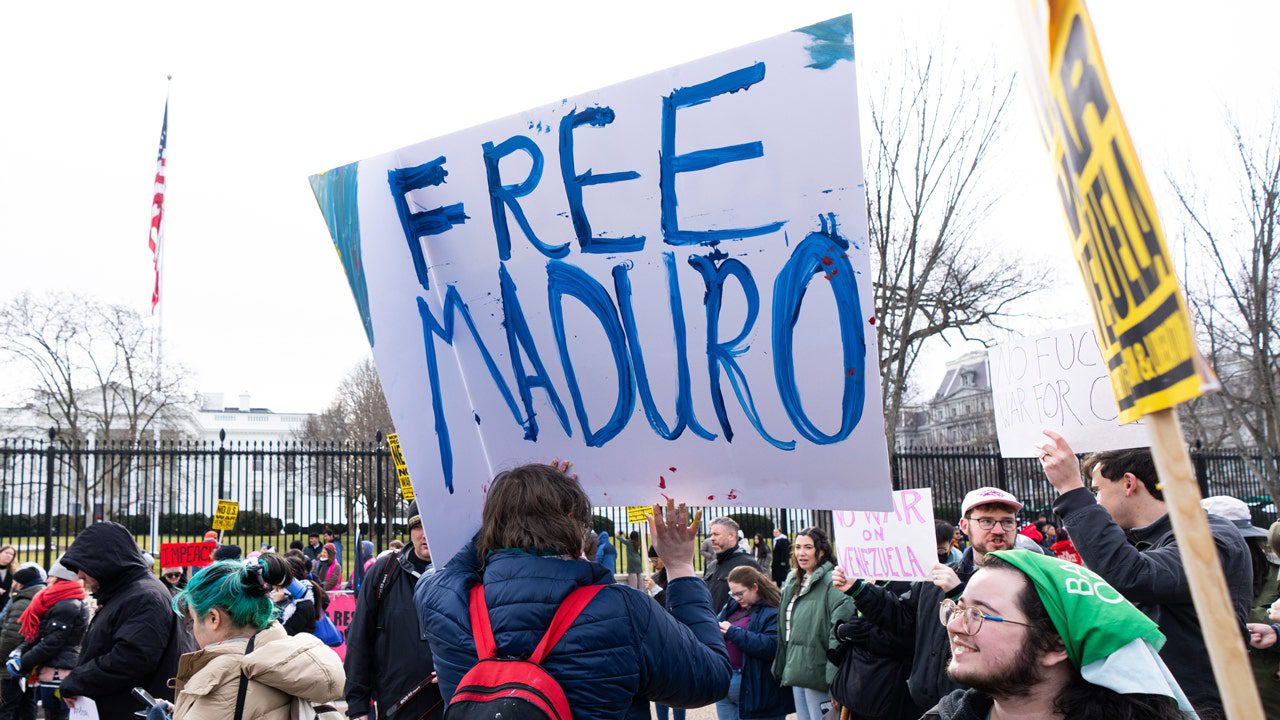
Within 12 hours of the U.S. operation, groups like BreakThrough News, The People’s Forum, and ANSWER Coalition published content and organized protests across approximately 100 cities, echoing narratives of an “illegal bombing campaign” and “U.S. imperialism.”
Investors should monitor the duration and intensity of these geopolitical tensions, as well as any official responses from major global powers, for their potential ripple effects on commodity prices, currency valuations, and overall investment sentiment in the coming weeks.
Detailed Analysis
SECTION A – CONTEXT & BACKGROUND
The U.S. military operation to capture Venezuelan leader Nicolás Maduro has instantaneously catalyzed a robust, organized counter-narrative and mobilization effort by a network of socialist and Marxist organizations within the United States. This rapid deployment of ideological influence, spanning digital channels and street protests, transcends a mere political event, evolving into a significant geopolitical risk factor for global markets. Historically, military actions involving oil-producing nations, or those with strong ties to major economic powers like China and Russia, introduce an immediate risk premium across various asset classes. Venezuela’s significant oil reserves mean any prolonged instability or international fallout directly influences global energy prices. Moreover, the involvement of a U.S.-based network, some elements of which are under congressional investigation for ties to Chinese interests, complicates the domestic and international political landscape, adding layers of uncertainty that can deter foreign investment and impact trade relationships. This confluence of military action, information warfare, and ideological mobilization creates a dynamic environment where traditional market analysis must be augmented with a keen understanding of geopolitical undercurrents.
SECTION B – DETAILED ANALYSIS
The organized information warfare described in the source content poses a distinct, albeit indirect, threat to market stability by fostering uncertainty and potentially influencing public and political sentiment. Groups like BreakThrough News, The People’s Forum, ANSWER Coalition, Party for Socialism and Liberation, Tricontinental: Institute for Social Research, and CodePink rapidly disseminated a unified narrative condemning U.S. actions, framing them as illegal and imperialist. This synchronized messaging, amplified by figures like Manolo De Los Santos and Vijay Prashad, aims to contest legitimacy and apply internal pressure on U.S. decision-making. For investors, such coordinated campaigns can contribute to heightened volatility in currency markets, particularly for emerging market currencies exposed to political instability. Furthermore, sectors like defense could see increased investor interest due to perceived escalations, while oil and gas companies might experience price fluctuations based on supply concerns or perceived geopolitical risk to supply routes. The ‘rapid-response influence network’ highlights a non-traditional threat vector capable of generating market noise and potentially impacting long-term investment strategies by eroding confidence in international stability. The explicit alignment of these groups with foreign states, notably Venezuela, China, and Russia, further compounds the complexity, suggesting a broader ideological confrontation that could manifest in economic and trade policies.
SECTION C – COMPARATIVE ANALYSIS
Comparing this swift mobilization to historical geopolitical flashpoints reveals patterns that investors can use to anticipate market reactions. Similar periods of heightened U.S.-Russia/China tensions or conflicts in oil-rich regions have typically led to immediate spikes in crude oil prices (e.g., Brent Crude, WTI futures), a flight to safe-haven assets such as gold and the U.S. dollar, and increased demand for defense industry stocks. Conversely, emerging market indices (e.g., MSCI EM Index) or specific country-focused ETFs often experience significant outflows due to increased perceived risk. The involvement of China and Russia, as noted in their condemnation of the U.S. action, signals potential for broader geopolitical alignment that could impact global trade flows, commodity pricing, and supply chain resilience. The coordinated messaging echoes tactics seen in past periods of Cold War-era proxy conflicts, suggesting a renewed emphasis on ideological struggle that could lead to shifts in diplomatic and economic alliances. Investors should consider monitoring major indices like the Nifty and Sensex for indirect impacts from global sentiment shifts, and keep a close eye on commodity markets and defense sector performance as proxies for escalating geopolitical tensions. [Suggested Line Graph: Global Crude Oil Price Volatility (WTI/Brent) pre-event vs. post-event in 7-day increments]
SECTION D – AUDIENCE TAKEAWAY
For Retail Investors and Swing Traders, immediate market reactions to such geopolitical events often present opportunities for short-term plays, particularly in energy futures or defense contractor stocks, while also increasing downside risks in broader market indices due to uncertainty. Monitoring news closely for shifts in diplomatic rhetoric or further military actions is paramount. Long-term Investors and Finance Professionals should evaluate their portfolio’s exposure to geopolitical risk, diversifying across geographies and sectors. Companies with significant international operations, particularly in Latin America or those sensitive to U.S.-China/Russia relations, warrant increased scrutiny regarding their supply chain resilience and political risk mitigation strategies. The growing sophistication of information warfare, as demonstrated by the rapid mobilization described, necessitates incorporating ‘narrative risk’ into financial models. Key metrics to monitor include crude oil prices, defense stock performance, emerging market currency fluctuations, and official statements from major global powers. The escalating ideological confrontation signals a need for a more dynamic and geopolitically informed investment strategy to navigate potential market turbulence and capitalize on emerging trends.
About the Author