Key Takeaways
Digital tools transform paleontology, revealing secrets of a limping dinosaur from 150M years ago. Explore how innovation is reshaping scientific discovery and data analysis in India’s tech landscape.
Overview
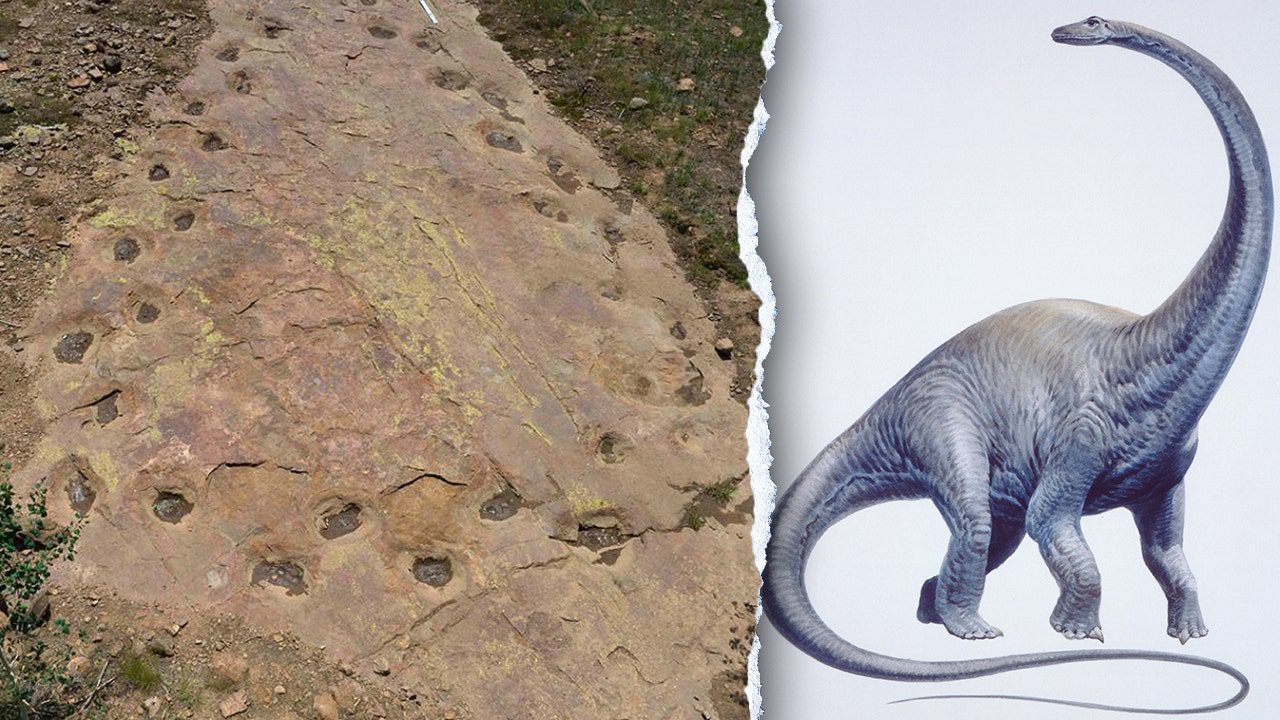
In a compelling fusion of ancient history and cutting-edge technology, paleontologists have leveraged advanced digital tools to uncover unprecedented insights into the movement of a 150-million-year-old dinosaur. This remarkable discovery, made in Colorado, provides compelling evidence of a sauropod exhibiting a limp.
For Tech Enthusiasts and Innovators, this highlights how sophisticated data analysis and imaging software are revolutionizing even traditionally non-tech fields, pushing the boundaries of scientific understanding and showcasing the versatility of modern computational methods.
The ancient trackway spans over 310 feet and contains approximately 130 footprints, offering a unique dataset. This analysis suggests a ‘statistically significant difference’ in the steps, indicating a potential injury.
This article delves into how such digital advancements are transforming paleontology, examining the methodologies employed and their broader implications for data-driven scientific inquiry and future innovation in Technology India.
Key Data
| Metric | Value | Significance |
|---|---|---|
| Trackway Length | Over 310 feet | Unusually long sequence enabling statistical analysis |
| Footprint Count | Around 130 | Robust data points for biomechanical study |
| Estimated Age | 150 million years | Provides glimpse into Jurassic era locomotion |
| Analytical Method | Digital mapping tools, Statistical analysis | Enables precision previously impossible for large trackways |
Detailed Analysis
The landscape of scientific discovery is being fundamentally reshaped by advancements in technology, transforming how researchers approach questions once deemed intractable. From astrophysics to archaeology, digital tools are unlocking new layers of understanding. The recent announcement by the University of Queensland regarding a 150-million-year-old dinosaur trackway in Ouray, Colorado, serves as a prime example of this paradigm shift. What makes this discovery particularly salient for the tech community is not just the ancient revelation itself, but the modern methodologies that enabled its detailed interpretation. This looping trackway, the only existing one of its kind globally after a similar site in China was destroyed, offered an unprecedented, long sequence of preserved steps, necessitating sophisticated analytical approaches to decipher its secrets. This intersection of deep history and cutting-edge innovation defines a new frontier for scientific exploration.
The detailed analysis of the Colorado trackway hinged entirely on digital mapping tools, which allowed paleontologists to process the vast dataset of over 130 footprints across more than 310 feet. University of Queensland paleontologist Anthony Romilio emphasized how these tools enabled ‘far greater precision and completeness than was previously possible.’ This technological leap moved beyond traditional measurement constraints, allowing for robust ‘statistical analyses.’ Specifically, researchers could rigorously assess ‘the difference between the steps made with the left leg versus that from the right,’ identifying a ‘statistically significant difference.’ This granular data processing provided empirical evidence suggesting a persistent limp, a level of biomechanical detail about an ancient creature that would be impossible to deduce from fossilized bones alone. The application of such software and data analysis techniques showcases the profound impact of modern computational power on even the most historical sciences, offering a blueprint for future AI & Innovation in diverse research fields.
This methodology represents a significant advancement over conventional paleontological studies that often rely on fragmented fossil records or limited trackway segments. Historically, the sheer scale of such a long trackway would present insurmountable logistical challenges for comprehensive measurement and comparison. The advent of digital mapping and advanced statistical software has effectively removed these barriers, allowing for micro-level analysis of macro-scale phenomena. This capability opens doors for comparing ancient locomotion patterns with modern biomechanical models, potentially refining our understanding of dinosaur gait, speed, and even health. While the exact species remains speculative (e.g., Camarasaurus vs. Diplodocus, with different weight distributions), the digital data unequivocally points to an asymmetric gait. This underscores how Technology India and global tech news should track such interdisciplinary advancements, as they often inspire novel applications for startup founders in data visualization, remote sensing, and analytical platforms.
For Tech Enthusiasts, Innovators, and Developers, this paleontological breakthrough highlights the transformative power of transferable technology. The precision offered by digital tools in mapping, measuring, and statistically analyzing ancient data sets underscores a vast potential for similar applications across various scientific and industrial domains. Startup Founders might find inspiration in developing specialized software or gadgets for remote sensing, high-resolution imaging, and AI-driven pattern recognition for unique datasets, whether geological, biological, or even urban planning. Key metrics to monitor moving forward include advancements in 3D laser scanning, machine learning algorithms for anomaly detection in large spatial datasets, and robust data visualization platforms. This discovery serves as a compelling reminder that the next wave of innovation can emerge from unexpected intersections, demonstrating how advanced tech can illuminate even the deepest past to inform our future.
About the Author