Key Takeaways
Explore the political missteps of Democratic leaders in 2025, from Jeffries to Schumer. Understand their impact on party unity & 2026 elections.
Overview
The year 2025 significantly exposed deep internal divisions within the Democratic Party, creating a distinct list of political figures whose missteps are already poised to heavily influence the political landscape for the upcoming 2026 elections. This period served as a series of cautionary tales for a major political party navigating its role while out of power.
These developments hold considerable significance for News Readers, Policy Watchers, Informed Citizens, and Political Analysts alike, as they shed light on the evolving dynamics within a pivotal global democracy. The internal struggles between progressive and moderate factions highlight broader trends in contemporary governance and electoral strategy, offering insights into potential future shifts.
Specific challenges included House Minority Leader Hakeem Jeffries and House Whip Katherine Clark facing primary challenges, California Governor Gavin Newsom struggling to define his executive vision beyond being a Trump foil, and former President Joe Biden’s legacy being rapidly dismantled on critical policy fronts like border control. Additionally, Senate Minority Leader Chuck Schumer faced intense criticism for legislative failures, including a prolonged government shutdown.
This article will delve into a balanced political analysis, providing historical context, exploring stakeholder perspectives, and examining the policy implications of these events, analyzing their potential short-term reactions, medium-term ripple effects, and long-term structural changes for the Democratic Party and wider US politics.
Detailed Analysis
The political narrative of 2025 within the United States saw a significant recalibration for the Democratic Party, marked by internal friction and strategic miscalculations that have effectively drawn a clear line between those gaining momentum and those losing ground. This period is not merely a reflection of a party out of power, but rather a profound illustration of the challenges inherent in maintaining unity and relevance amidst shifting ideological landscapes. Historically, periods of opposition often compel parties to undergo significant introspection and realignment. The current scenario, however, appears to be an acceleration of existing tensions, with a restless progressive base increasingly challenging the long-standing establishment, reminiscent of ideological battles seen in various global political contexts where traditional parties grapple with emergent, more radical wings.
The timeline of events leading to this point includes growing dissatisfaction with the party’s strategy against the Trump administration, particularly concerning issues where a more aggressive stance was demanded by the left flank. This contextual backdrop of an assertive progressive movement, exemplified by figures like New York City Mayor-elect Zohran Mamdani advocating for expansive government programs and Rep. Alexandria Ocasio-Cortez signaling presidential aspirations, created an environment where traditional Democratic figures found themselves under unprecedented pressure. The internal policy debates, often playing out in public forums, underscored a fundamental divergence in approach and priorities, forcing a critical examination of the party’s future direction and its capacity to appeal to a broad electorate, especially the political middle.
The detailed analysis of 2025’s political landscape reveals several key figures experiencing significant setbacks, each contributing to the broader narrative of Democratic discord. House Minority Leader Hakeem Jeffries, D-N.Y., and House Whip Katherine Clark, D-Mass., notably faced primary challenges from within their own progressive base. These challenges stemmed directly from dissatisfaction with their perceived insufficient resistance to the Trump administration, illustrating the intense pressure establishment Democrats are under to align with their party’s most vocal progressive elements. The policy implications of such internal disputes are manifold; they could either push the party further left, potentially alienating moderate voters, or force a more nuanced strategy that attempts to bridge the ideological divide, a difficult task in a highly polarized environment. Stakeholder perspectives reveal that while progressives view these challenges as necessary for ideological purity and a more robust opposition, moderate Democrats worry about the electability consequences of an overly radicalized platform, fearing it might hinder their ability to win over the crucial political middle in the upcoming 2026 midterms.
California Governor Gavin Newsom also found himself in a challenging position, having largely defined his national profile as a foil to the Trump agenda. While this strategy initially garnered attention, it inadvertently limited his political scope, creating a reliance on the former president for his own political visibility. His actions, such as pushing through a controversial redistricting effort in California to target Republican seats—a move that received mixed reviews even among Democrats—highlighted his national ambitions but also his struggle to project a distinct executive vision independent of the Trump counter-narrative. Newsom, with only one more year as governor, burned precious time in 2025 that could have been used to showcase his executive capabilities and policy achievements to a broader national audience, potentially positioning himself for a 2028 presidential bid. His current trajectory raises questions about his long-term viability as a national leader if his political brand remains tied predominantly to opposition, rather than a positive, self-defined agenda.
Former President Joe Biden’s legacy faced rapid dismantling just one year out of office, particularly on key policy issues that had defined his administration. The Trump administration, through a series of executive orders, quickly reversed Biden’s border policies, leading to significantly reduced border encounters, directly challenging the narrative that the previous administration had done everything possible to manage illegal immigration. This swift policy reversal provided Republicans with substantial evidence to question the transparency and effectiveness of Biden’s approach to national problems. Furthermore, revelations from an autopen investigation in the House of Representatives regarding unprecedented delegation of authority to aides, coupled with a book by Jake Tapper and Alex Thompson detailing efforts to manage concerns about Biden’s age and cognitive ability, further complicated his public image and cast shadows on the internal workings of his administration. These insights have left the Democratic Party grappling with fundamental questions about its future leadership and image, providing potent ammunition for Republican campaigns.
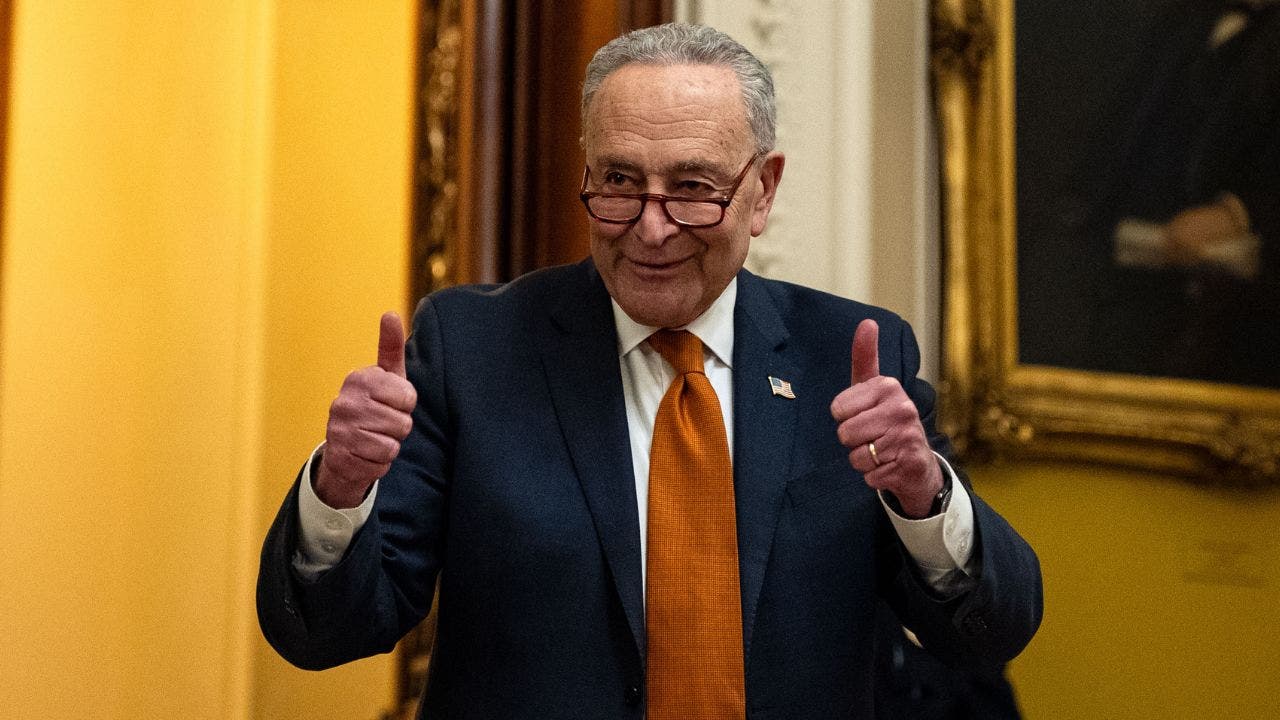
Senate Minority Leader Chuck Schumer, D-N.Y., arguably experienced one of the most politically damaging years in 2025. He bore the brunt of the blame for a disastrous 43-day government shutdown, which ultimately left Democrats with few legislative wins and exposed significant fractures within the Senate Democratic caucus. His inability to keep Senate Democrats unified led to calls for him to step aside, highlighting a crisis of leadership. Republicans widely attributed Schumer’s strategy during the shutdown to an attempt to appease the progressive wing of his party, yet even this objective proved elusive. His reluctance to publicly support the self-proclaimed socialist Zohran Mamdani in the crucial New York City mayoral race further alienated the progressive base and intensified questions about his leadership capacity and his vision for the party’s future. The internal debate among Senate Democrats, and the broader party, now centers on whether Schumer can effectively lead and represent the evolving ideological direction of the party heading into critical legislative battles and the 2026 midterms.
Comparing the challenges faced by these Democratic figures in 2025 reveals a common thread: the escalating tension between the party’s establishment and its progressive wing, intensified by being out of federal power. This dynamic is not isolated to the US; similar patterns of populist or reformist movements challenging entrenched leadership can be observed in political parties across Europe and other democracies, reflecting a global shift in voter expectations and ideological alignment. For instance, the pressure on Jeffries and Clark from primary challengers mirrors the internal struggles within parties like the UK’s Labour Party, where leadership has often been contested between centrist and far-left factions. Newsom’s reliance on being a ‘Trump foil’ is analogous to how opposition leaders in other countries can become defined by their rivals, struggling to articulate an independent vision. Biden’s legacy dismantling and Schumer’s leadership woes highlight the fragility of political power and the relentless scrutiny faced by former and current leaders, a lesson observed across various political systems where public perception and internal party cohesion dictate longevity and influence.
The regulatory and policy impacts of these internal Democratic struggles are significant. Should progressives continue to gain traction and influence the party’s platform, the US could see proposals for more expansive government programs, stricter environmental regulations, and potentially more interventionist economic policies. This would inevitably lead to increased friction with the Trump administration and a more stark ideological contrast heading into the 2026 and 2028 election cycles. The outcome of these internal battles will shape the Democratic Party’s campaign messaging, candidate selection, and overall legislative strategy. The competitive positioning within the party is fierce, with emerging figures like Ocasio-Cortez and Mamdani representing a new wave, while established figures like Jeffries and Schumer attempt to navigate these shifting currents. This internal competition, while potentially invigorating, also risks fragmenting the party’s message and resources, a crucial consideration as they aim to regain electoral ground.
For News Readers, Policy Watchers, Informed Citizens, and Political Analysts, the events of 2025 within the Democratic Party offer critical insights into the evolving landscape of US politics and broader global governance trends. The internal struggles highlight the challenges any major political party faces when grappling with ideological shifts, generational changes, and the demands of an increasingly polarized electorate. Citizens should closely monitor the outcomes of upcoming primary elections in 2026, as these will be key indicators of the balance of power between the progressive and moderate wings. Policy watchers should pay attention to the legislative agendas pushed by various Democratic factions, noting how these align with or diverge from traditional party platforms and their potential impact on national policy debates. The performance of these figures in the short-term, particularly how they adapt their strategies for the 2026 midterms, will be crucial.
The long-term implications are particularly pertinent for political analysts; a sustained internal conflict could lead to a fundamental realignment of the Democratic Party, potentially reshaping the American political spectrum for decades. Conversely, a successful reconciliation of these factions could present a more unified and formidable opposition. Metrics to monitor include public approval ratings for key Democratic leaders, fundraising efforts for both establishment and progressive candidates, and voter turnout trends in crucial swing states. The ongoing narrative underscores the need for resilience and adaptability in modern politics. The strategic shifts currently underway within the Democratic Party will undeniably shape the contours of American governance and electoral outcomes in the immediate future and beyond, influencing not only domestic policy but also the nation’s stance on global affairs.
About the Author