Key Takeaways
China’s military presence near Taiwan escalates with aircraft and naval vessels. Understand the implications for regional stability and global current affairs.
Overview
Taiwan recently detected a significant increase in China’s military presence around its territorial waters, raising regional tensions. This surge involved aerial and naval deployments, prompting international calls for restraint and intensifying global scrutiny on current affairs. General readers should note this as a critical development in India News.
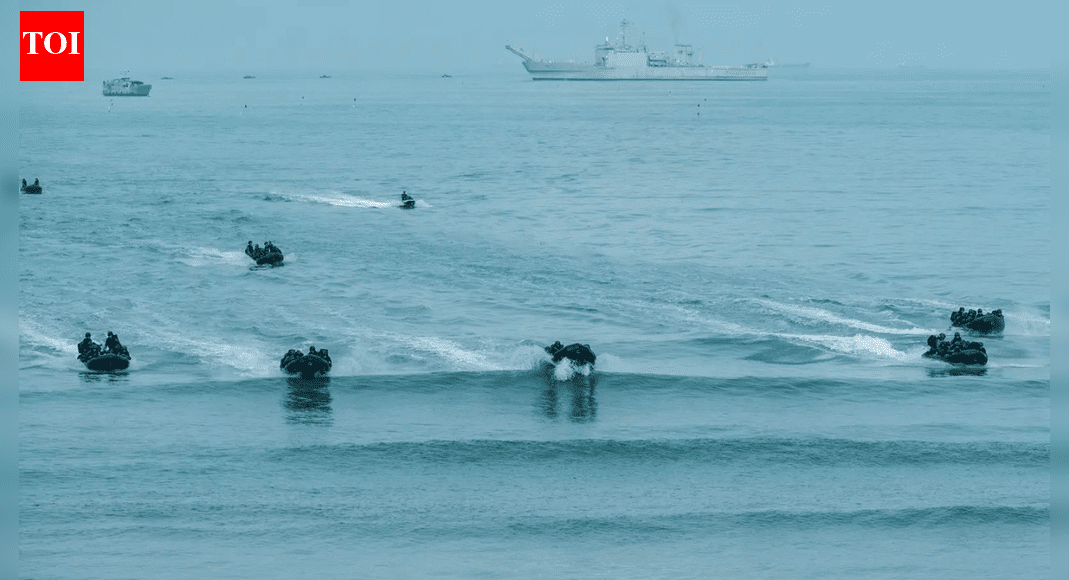
On Saturday, Taiwan detected four sorties of Chinese aircraft, six naval vessels, and an official ship. Critically, one aircraft sortie crossed the sensitive median line into Taiwan’s central air defense identification zone. This followed Friday’s detection of six naval vessels, an official ship, and two balloons, highlighting persistent military posturing.
This heightened activity comes after Beijing’s “Justice Mission-2025” live-fire exercises, concluded December 31. Those drills, impacting 857 international flights, were seen as a warning after a proposed $11 billion US arms sales package to Taiwan.
The situation underscores a delicate balance in the Indo-Pacific. Further diplomatic statements and military responses will be crucial to monitor today.
Key Data
| Military Asset Detected | Friday (Earlier) | Saturday (Today) |
|---|---|---|
| PLA Aircraft Sorties | 0 | 4 |
| PLAN Naval Vessels | 6 | 6 |
| Official Ships | 1 | 1 |
| PRC Balloons | 2 | 0 (Not detected) |
Detailed Analysis
The recent increase in China’s military presence around Taiwan serves as a stark reminder of the long-standing tensions between Beijing and the self-governed island. China views Taiwan as a renegade province that must be reunified with the mainland, by force if necessary, a stance that has underpinned its geopolitical strategy for decades. This assertive posture frequently manifests in military drills and incursions into Taiwan’s claimed defense zones. The current escalation follows a pattern of heightened activity, particularly after perceived provocations or strengthened ties between Taiwan and other nations. A significant preceding event was Beijing’s two-day live-fire military exercise, dubbed “Justice Mission-2025,” which concluded on December 31. These drills involved extensive naval and air deployments, serving as a “stern warning” to what China terms “Taiwan independence” separatist forces. Historically, such exercises significantly impact regional stability and global shipping lanes, often forcing considerable rerouting of both international and domestic flights, as evidenced by the 857 international and 84 domestic routes affected during the recent drills.
Taiwan’s Ministry of National Defence (MND) meticulously tracks these incursions, providing daily updates. On Saturday, the MND detected four sorties of People’s Liberation Army (PLA) aircraft, six People’s Liberation Army Navy (PLAN) vessels, and one official ship near Taiwan. A critical detail was one aircraft sortie crossed the median line of the Taiwan Strait, entering Taiwan’s central Air Defence Identification Zone (ADIZ). This median line historically served as an unofficial buffer; its crossing signifies a more direct and aggressive assertion of China’s claims. On Friday, the MND also reported six PLAN vessels, one official ship, and two PRC balloons. These repeated and varied military deployments, from naval vessels to surveillance balloons and fighter jets, demonstrate China’s capacity and intent to exert continuous pressure. Such activities contribute to heightened alert across the region, necessitating constant monitoring and response from Taiwan’s armed forces and global observers monitoring today’s updates.
Saturday’s detection of aircraft crossing the median line marks a distinct escalation from Friday’s naval and balloon presence. This sustained pressure follows China’s large-scale live-fire drills on December 31, where 27 rockets, with 10 landing within Taiwan’s contiguous zone, constituted the closest Chinese live-fire activity ever recorded near the island. Such aggressive maneuvers often stem from developments Beijing perceives as challenging its “One China” principle, notably the proposed US arms sales package to Taiwan valued at over $11 billion. This cycle of military demonstrations creates concerning precedents for regional security. International reactions underscore the gravity, with the United States urging Beijing to “exercise restraint.” The European Union, UK, France, Germany, Japan, Australia, New Zealand, and the Philippines have all voiced serious concern, highlighting global implications for today’s updates.
For general readers, the increased military presence around Taiwan signals persistent geopolitical instability with potential global ripple effects. The Taiwan Strait, a vital shipping lane, sees any escalation carry economic implications, evident from flight reroutings impacting international travel. This ongoing tension is a crucial component of broader global current affairs, affecting trade and diplomatic relations. Monitoring responses from key international players, including the United States, Europe, and India, remains essential. The frequency and nature of future military drills, coupled with diplomatic statements from Beijing and Washington, will indicate the short-term trajectory. Understanding these dynamics offers crucial insight into evolving power balances and international security, directly impacting India News. Informed vigilance from citizens remains paramount for today’s updates.
About the Author