Key Takeaways
China launches major military drills near Taiwan as warning to ‘separatist forces’. Understand geopolitical implications, stakeholder responses, and policy impacts.
Overview
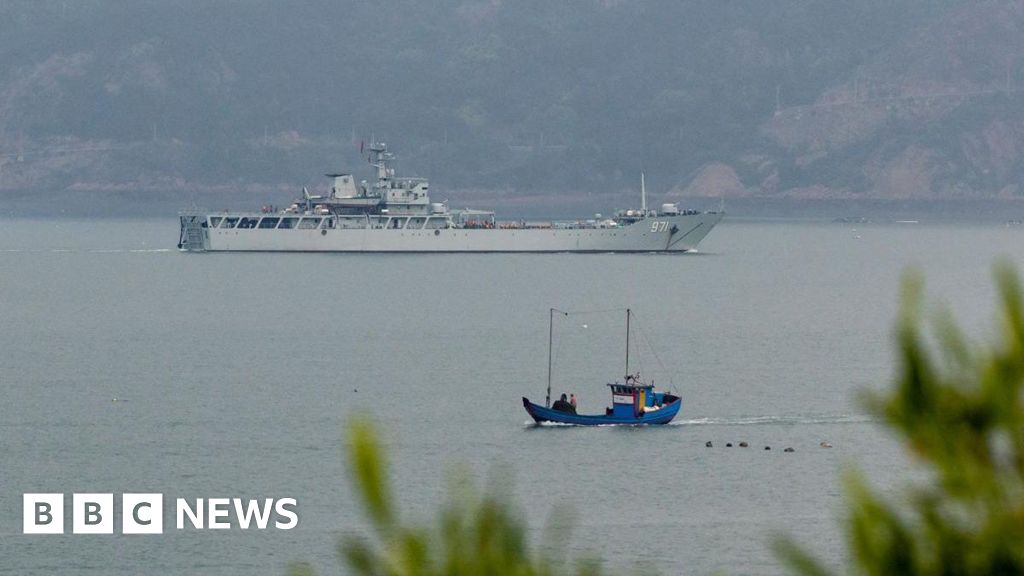
China has announced significant military drills around Taiwan, simulating a blockade and seizure of key areas, in a stark warning to what Beijing terms “separatist forces.” This escalation follows Taiwan’s increased defense posture and a substantial US weapons package sale, intensifying geopolitical tensions in the region.
The meticulously planned exercises, codenamed “Justice Mission 2025,” involve China’s army, navy, air force, and rocket force, featuring live-fire components. These drills underscore Beijing’s resolve regarding its claims over the self-ruled island, posing critical questions for regional stability and international policy watchers.
Scheduled for Tuesday, the drills come days after the US approved an $11 billion (£8.2 billion) weapons package for Taiwan. Taiwan’s defense ministry confirmed detecting Chinese aircraft and ships, deploying its own forces and missile systems in response.
This development necessitates a close examination of the short-term reactions, medium-term ripple effects on alliances, and long-term implications for the intricate balance of power across the Taiwan Strait, demanding attention from news readers and political analysts alike.
Detailed Analysis
The recent announcement of extensive Chinese military drills around Taiwan, simulating key area seizures and blockades, marks a significant escalation in cross-strait tensions. Historically, Beijing has consistently viewed Taiwan as an inseparable part of its territory, governed by its ‘One China’ principle, a stance reiterated through legislative means like the 2005 Anti-Secession Law which permits the use of “non-peaceful means” if Taiwan formally declares independence. Since 2022, China has visibly ramped up its military exercises in the Taiwan Strait, often in direct response to perceived threats, such as former US Speaker Nancy Pelosi’s visit in 2022 and the inauguration of Taiwan’s President Lai Ching-te in 2024. These actions collectively establish a pattern of deterrence, signaling Beijing’s unwavering commitment to its territorial claims.
Codenamed “Justice Mission 2025,” these particular drills are notable for their comprehensive involvement of the army, navy, air force, and rocket force, explicitly including live-fire exercises, simulating not just intimidation but also operational capabilities for seizure and blockade. This comes days after the US approved an $11 billion weapons package, one of its largest to Taiwan, leading to sharp protests from Beijing and sanctions against US defense firms. Taiwan’s presidential office has vehemently criticized the drills as a challenge to international norms, with its defense ministry reporting Chinese naval and air activity. President Lai Ching-te, while affirming Taiwan is already a sovereign nation and committed to maintaining the status quo, emphasizes the need for “real strength” to deter potential aggression, a sentiment echoed by Taiwan’s own “Han Kuang” military exercises, which were the largest and longest to date this year. The Chinese military’s Eastern Theater Command, responsible for the Taiwan Strait, cryptically declared the drills a “shield of justice,” vowing annihilation for “those plotting independence.”
Comparing the current “Justice Mission 2025” with previous exercises, China’s messaging appears increasingly assertive and operationally focused. Earlier drills, such as the live-fire exercise in April, simulated strikes on critical infrastructure, accompanied by propaganda like cartoons depicting President Lai as a “parasite.” The appointment of Yang Zhibin as the new chief of the Eastern Theater Command in October precedes these drills, suggesting a potential shift in tactical leadership. While Taiwan enhances its defense capabilities, including a recently announced dome-like air defense system, regional geopolitical implications extend beyond the immediate strait. China’s military specifically mentioned deterrence “outside the island chain,” a reference that gains context from recent icy relations with Japan. Following Japanese leader Sanae Takaichi’s parliamentary suggestion of Japan’s self-defense forces intervening if China attacked Taiwan, Beijing lodged heated protests and issued travel warnings, further highlighting the interconnectedness of regional security dynamics.
For news readers, policy watchers, informed citizens, and political analysts, these drills represent more than just military posturing; they are a critical barometer of geopolitical stability in East Asia. The immediate concern revolves around the potential for miscalculation during live-fire exercises and the increasing militarization of the Taiwan Strait. Policy implications are significant, as nations worldwide reassess their strategic partnerships and supply chain dependencies, particularly regarding Taiwan’s crucial role in global technology. Stakeholders, from international trading partners to regional security alliances, face heightened uncertainty. Citizens globally should monitor official statements from Beijing, Taipei, and Washington, as well as the responses of neighboring countries like Japan. The coming weeks will be crucial in observing the duration and intensity of the drills, any subsequent diplomatic fallout, and Taiwan’s continued efforts to bolster its defenses, all of which will shape the evolving strategic landscape for years to come.
About the Author