Key Takeaways
China passes a revised foreign trade law, enhancing its trade war response. Understand the implications for global commerce, international relations, and India’s position in 2025.
Overview
In a significant move impacting global commerce, China has officially passed a revised foreign trade law. This legislative update aims to bolster the nation’s capabilities in potential trade disputes, signaling a more assertive stance in international economic relations. The development comes amidst ongoing global trade tensions and shifts in geopolitical dynamics.
For general readers and news consumers, this revision is crucial as it could lead to ripple effects across international supply chains and potentially influence the cost and availability of goods. It equips Beijing with stronger legal instruments to counteract measures perceived as unfair trade practices by other nations, shaping the future landscape of global trade policies.
While specific quantitative details regarding the law’s immediate impact or direct metrics of its strengthening provisions are not yet fully disclosed, the overarching intent is to provide a robust legal framework for China’s trade defense. This proactive step is poised to influence how countries, including India, engage in trade with the economic superpower.
The following analysis will delve into the short, medium, and long-term implications of this new legislation, offering context and potential consequences for various stakeholders in the evolving global trade environment.
Detailed Analysis
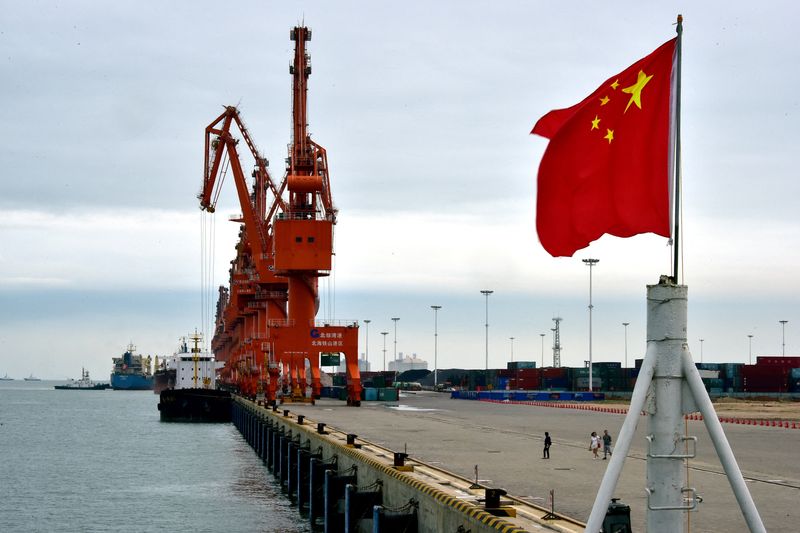
The passing of a revised foreign trade law by China represents a pivotal development in the ongoing evolution of global trade. Historically, China has leveraged its vast manufacturing capacity and export-driven economy to achieve significant growth, often navigating complex trade relationships. However, in recent years, escalating trade tensions, particularly with Western nations, have prompted Beijing to fortify its legal and policy frameworks. This latest legislative action, occurring in late 2025, builds upon a series of measures designed to enhance national economic security and resilience in a world increasingly characterized by economic competition and strategic decoupling efforts. It marks a clear continuation of a trend where major economies are recalibrating their trade policies to protect domestic interests and assert greater control over their economic destinies.
At its core, the revised China foreign trade law is expected to provide more explicit legal grounds for Beijing to implement retaliatory measures during trade disputes. This likely includes clearer provisions for imposing tariffs, applying export controls on strategic goods, or restricting foreign entities deemed to be undermining Chinese interests. The strengthened legal framework offers Beijing a more formalized and perhaps swifter mechanism to respond to economic coercion or unfair trade practices initiated by other countries. For foreign companies operating within China, this could translate into increased regulatory risk and a heightened need to understand the nuances of Chinese law, as the scope for counter-measures could broaden, potentially impacting their market access and operational stability.
This legislative move by China aligns with broader global trends where countries are increasingly resorting to unilateral trade defense mechanisms. Much like the tariff regimes implemented by the United States or the trade defense instruments utilized by the European Union, China’s revised foreign trade law contributes to a more fragmented and nationalistic approach to international commerce. This shift stands in stark contrast to the multilateralism championed by institutions like the World Trade Organization (WTO), whose dispute resolution mechanisms are increasingly sidelined. The updated law could further strain international trade relations, potentially prompting other nations to review their own trade legislations in response, leading to a tit-for-tat dynamic that undermines global economic stability.
For General Readers and News Consumers, the implications are wide-ranging. In the short term, the law introduces greater uncertainty into global supply chains, as businesses worldwide evaluate potential risks of trade disruptions. Medium-term effects could see shifts in manufacturing locations and sourcing strategies as companies seek to de-risk their operations, potentially impacting the availability and pricing of various consumer goods. For India, this development demands careful monitoring. As a major trading partner with China, any escalation in global trade wars or changes in China’s trade posture could directly influence India-China economic relations and India’s own trade policy responses. Stakeholders should monitor future trade actions by China, the reactions of major global economies, and how this law is applied in specific disputes to gauge its true impact on current affairs and the international economy.
About the Author