Key Takeaways
A US report reveals China covets Arunachal Pradesh like Taiwan. Explore rising India-China tensions, Beijing’s military buildup, and geopolitical impacts.
Overview
A recent US Department of Defense report highlights China’s expanding geopolitical ambitions, stating that Beijing now actively covets Arunachal Pradesh, much like Taiwan and other disputed regions. This stance forms a crucial part of China’s broader strategy for “great rejuvenation” as a nation, impacting India-China relations significantly.
This development underscores escalating regional tensions and China’s assertive foreign policy. For general news consumers, it signifies a critical shift in how major global powers perceive and navigate territorial claims, directly affecting stability in the Indo-Pacific and current affairs.
The annual Pentagon report specifically extends China’s “core interest” to include Arunachal Pradesh. It also noted China’s continued arming of Pakistan with advanced military hardware, including 36 J-10C fighters and four 054A/P multi-role frigates delivered by May this year.
The following analysis delves into the implications of this report for India’s strategic posture and the evolving dynamics of India news and global security updates.
Key Data
| Strategic Area | Current Status (Report) | Projected Status / Deliveries | Key Implication |
|---|---|---|---|
| PLA Nuclear Warheads | Approx. 600 | Over 1,000 by 2030 | Significant nuclear expansion |
| PLA Aircraft Carriers | 3 existing | 6 more by 2035 | Enhanced naval power projection |
| Pakistan J-10C Fighters | N/A | 36 delivered by May | Regional military balance shift |
| Pakistan 054A/P Frigates | N/A | 4 delivered | Naval reinforcement for Pakistan |
Detailed Analysis
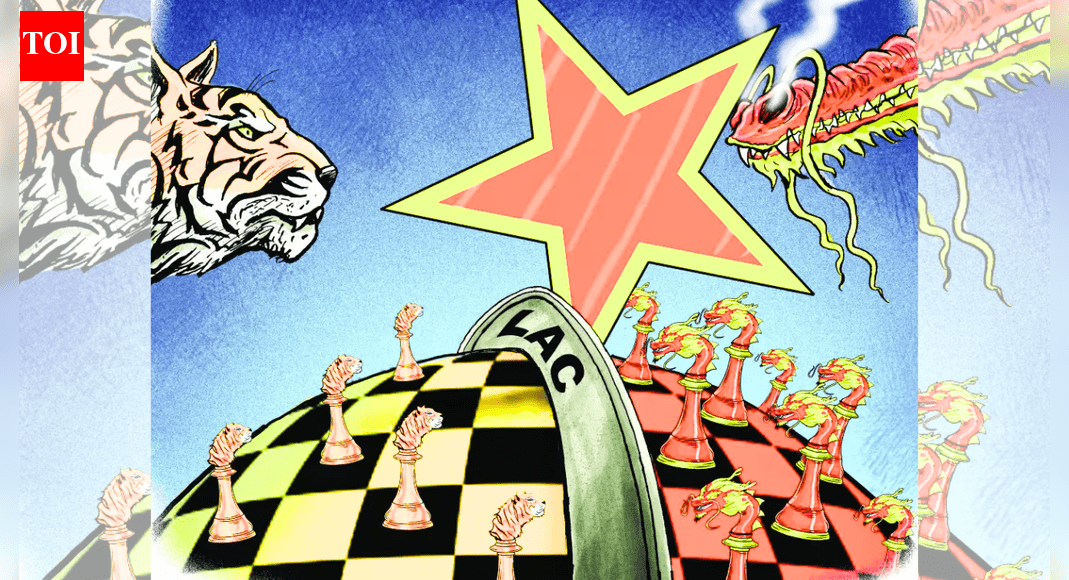
China’s assertive posture regarding Arunachal Pradesh is not a new phenomenon, but the latest US Department of Defense report intensifies concerns by explicitly equating it with Beijing’s claims over Taiwan and the South China Sea. This strategy falls under China’s broader national vision of “great rejuvenation,” which involves reclaiming perceived historical territories and solidifying its regional dominance. Historically, India and China have maintained a delicate balance along their 3,488-km Line of Actual Control (LAC), a balance significantly disrupted by the People’s Liberation Army’s (PLA) multiple incursions into eastern Ladakh in April-May 2020. These events progressively escalated tensions, particularly in the eastern sector, encompassing Sikkim and Arunachal. Despite recent troop disengagement in specific areas like Depsang and Demchok, the core issue of de-escalation remains unresolved. Rival armies continue forward deployment, marking a sixth successive winter of heightened alert along the LAC, directly impacting India news and stability.
The Pentagon report clearly outlines China’s expanding definition of “core interest,” a term traditionally reserved for Taiwan, to now include territorial disputes in the South China Sea, the Senkaku Islands, and critically, the northeastern Indian state of Arunachal Pradesh. This semantic shift suggests a hardening of Beijing’s claims. India, recognizing the gravity of these assertions, has heavily guarded its borders, particularly the Tawang sector in Arunachal, which China claims as “South Tibet.” Indian officials confirm a “very high density” of troops and weapon systems deployed to counteract any potential threat. Beyond immediate border concerns, the report details China’s rapid and formidable military modernization. The PLA continues its “massive nuclear expansion,” aiming for over 1,000 warheads by 2030, a significant increase from its current stockpile of approximately 600. Furthermore, China plans to add six more aircraft carriers by 2035, supplementing its existing three, signaling a robust enhancement of its naval power projection capabilities.
China’s simultaneous assertion over Arunachal Pradesh, Taiwan, and the South China Sea illustrates a cohesive strategy of territorial consolidation and regional hegemony, viewing these areas through the same lens of “core interest.” This broad-spectrum approach positions China as a formidable challenger to the existing international order. While the Pentagon report notes China’s attempts to “capitalise on decreased tensions” along the LAC following the Modi-Xi meeting in October last year, aiming to stabilize bilateral relations and prevent deeper US-India ties, India’s scepticism remains high. Continued mutual distrust almost certainly limits the bilateral relationship’s progress. A significant concern for India is China’s consistent arming of Pakistan, a strategic move designed to bog India down in South Asia. Deliveries of 36 J-10C fighters and four 054A/P multi-role frigates to Pakistan highlight this ongoing military assistance, used effectively by Pakistan against the Indian Air Force in past encounters. Furthermore, China’s establishment of an “operational presence” at Cambodia’s Ream naval base, following Djibouti, confirms its growing military footprint in the wider Indian Ocean Region.
For general readers and news consumers, this US report serves as a crucial indicator of evolving geopolitical landscapes, particularly in Asia. The equating of Arunachal Pradesh with Taiwan by China signals a potentially more aggressive stance on border issues, demanding vigilance from India and its allies. Indian citizens should monitor developments along the LAC closely, as any change in troop deployment or diplomatic engagement will directly reflect regional stability. The ongoing military modernization by China, coupled with its strategic support for Pakistan and expansion of overseas military bases, presents both immediate and long-term security challenges for India. Observing future interactions between global powers, especially India-US and India-China dialogues, will be vital to understand how these complex dynamics unfold. The emphasis shifts towards strategic defense and proactive diplomacy to safeguard national interests amidst these significant current affairs updates.
About the Author