Scientists say they have been “stunned” by how quickly young children’s lungs began to recover and grow after pollution restrictions were brought in where they lived.
Researchers found that children in London whose lung growth had been stunted by pollution showed impressive improvements after the introduction of an Ultra Low Emission Zone (Ulez) in 2019 reduced emissions.
The study followed more than 3,400 primary school children in London and Luton and provides what scientists believe is the strongest evidence yet that local clean air zones could help reduce some of the harm caused by pollution during childhood.
But independent researchers caution that other factors must also be considered.
Air pollution can stunt the growth of young children’s lungs leaving them at an increased risk of asthma, heart disease, diabetes and even premature death.
Children are also more vulnerable to pollution because their lungs and immune systems are still developing. And when outside, they tend to be closer to the ground and nearer sources of exhaust fumes, for example.
In 2020 Ella Adoo-Kissi-Debrah, a nine-year-old girl from London who died following an asthma attack in 2013, became the first person in the UK to have air pollution listed as a cause of death.
In the study, researchers recruited six to nine-year-olds attending primary schools in London’s ultra low emission zone and followed the same children for five years, comparing them to similar children (in terms of socio-economic background, physical activity and ethnicity) in Luton.
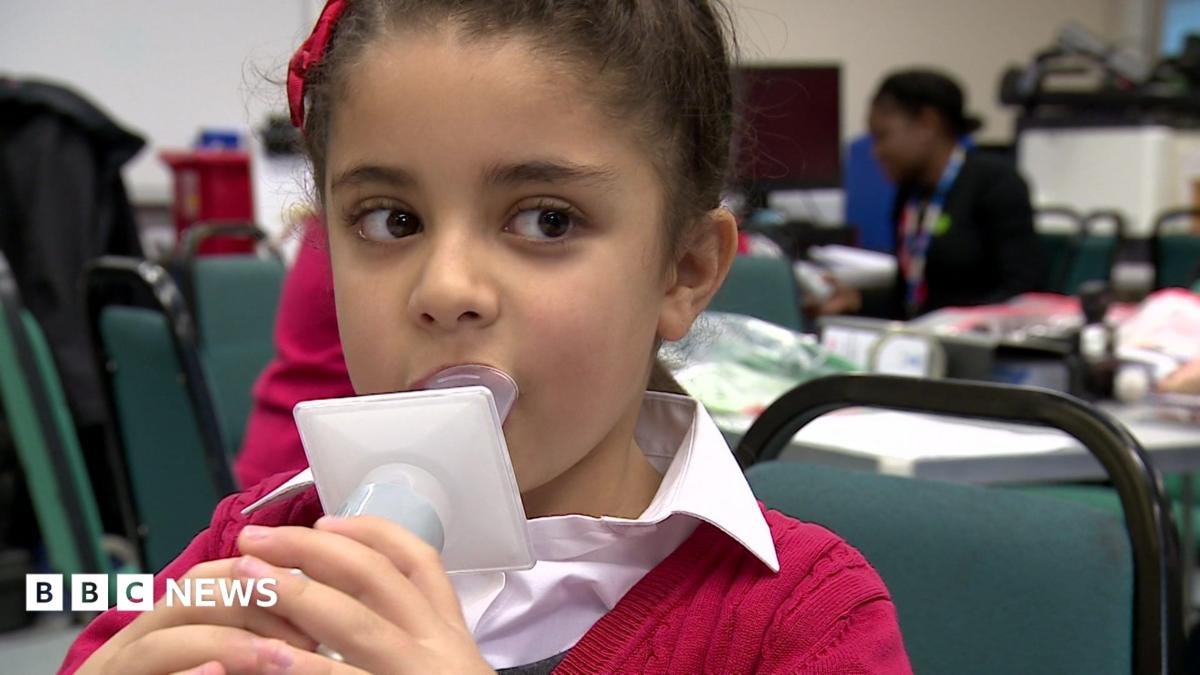
Children in the study had annual lung function and capacity tests in the year before Ulez came in and for four years after.
Initial results showed children’s lungs in London were smaller in capacity than those in Luton, which is less polluted than London but has a similar mix of pollutants.
At the end of the study the children’s lung capacity reached near identical levels in both groups.
“While we would expect children’s lungs to grow year on year, our results indicate that the London children’s lung growth had accelerated during the four years to ‘catch up’ with the control group in Luton to reach similar levels of lung capacity,” researchers say.
“I was absolutely stunned when I first saw the results,” Prof Chris Griffiths, a senior author on the study, at Queen Mary University of London, told the BBC.
“The speed of catch up in lung capacity in the London group was surprising and impressive.
“This shows an ambitious clean air zone can drive pollution levels down, rapidly restoring children’s stunted lung growth.”
The main test measured how much air a child could forcibly breathe out in one second after a big breath in.
In practical terms the improvements could mean children in the London group could run as fast as the Luton group without getting out of breath or blow out of the same number of candles for example, Griffiths explained.
Another way of testing for lung capacity used in the study showed significant improvements too, though not to the same extent – implying there are still gains to be made.
Overall the proportion of children in London whose lung capacity was deemed “clinically impaired” (suggesting lung damage resulting in coughs or breathlessness) fell from 14% to 9%.
In Luton – where some smaller scale measures were put in place to tackle air pollution – the figures were 9% to 7%.
The team’s measurements also showed the level of nitrogen dioxide children were exposed to fell faster in London than in Luton over this time.
Researchers say this is key as it likely demonstrates that the improved lung growth they saw was related to air quality improvements following the implementation of Ulez.
London’s Ulez was first introduced in 2019 by Mayor Sadiq Khan in a bid to “clean up London’s air”. London had high levels of the harmful gas nitrogen dioxide which comes from motor vehicles.
Older, more polluting vehicles had to pay a daily charge to drive in central London. The measures were later expanded to cover the whole capital. While many supported the policy it provoked political opposition and protests.
Source: https://www.bbc.co.uk/news/articles/c1l1r1zne1ro?at_medium=RSS&at_campaign=rss
About the Author