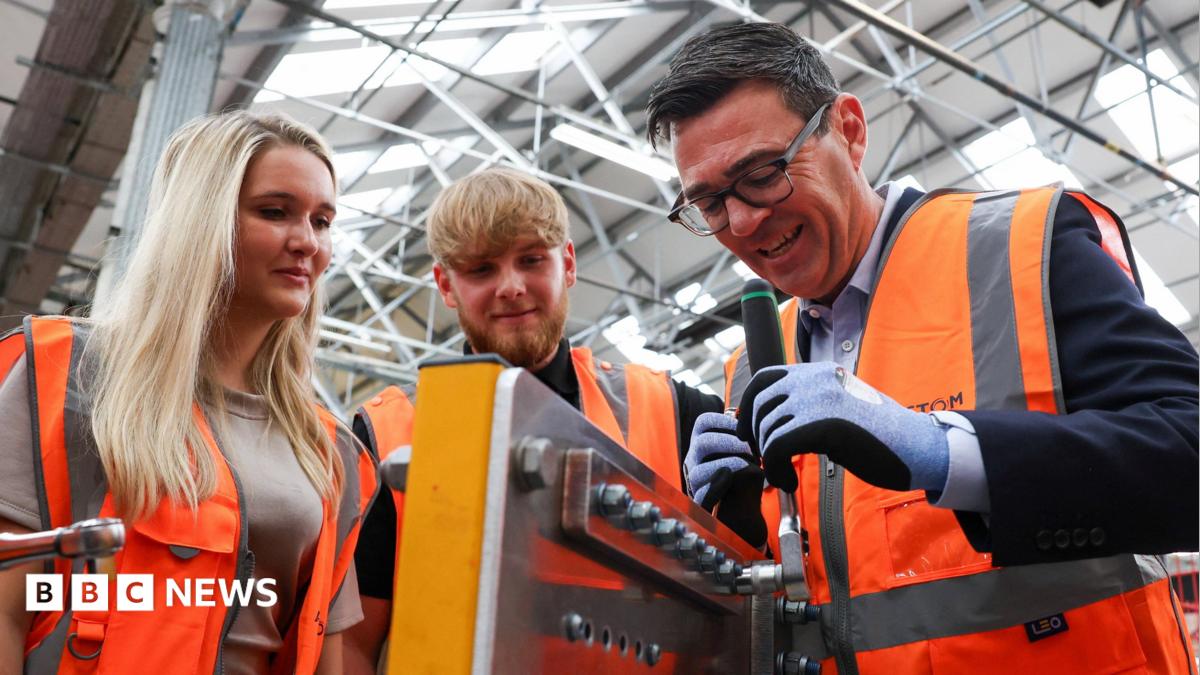
Two years ago, I stood at the back of a conference room in Manchester Hall, sipping a coffee and watching Andy Burnham unveil his vision for transforming technical education in Greater Manchester.
He had announced plans for the Manchester Baccalaureate, or MBacc, the year before, and, armed with PowerPoint slides and guest speakers, was running through the ins and outs in front of a room full of education and business leaders.
Now, as prime minister, Burnham has announced plans to make that idea national, and overhaul the technical education system across the whole of England.
The details are still scarce at this stage. We know it will involve giving pupils the option to study more vocational courses and take up work experience from Year 10, but how it will work in practice is still up in the air.
One thing that is certain is that the thinking behind it, and the ambition, is the same as that which underpins the MBacc: a determination to give teenagers a clear, step-by-step route into more practical and technical jobs.
The trouble is, the MBacc itself can be quite a difficult concept to get your head around if you’re not familiar with it.
Let’s be clear from the start: it’s not another type of qualification, like the T-levels and V-levels announced in England in recent years.
Instead, it’s a framework that aims to give teenagers a “clear line of sight to good jobs” in vocational and technical areas.
The best way to think about it is a step-by-step route – picture a flow chart – that teenagers can follow from school into any given technical career.
It’s set up in parallel to a more clearly defined academic route. During that conference event in July 2024, Burnham and other speakers made clear that those who want to go on to desk jobs can follow a well-trodden path of GCSEs, A-levels, and a university degree.
But for those who want more practical careers, the landscape is much more complicated.
The MBacc is best seen as an effort to simplify that landscape, spelling out for teenagers who want to go into more vocational or technical careers which courses they can study, and ensuring they have the opportunity to study them along with hands-on work experience.
It spells out routes to careers in seven different categories:
-
Construction and the green economy
-
Creative, culture and sport
-
Digital and technology
-
Education and early years
-
Financial, business and professional services
-
Health and social care
-
Manufacturing and engineering
Its success is difficult to measure, since the MBacc is still in its infancy.
It’s not until 2030 that it seeks to achieve its mission of guaranteeing every young person a clear path to good jobs. By 2035, the aim is for every young person to have 45 days of work experience by the time they’re 19.
According to the most recent data, the MBacc has been rolled out across 101 secondary schools and colleges in Greater Manchester – about 40% of the total.
The Greater Manchester Combined Authority says 1,405 young people accessed workplace experiences during its second year.
Time will tell, as those teenagers leave school and enter the world of work, how transformative it will be.
Source: https://www.bbc.co.uk/news/articles/c79gevrvgddo?at_medium=RSS&at_campaign=rss
About the Author